September 14, (THEWILL) — The plan to privatise Nigeria’s moribund refineries would end decades of waste, inefficiency and corruption in the oil and gas sector. Previous attempts to sell or privatize the resource-gulping refining facilities have been resisted by selfish interests of powerful groups within and outside government.
The Federal Government recently announced plans to privatise or concession at least 91 state-owned enterprises, including the four refineries, Ajaokuta Steel Company, Tafawa Balewa Square, Lagos Trade Fair Complex, and five international airport terminals.
The director-general of Bureau of Public Enterprises (BPE), Ayodeji Ariyo Gbeleyi, who revealed the initiative in Abuja, stressed that every transaction would follow a strict and transparent process guided by technical, financial, and legal experts.

Gbeleyi explained that advisers would determine the value and terms of each transaction through detailed feasibility studies, noting that the structure of some deals may vary depending on the sector. Using the stock exchange as an example, he highlighted the importance of financial and technical analysis in establishing transaction ranges.
He pointed to past successes as evidence of the benefits of such reforms. Nigeria’s telecommunications sector now boasts 169.3 million subscribers and a broadband base of 104.1 million. Pension reforms have generated 10.79 million contributors with assets worth N24.63 trillion.
Port reforms have drawn over $2.5 billion in investments and reduced cargo dwelling times, while aviation ground handling companies like NAHCO and SAHCO have recorded significant revenue growth.
Gbeleyi emphasised that the planned privatisation and concessioning are designed to unlock value from state-owned enterprises, attract new investments, and boost efficiency across key sectors, ensuring sustained economic growth and stability.
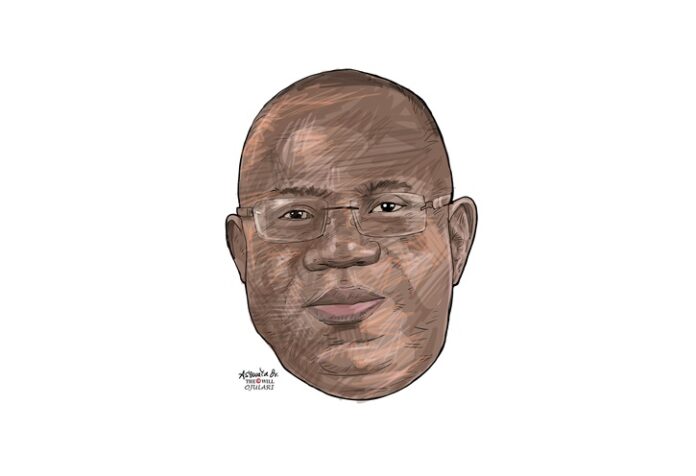
Recently, Group Chief Executive Officer, GCEO, of the Nigerian National Petroleum Corporation Limited (NNPCL), Engr. Bayo Ojulari announced plans to overhaul the oil and gas sector, including concessioning the refineries. This has earned Ojulari a huge backlash from the system as he is seen to have played the ‘spoiler’ game.
Under the former President Muhammadu Buhari-led 8-year administration, on the platform of the All Progressives Congress (APC), the NNPCL showcased itself as a theatre of bazaar where Nigerian taxpayers’ money was burnt on the crest of waste and corruption.
Before Ojulari’s tenure, the Port Harcourt Refinery was on an endless stream of rehabilitation and constituted a window for massive treasury looting. Different arms of government devised a means to take their own share – ministers, lawmakers, party chieftains, political appointees … Just mention Port Harcourt Refinery. You are on course.
THEWILL recalls that NNPC Ltd had in July 2023 promised that the Port Harcourt Refinery would resume production in December of that year, later shifted to April, August, September … without results.
While Nigerians awaited the outcome of the promises, the Senate on October 24, 2023 constituted an ad-hoc committee to investigate all contracts estimated at over N11.35 trillion awarded for the rehabilitation of the four moribund refineries in the country, without results.
Ten months after the Senate embarked on the elusive probe of the endless maintenance of Nigeria’s moribund refineries, the upper and lower legislative chambers jointly commenced a similar exercise in August, 2024.
Following fresh controversies trailing the nation’s oil and gas industry, especially in the aspects of sabotage, corruption and oil theft, the Speaker of the House of Representatives, Abbas Tajudeen, named a seven-member committee to probe alleged economic sabotage in the oil and gas sector.
On its part, the Senate also raised an Ad Hoc Committee to Investigate the Alleged Economic Sabotage in the Nigerian Petroleum Industry. The upper legislative chamber expressed concerns over the $1.5 billion approved in 2021 for the turn-around maintenance of the Port Harcourt Refinery with little or no result.
In a dramatic twist, the Senate ad-hoc Committee eventually suspended its assignment indefinitely citing the need for broader consultation “in the nation’s interest”. The exercises entered into a voicemail thereafter.

Sam Diala is a Bloomberg Certified Financial Journalist with over a decade of experience in reporting Business and Economy. He is Business Editor at THEWILL Newspaper, and believes that work, not wishes, creates wealth.