
June 26 (THEWILL) — The Presidency has ordered the immediate activation of a national early flood response platform, directing the National Emergency Management Agency (NEMA), the Anticipatory Action Task Force (AATF), and other relevant agencies to fast-track preparedness measures as the country enters the peak of the rainy season.
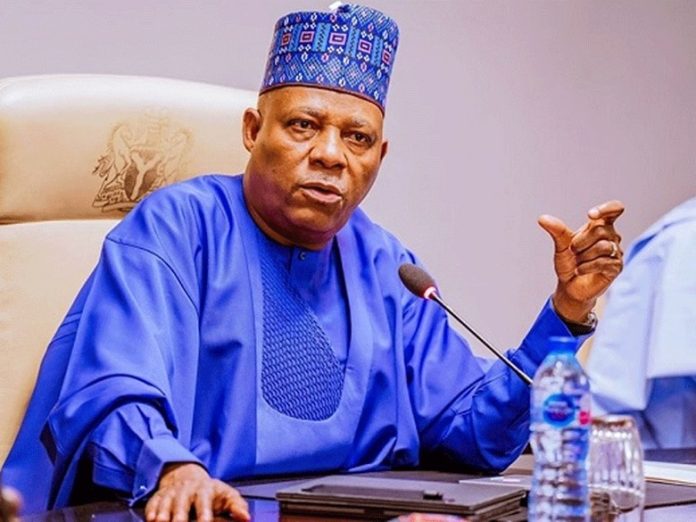
Vice President Kashim Shettima issued the directive on Thursday during a meeting of the AATF at the Presidential Villa, Abuja, declaring that the administration of President Bola Tinubu would no longer tolerate delayed responses to flooding and other climate-induced disasters.
Insisting that government must move away from reacting after disasters occur, Shettima ordered the immediate operationalisation of the proposed Fusion and Trigger Room concept within NEMA to serve as a national coordination and early action platform for flood monitoring, forecasting, and emergency response.

He also directed NEMA, the AATF, and other technical agencies to immediately review and update implementation budgets in line with approved allocations, establish clear priorities for execution, and ensure the swift deployment of resources.
“As the rainy season peaks, preparedness, coordination, and early action must become the standard practice of how we govern disaster risks in Nigeria,” the Vice President said.
According to him, climate-related disasters are becoming more frequent and severe, making it imperative for government institutions to anticipate hazards and intervene before emergencies escalate.
“We are called to act early, to reduce losses before they multiply, and to protect vulnerable communities before crises unfold around them,” he stated.
Shettima explained that the proposed Fusion and Trigger Room would provide a unified platform for monitoring weather patterns, consolidating data, activating early warning triggers, coordinating relevant agencies, and supporting timely decision-making.
“I am directing that technical consultations begin at once to operationalise the Fusion and Trigger Room concept within NEMA as a national platform for coordination and early action.
“This platform should anchor our monitoring, our forecasting, the activation of triggers, the coordination across agencies, and the decisions that follow from them,” he said.
Warning against bureaucratic bottlenecks, the Vice President stressed that anticipatory action depends on speed and readiness, noting that resources approved for disaster preparedness must be released before emergencies occur.
“To wait until disaster strikes before releasing what we have already approved is to defeat the very purpose of acting early,” he said, directing all relevant institutions to expedite the release and deployment of approved funds and ensure implementation timelines are not hindered by administrative delays.
The Vice President also appealed to state governors and sub-national institutions to actively participate in implementing flood preparedness measures, saying federal efforts alone would not be sufficient to mitigate the anticipated impact of flooding.
“I call on our State Governors and state institutions to participate actively and to lead implementation within their jurisdictions. Federal coordination on its own will never be sufficient,” he added.
Earlier, the Minister of Humanitarian Affairs and Poverty Reduction, Bernard Doro, described the Federal Government’s approval of funds for anticipatory flood action as timely and commendable, urging that implementation of all intervention programmes be centrally coordinated through existing national social registers and digital payment platforms in collaboration with state governments.
Also speaking, the United Nations Resident and Humanitarian Coordinator in Nigeria, Mohamed Fall, praised President Tinubu’s administration for approving funds for anticipatory flood action, describing the move as a demonstration of political commitment, national ownership, and practical leadership.
He noted that investments in anticipatory action have consistently helped save lives and livelihoods, adding that Nigeria’s initiative would serve as a model for other African countries.
Director-General of NEMA, Mrs Zubaida Abubakar Umar, said the intervention fund approved by the National Economic Council (NEC) would help prevent loss of lives and protect livelihoods, adding that the agency had already prioritised vulnerable communities and issued early warning advisories ahead of the peak rainfall season.
The latest directive follows the approval by the National Economic Council of an ₦83.2 billion intervention fund to strengthen nationwide anticipatory action against flooding, as authorities intensify efforts to reduce the humanitarian and economic impact of the annual disaster.

Felix Ifijeh is a journalist with years of professional reporting experience. Known for his keen news sense, compelling storytelling and commitment to accurate, impactful reporting, he has built a reputation for turning leads into clear, engaging, and well-structured reports that resonate with readers. His work reflects deep newsroom experience and a commitment to accurate, impactful journalism.
