

November 10, (THEWILL) – Nigeria’s agricultural sector has been on a continued decline in the past seven years – since 2017. This is not good news for the consumer goods firms who depend on the sector for local sourcing of their raw materials under the backward integration scheme.
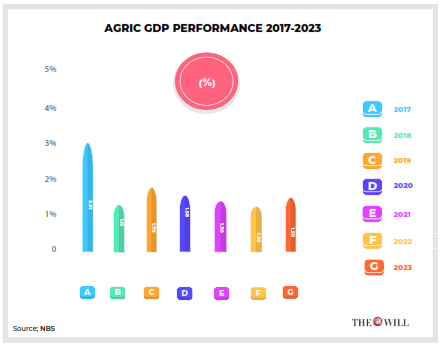
According to data by the National Bureau of Statistics (NBS), aside from the second quarter (Q2) of 2016 when agriculture achieved a real gross domestic product (GDP) growth rate of 4.5 percent year-on-year, the sector has maintained an uninterrupted slide in the past seven years. The facts speak:
In Q2 2017, agriculture declined to a growth rate of 3.01 percent (from 4.5 percent in the corresponding period of the previous year), before it hit 1.19 percent in Q2 2018. The fortune of this strategic sector, which is the largest employer of labour, rose marginally to 1.79 percent in Q2 2019, then plunged to 1.58 percent in Q2 2020.

Although the overall GDP growth rate rose to 3.40 percent in Q2 2021 from -1.92 percent in the previous year’s equivalent period, the positive trend did not impact on agriculture: The sector, instead, nosedived to a 1.3 percent growth rate in Q2 of that year. It then sank deeper to 1.2 percent in Q2 2022, before recording a stunted growth of 1.50 percent in Q2 2023.
In all, while the overall contribution of agriculture to GDP hovered on the average of 23 percent during the seven-year period, the receding fortune of this sector was a major concern to the consumer goods firms. This is because the consumer goods firms rely significantly on agriculture to source their local raw materials under the backward integration policy.
Backward integration
Backward integration is a practice where companies are encouraged to cultivate their own raw materials by purchasing from their suppliers or establishing farms to grow produce for their factories. Though conceived in the 80’s, the policy gained momentum in the country following the crash in crude oil prices which started in the fourth quarter of 2014.
The government put the scheme in place to save foreign exchange, create jobs, boost domestic productivity and grow the GDP. On a positive note, the initiative was well received in the real sector.
The consumer goods firms keyed into the scheme and have since taken giant strides in its implementation. This is to the benefit of the small and medium enterprises (SME), especially those engaged in the agriculture value chain and transport.
For instance, Nestlé Nigeria instituted a project to engage 5,000 smallholder farmers, initially, for the supply of raw materials for its agro-business operations. The initiative, ‘Developing Inclusive Grain Value Chains Project’, was in partnership with IDH — a Sustainable Trade Initiative and TechoServe outfit.
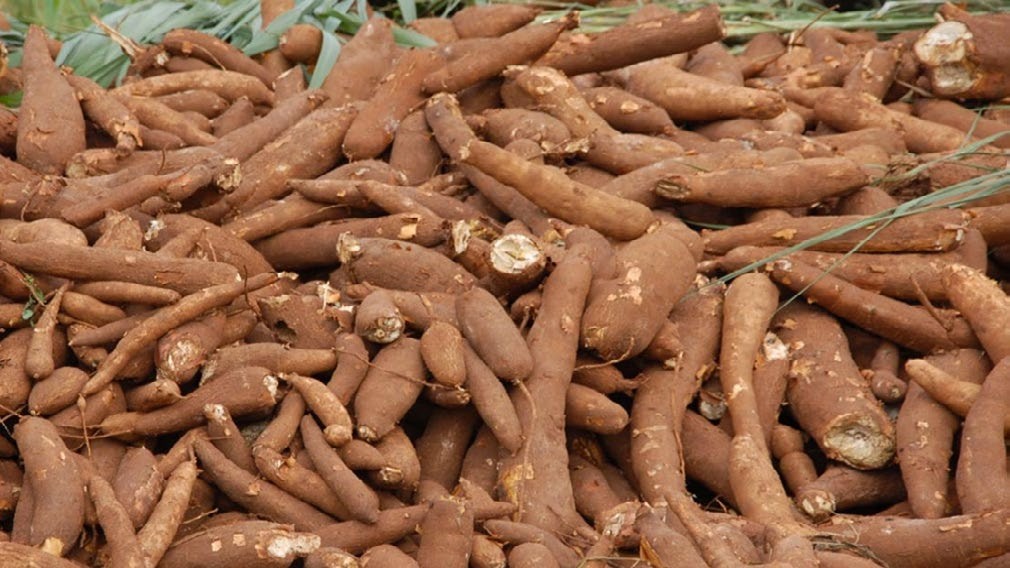
Nigerian Breweries stepped up local production of sorghum and cassava to boost local raw material supply for its plants. The 77-year-old consumer goods firm has made significant strides towards large-scale cultivation of sorghum and industrial application since the 80’s.
Similarly, FrieslandCampina WAMCO Nigeria developed its local raw milk sourcing in a bid to support backward integration, an initiative that has proved a source of sustained income to almost 2,000 farmers (including 900 women).
In the same vein, manufacturers in the flour milling sector have been taking steps to increase their tempo of backward integration in recent times. Flour Mills of Nigeria Plc has invested in several farms and other agricultural projects to cultivate raw materials for most of its processes.
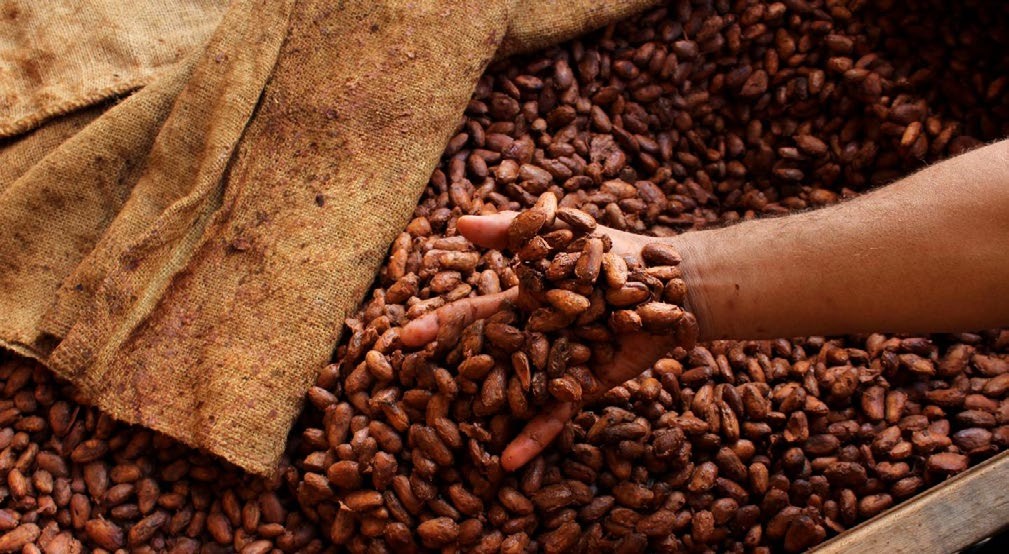
Industry giant, Cadbury Nigeria, established a cocoa processing plant in Ondo which has lifted many farmers and transporters engaged in the agribusiness value chain over time.
Also, Guinness Nigeria Plc. launched its agriculture scheme tagged ‘Grow with Nigeria’ in 2018 for the growth of the agricultural value chain and that of small holder farmers who form an integral part of its business. The company has consistently sourced all its core ingredients such as sorghum and malt extract locally through the various local raw material chains up to 75 percent.
These partnerships enabled the consumer goods firms to develop an ecosystem of private sector players creating values that impact smallholder farmers directly and boosting employment.
With the strategic interventions, they are able to leverage on the collaboration as provided by the respective partners in the ecosystem. It has helped to improve the livelihoods of the farmers by moving them from subsistence level to full economic inclusion.

Downturn, dilemma
Incidentally, these projects have been negatively impacted by the receding fortune of agriculture occasioned by lingering structural supply-side challenges. These include rising insecurity, infrastructure deficits, inadequate storage facilities, logistical challenges, multiple taxes, extortion, amongst others. The projects are now severely challenged by the myriad of environmental obstacles across the states where the farms are established and the value chain is threatened.
“The companies rely on a strong value chain that involves many micro, small and medium businesses especially in agriculture and agro-business activities. If they are not healthy, they will not feed the manufacturing companies and this will have a far-reaching impact on the economy”, said Julius Abbas, a processing business operator.
Findings revealed that these limitations which impacted the agricultural value chain have compelled the consumer goods firms to resort to importation to augment their raw material input. But forex scarcity and high exchange rate pose another challenge. There lies the dilemma.
Ten sampled consumer goods firms recorded higher operating expenses in Q2 2023 occasioned by higher cost of raw materials and associated heads. The 10 companies’ raw materials inventories cost showed a total of N161.4 billion during the first three months of 2023, a 20 percent rise from N134.7 billion spent in the corresponding period in 2022.
In this vein, the consumer goods firms are confronted with a highly frightening dilemma: depleting local material sourcing and high cost of importing the inputs as alternatives. “It is s worrisome situation; the consumer goods firms are at a terrible crossroads,” Paul Amadi, an investment banker said, adding that the firms are faced with potentially deeper troubles in the days ahead.
Deeper trouble emerges
The most outstanding impact came from the devaluation of the naira. The Central Bank of Nigeria (CBN) on June 14, 2023, announced the unification of the multiple exchange windows of the forex market and floating of the local currency.
This resulted in significant depreciation of the naira by 67 percent to the average of N777/$ on the Investors’ and Exporters’ (I&E) window (as of June 2023) against N465/$ prior to the announcement. Also, the naira traded N995/$ at the parallel market in June compared to N765/$ before the abolition of the multiple exchange rates. This put the real sector operators under severe pressure.
Findings showed that the 2023 half-year financial results of the sampled firms proved they are walking a tight rope. They reported a total of N517.1 billion in non-recovery, net foreign exchange losses in the first half of the year (HY 2023), occasioned by the devaluation of the naira.
Nestle Nigeria Plc and Dangote Cement Plc were the worst hit with non-recovery net forex losses of N123.7 billion and N113.6 billion respectively. They are followed by Nigerian Breweries Plc N85.26 billion, Dangote Sugar Refinery Plc N83.09 billion and Guinness Nigeria Plc N41.9 billion forex losses.
Others are International Breweries Plc with a forex loss of N40.66 billion, Neimeth Pharmaceuticals Plc N22.82 billion, Unilever Plc N2.93 billion and Cadbury Nigeria Plc N1.03 billion. The eroding wave of depreciation resulted in total post-tax loss of N370.57 billion by the 10 firms, compared to N175.9 billion post-tax profit they posted in the equivalent period of the preceding year.
The scenario also impacted severely on the firms’ balance sheets as they had to source extra funds in local currency to meet their dollar-denominated obligations, which include payment for raw materials.
“It is a bad omen,” said Barnabas Ikuruh, an investment and financial analyst. “Their balance sheets have been significantly eroded, their earning power vitiated, and their expansion capacities weakened. Top among the victims are the employees who may be laid off, downgraded or suffer a salary cut. Some companies will have to increase the price of their products and that would impact their sales revenue because of declining consumer power, and many will have to close down,” Ikuruh added.
Emerging exit route
Indeed, some consumer goods firms have opted to exit the Nigerian Exchange (NGX) and close shop in Nigeria. These include GlaxoSmithKline (GSK) Plc and PZ Cusson Plc with combined market capitalisation of N143 billion which will be wiped from the NGX equities capitalisation following the firms’ delisting from the stock market.
GSK, had announced plans to cease operations in Nigeria without stating reasons for its decision. Economy experts have, however, linked the company’s decision to scarcity of forex and the forex losses incurred by most companies following the devaluation of the Naira.
“The companies have limitations in sourcing local raw materials, they have challenges sourcing forex for import, they cannot repatriate their assets due to dollar shortage, and they have to pay taxes, employee remunerations and other commitments. Is that not walking the shadow of the valley of death?” queried Marcel Okeke, an Economist and Sustainability expert.
The development is not good news for the SMEs which operate in the value chain to feed the consumer goods firms whose commitment to the backward integration scheme was not in doubt.
Way Out
The government had introduced initiatives and programmes to boost agricultural produce towards attaining food security, increased raw materials and high productivity. These include the Anchor Borrowers Programme, Commercial Agricultural Credit Scheme, N200 billion intervention fund for SMEs, among the others promoted under the CBN intervention Funds.
Incidentally, beneficiaries have expressed concern over the challenge of rising insecurity, multiple taxes, extortion and high transportation cost in disposing of their produce.
Although, President Bola Tinubu-led government has declared a national state of emergency on agriculture, it should go beyond declaration. The lingering insecurity challenge should be tackled frontally and attention focused on fixing the roads.
The Taiwo Oyedele-led Presidential Fiscal Policy & Tax Reforms Committee should come up with workable policies to address the intractable multiple taxes. It is a virus that kills small and medium enterprises with extended impact on the performance of the consumer goods firms.

Sam Diala is a Bloomberg Certified Financial Journalist with over a decade of experience in reporting Business and Economy. He is Business Editor at THEWILL Newspaper, and believes that work, not wishes, creates wealth.
