November 16, (THEWILL) — After many years of functioning within the infamous landscape of conventional business practices, marked by a culture of wastefulness, inefficiency, and corruption, there are signs that the Federal Government, through the Nigerian National Petroleum Company Limited (NNPC Ltd), recognises the necessity for transformation — to accept reality. As stated by senior government officials, NNPC Ltd is currently contemplating the sale of its four refineries situated in Port Harcourt (2), Warri, and Kaduna.Additionally, the national oil company is set to undergo restructuring.
In an interview with Bloomberg TV during the recent ADIPEC energy conference in Abu Dhabi, Olu Verheijen, the Special Adviser to President Bola Tinubu on Energy, mentioned that the Nigerian government has not dismissed the possibility of selling the refineries. “It’s one of the options that you have to consider if you find the right technical partner with the right capital,” Verheijen remarked, noting that the plants have primarily relied on subsidies. “However, now that we’ve eliminated the subsidies, we’ve removed the distortions in that market.”
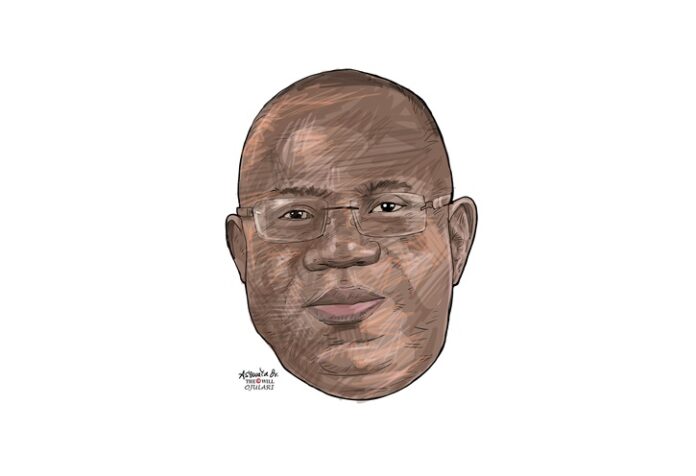
Verheijen further explained that the government’s reform agenda under President Tinubu seeks to enhance market efficiency and transparency, ensuring that the petroleum sector functions on strictly commercial terms. Similarly, Bayo Ojulari, Group Chief Executive Officer of NNPC Ltd, revealed at the same event that the state-owned oil company is striving to increase its ownership in the Dangote Petroleum Refinery from the current 7.2 percent to 20 percent.

The Nigerian government (through NNPC Ltd) initially pledged to acquire a 20 percent stake in the $20 billion Dangote Refinery, which is the largest oil refining facility in Africa. Nevertheless, due to financial limitations, the company restricted its investment to the amount already disbursed, leading to a diminished stake of 7.2 percent.
At the Nigerian Association of Petroleum Explorationists (NAPE) Conference in Lagos on November 3, 2025, Verheijen revealed that the government is contemplating a restructuring of asset ownership. She emphasized that reaching the target of 3 million barrels of oil production per day necessitates performance-oriented stewardship insisting that it hinges on NNPC’s ability to achieve incremental growth.
She remarked that reorganizing the national oil company would rejuvenate Nigeria’s oil and gas industry, thereby ensuring energy security and promoting sustainable development. Ojulari previously stated that the state oil company is on course to be listed on the stock exchange by 2028.
In July, during the 9th Organisation of the Petroleum Exporting Countries International Seminar held in Vienna, Austria, Ojulari reiterated that the state oil company is on track for a stock exchange listing by 2028 as part of its strategic transformation into a commercially viable and globally competitive energy entity.
Dawn of a new era
These policy changes signify a decisive shift away from the entrenched culture of waste, inefficiency, and corruption that has characterized the operations of the stagnant refineries. Nevertheless, analysts express skepticism regarding the government’s commitment to follow through this time, given past policy inconsistencies that indicated a lack of political resolve to reform the colossal national oil company, which has maintained four non-operational refineries for nearly thirty years.
Anti-change resistance
Ojulari raised concerns four months ago about threats to his life and those of his management team. He made this statement on Thursday, August 28, 2025, in Abuja while welcoming a delegation from the Petroleum and Natural Gas Senior Staff Association of Nigeria (PENGASSAN), led by its president, Festus Osifo. He indicated that his priorities upon taking office included conducting a swift review of the refineries. This assessment revealed that the company was incurring losses ranging from N300 million to N500 million monthly due to refinery operations, with Port Harcourt identified as a significant source of the financial drain. Ojulari informed his perplexed audience that approximately 950,000 barrels of crude were delivered to the facility as cargo; however, an analysis of the inputs and outputs indicated that less than 40 percent of what was received was being processed efficiently.
This scenario was typical within NNPCL during the tenure of the previous GCEO, Mallam Mele Kyari. “Therefore, our initial response was to halt the losses and seek a method to transform the refinery into a sustainably profitable enterprise, while also providing a means of sustainable employment.” For Ojulari, “There is no reason for us to feign ignorance. Thus, there was no adverse political pressure on NNPC to persist in operating at a loss.” He stated that his sole “offense” was implementing reforms in the oil and gas sector, in accordance with the directive given to him by President Bola Tinubu to rejuvenate the nation’s ailing refineries.
NASS Angle
On Thursday, October 9, 2025, the House of Representatives decided to investigate the over $18 billion reportedly spent on the rehabilitation of Nigeria’s state-owned refineries in Port Harcourt, Warri, and Kaduna over the past two decades without achieving notable results.
This resolution came after the adoption of a motion presented during plenary by Hon. Sesi Oluwaseun Whingan concerning the non-functionality of state-owned refineries. In his motion, Whingan voiced his concerns about the persistent ineffectiveness of the refineries, despite numerous turnaround maintenance initiatives and repeated government assurances. He emphasized that the facilities have remained dormant even after considerable funding and multiple promises of rehabilitation.
The lawmaker underscored that the recent admission by the Group Chief Executive Officer of NNPCL, Engr. Bayo Ojulari, regarding the refineries’ inactivity despite significant investments, raises additional concerns about fiscal responsibility and transparency in the management of national assets. “The ongoing non-functionality of these refineries, despite regular budget allocations and rehabilitation contracts, signifies a severe misappropriation of public funds and a breach of public trust,” lamented Whingan.
NNPC’s ‘solutions’
Nevertheless, in an unexpected announcement, NNPC Ltd revealed on October 30, 2025, that it had commenced a comprehensive technical and commercial assessment of its three primary refineries situated in Port Harcourt, Warri, and Kaduna. According to the national oil company, the purpose of the review is to evaluate the operational readiness and financial viability of the facilities as part of NNPC’s renewed dedication to revitalizing Nigeria’s refining capacity. The initiative, which was announced by the Group Chief Executive Officer, Mr. Bayo Ojulari, represents a significant advancement in ensuring that the refineries can once again play a vital role in Nigeria’s energy security and economic development.
According to the company, this review is part of a larger modernisation strategy aimed at transforming the refineries into globally competitive, revenue-generating assets. Rather than simply conducting repairs, the emphasis is on ensuring that the facilities comply with international standards regarding efficiency, output, and environmental regulations.
THEWILL recalls that NNPC Ltd had in July 2023 promised that the Port Harcourt Refinery would resume production in December of that year, later shifted to April, August, September … without results.
While Nigerians awaited the outcome of the promises, the Senate on October 24, 2023 constituted an ad-hoc committee to investigate all contracts estimated at over N11.35 trillion awarded for the rehabilitation of the four moribund refineries in the country, without results. Ten months after the Senate embarked on the elusive probe of the endless maintenance of Nigeria’s moribund refineries, the upper and lower legislative chambers jointly commenced a similar exercise in August, 2024. Following fresh controversies trailing the nation’s oil and gas industry, especially in the aspects of sabotage, corruption and oil theft, the Speaker of the House of Representatives, Abbas Tajudeen, named a seven-member committee to probe alleged economic sabotage in the oil and gas sector.
On its part, the Senate also raised an Ad Hoc Committee to Investigate the Alleged Economic Sabotage in the Nigerian Petroleum Industry. The upper legislative chamber expressed concerns over the $1.5 billion approved in 2021 for the turn-around maintenance of the Port Harcourt Refinery with little or no result. In a dramatic twist, the Senate ad-hoc Committee eventually suspended its assignment indefinitely citing the need for broader consultation “in the nation’s interest”. The exercises entered into a voicemail thereafter.
Labour in silence mode
The previous effort to sell the refineries during the administration of former President Olusegun Obasanjo faced significant opposition from the two primary oil workers’ unions: PENGASSAN and the Nigeria Union of Petroleum and Natural Gas Workers (NUPENG). The representatives of these unions did not provide any comments when approached for their input last week. Various interest groups, including the Independent Petroleum Marketers Association of Nigeria (IPMAN), the Nigeria Union of Petroleum and Natural Gas Workers (NUPENG), and the Petroleum Products Retail Outlet Owners Association of Nigeria (PETROAN), have exerted pressure on Ojulari to either repair the Port Harcourt Refinery or exit the industry. “If the GCEO is unable to repair the Port Harcourt Refinery or show a commitment to its restoration, stakeholders and host communities will have no choice but to urge President Tinubu to consider his replacement,” stated Comrade Emmanuel Inimgba, the Eastern Zonal Secretary of IPMAN, in a declaration made on Wednesday, August 13, in light of the ongoing closure of the refinery.
In a similar vein, the Petroleum Products Retail Outlets Owners Association of Nigeria has also reportedly accused the NNPC GCEO, Bayo Ojulari, of failing to prioritize the revival of the Port Harcourt refinery. PETROAN’s Zonal Chairman for System 2E (Eastern Zone), Sunny Nkpe, expressed his concern in a statement regarding the sluggish progress at the Old Port Harcourt Refinery (Area 5), which was shut down on May 24, 2025, for a scheduled repair lasting 30 days.
These facilities, as revealed by Ojulari, are responsible for draining the nation’s resources, resulting in losses of up to N500 million monthly. As Ojulari contends with internal opposition, his ability to navigate the challenges posed by the dysfunctional refineries remains a significant concern. Nigerians are eager to observe his plans for the refineries, which have been widely deemed inoperable.

Sam Diala is a Bloomberg Certified Financial Journalist with over a decade of experience in reporting Business and Economy. He is Business Editor at THEWILL Newspaper, and believes that work, not wishes, creates wealth.