
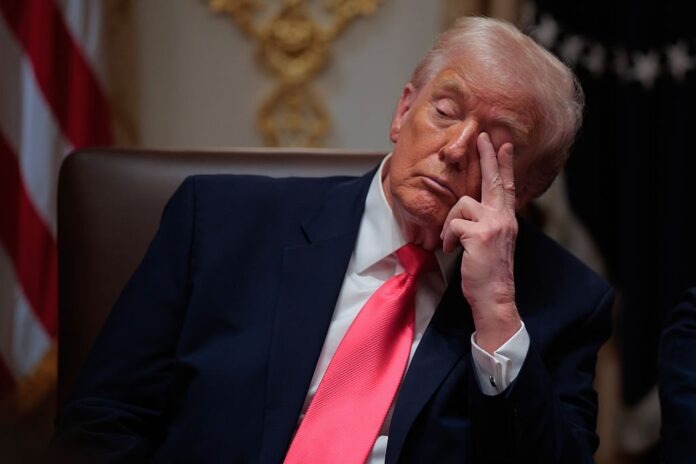
April 05, (THEWILL) — Regional tensions surged dramatically across the Middle East on Sunday, as Iran launched coordinated strikes on Israeli and US-linked strategic assets, while Donald Trump issued a stark warning threatening severe retaliation if Tehran maintains restrictions on the Strait of Hormuz, raising fresh concerns over a broader regional escalation.
Iran’s military, in a statement carried by state-affiliated Tasnim news agency, said it targeted petrochemical facilities near Dimona in southern Israel, an area associated with the country’s primary nuclear installation.
Tehran also claimed responsibility for drone attacks on US military positions on Kuwait’s Bubiyan Island, signalling a widening theatre of operations across the Gulf.

The escalation followed a 48-hour ultimatum issued by President Trump, who warned that failure to reopen the vital oil transit route could trigger devastating strikes on Iran’s infrastructure, including power plants and bridges.
The threat has drawn international criticism, with Iran’s Mission to the United Nations condemning the remarks and urging global intervention to prevent what it described as potential “war crimes.”
Iran further claimed it downed multiple US aircraft, including two C-130 planes and two Black Hawk helicopters, amid ongoing confrontations.
The claims came hours after President Trump confirmed the successful rescue of a US officer whose F-15E fighter jet had been downed in Iranian territory—an operation that underscored the intensity of ongoing military engagements.
Across the Gulf, Kuwait reported one of the most significant waves of attacks in recent days, with its military confirming that nine ballistic missiles, four cruise missiles, and at least 31 drones entered its airspace within 24 hours. The projectiles targeted critical infrastructure, including power generation facilities, water desalination plants, and oil installations.
Despite the scale of the assault, Kuwaiti authorities confirmed that no casualties were recorded, even as the strikes caused substantial material damage and fires at key facilities. Emergency responders were able to contain the situation, highlighting the country’s defensive resilience amid sustained regional instability.

Felix Ifijeh is a journalist with years of professional reporting experience. Known for his keen news sense, compelling storytelling and commitment to accurate, impactful reporting, he has built a reputation for turning leads into clear, engaging, and well-structured reports that resonate with readers. His work reflects deep newsroom experience and a commitment to accurate, impactful journalism.
