
November 03, (THEWILL) – Last week’s ruling of a Federal High Court in Abuja suspending the payment of Rivers State’s federal financial allocation has sparked serious concerns over the judiciary’s scope of power, particularly when juxtaposed with the 2004 landmark Supreme Court ruling involving Lagos State. That decision, delivered during the tenure of President Olusegun Obasanjo, definitively ruled that the executive arm had no authority to withhold allocations due to a state, marking a crucial precedent that underscores the limitations of both executive and judicial authority over federal disbursements to Nigeria’s federating units. This precedent is now in question, as the Rivers State ruling indicates a possible judicial overreach by a lower court, casting doubt on the stability of previously established constitutional norms.
In 2004, Lagos State, under then-Governor Bola Tinubu, unilaterally created additional local government areas to accommodate the city’s growing administrative needs. The Federal Government, led by President Olusegun Obasanjo, took exception to this move and decided to withhold Lagos State’s allocations as a punitive measure, insisting that the state revert to its original number of local governments.
Governor Tinubu declined, prompting a legal battle that culminated in the Supreme Court decision. The court ruled that the executive’s action was unconstitutional, asserting that no arm of government can withhold allocations to any state on grounds that interfere with the state’s sovereign rights as part of the federation. This ruling became a bedrock decision that, to this day, has informed understandings of state-federal financial relations in Nigeria.

The recent ruling involving Rivers State, however, has created a paradox by allowing the judiciary to halt the state’s federal allocations, seemingly contravening the Supreme Court’s decision in the Lagos case. It raises pertinent questions: where does the judiciary derive the authority to suspend allocations to a federating unit when even the executive branch lacks such power?
In this context, the judiciary’s action appears to contradict established constitutional limits, indicating an instance where judicial decisions are encroaching upon the financial autonomy of state governments. Such rulings undermine the stability of Nigeria’s federal structure and could encourage a dangerous precedent where financial control becomes a tool for political manoeuvring within the judiciary.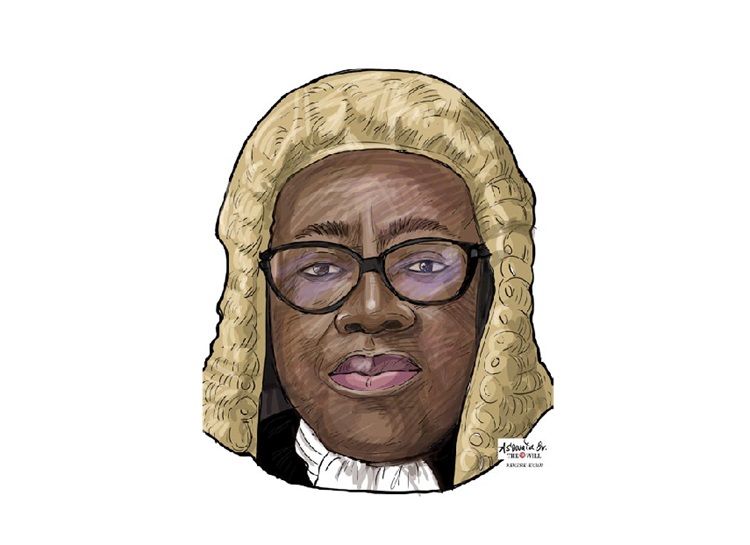
The Rivers State matter has intensified discussions about the judiciary’s politicisation under this democratic depensation mainly dominated by the Peoples Democratic Party and the All Progressives Congress, which has seen a marked rise in judicial rulings favouring the political interests of the executive. While the judiciary appears to take sides in both political and civil disputes, it is eroding its credibility and, by extension, Nigeria’s democratic foundations and losing its mantra as the last hope of the ordinary man.
One of the primary issues compounding judicial impartiality is the growing influence of the executive over judicial welfare. Several instances have demonstrated how the executive branch extends financial incentives—housing, allowances, and vehicles—to judges, ostensibly as welfare benefits. While improving the judiciary’s material conditions is a worthy objective, these gestures from the executive are widely interpreted as compromising judicial independence.
A judiciary that relies on the executive for its basic needs can scarcely claim to be a co-equal branch of government, as it may feel an implicit obligation to favour the executive in sensitive cases.
The situation is especially pronounced in Abuja, where Nyesom Wike, Minister of the Federal Capital Territory, who is one of the protagonists in the political crisis in Rivers State, has introduced several welfare initiatives for the judiciary, ranging from allowances to infrastructure. Though well-intentioned, such actions reinforce the judiciary’s financial dependence on the executive, raising fears that this reliance may compromise judicial impartiality.
In a system where the executive is constructing residences and offering perks to judges, it becomes difficult for the judiciary to act as a check on executive power without bias. For the judiciary to function as a true guardian of democracy, it must operate independently, free from material dependence on any arm of government. I must also state here that some state governors have also engaged in this kind of gesture.
This erosion of judicial independence has far-reaching implications for Nigeria’s democracy. In recent years, Nigerians have observed a series of judicial decisions that seem to favour elites while ordinary citizens face harsh punitive measures for minor infractions. This growing perception that the judiciary serves only the interests of the powerful has severely undermined public trust in the legal system. Cases where high-profile individuals are given symbolic punishments, or evade justice entirely, highlight the unequal treatment within the legal system and deepen societal disillusionment with the judiciary.
Public trust in the judiciary is essential to a functioning democracy, as it ensures that citizens believe in the rule of law as an equalising force. When people lose faith in the judiciary’s ability to deliver impartial justice, they are less likely to respect legal processes, which can lead to anarchy and social fragmentation. The Rivers State ruling has thus reignited calls for judicial accountability and reforms that could restore confidence in Nigeria’s legal system.
For Nigeria’s democracy to thrive, the judiciary must reclaim its role as an independent arbiter of justice. This requires immediate reforms to address both judicial accountability and financial independence. The Nigerian Bar Association (NBA) has a pivotal role to play in championing these reforms, advocating an autonomous and robust judicial budget that ensures financial independence. Such reforms would prevent the executive from using financial incentives to influence judicial decisions and reinforce the judiciary’s ability to act impartially.
Moreover, civil society organisations also need to intensify their advocacy for judicial accountability, highlighting instances where rulings appear compromised by political interests. Public awareness campaigns that draw attention to judicial overreach and inconsistencies can pressure the judiciary to maintain higher standards of impartiality and integrity. By demanding transparency and accountability, Nigerians can work toward a judiciary that genuinely serves the interests of justice rather than political elites.
The phrase, “after the judge, it is God,” reflects the immense trust placed in the judiciary’s hands. This trust, however, comes with a responsibility: the judiciary must interpret laws in a way that strengthens democracy and upholds the constitution, rather than succumbing to political pressures. As seen in the Rivers State ruling, when the judiciary fails to uphold these responsibilities, it risks not only its own credibility but the very fabric of Nigeria’s democratic structure.
The multiple lawsuits associated with the political crisis in Rivers State should serve as a wake-up call to the judiciary. The suits must be adjudicated on their merit strictly adhering to established legal precedents and the constitution.
I may not be a legal scholar but my understanding of common-sense application of the law tells me that the Supreme Court is the highest court in the land. Its ruling in the Lagos case has already made clear that neither the executive nor the judiciary holds the power to interfere with state allocations. This is final until there is a constitutional amendment that states otherwise or when the apex court reverses itself.
Upholding this principle is essential for preserving the federal structure that underpins Nigeria’s democracy.