
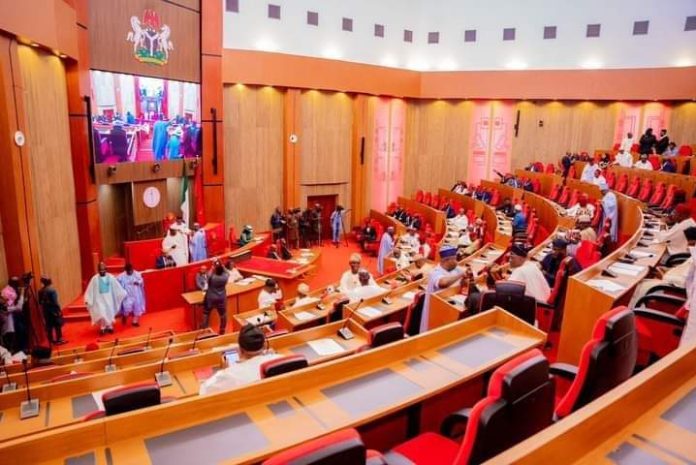
May 07, (THEWILL) — The Senate of the Federal Republic of Nigeria has reversed portions of its recently amended Senate Standing Orders 2026, rescinding key provisions relating to oath-taking procedures and the participation of senators-elect in the election of presiding officers, following concerns over possible constitutional inconsistencies.
The decision, taken barely two days after the amendments were adopted, followed internal reviews and concerns that some provisions could conflict with the 1999 Constitution, particularly Section 52.
However, the Senate retained a controversial amendment, Order 5(a), which restricts eligibility for principal offices. The provision states that only senators re-elected from the 10th Assembly into the 11th Assembly will be eligible to contest for positions such as President of the Senate and Deputy President of the Senate.

The rescinded provisions included Order 3(1), which had barred senators-elect from participating in any Senate proceedings, including voting in the election of presiding officers, until they had taken the constitutionally prescribed oath of office.
Also reversed was Order 2(2), which introduced additional procedural requirements for the Clerk to the National Assembly, including roll call, verification of election writs, declaration of assets and liabilities by senators-elect, and confirmation of quorum before the commencement of legislative business.
Moving the motion for rescission, Senate Leader Opeyemi Bamidele explained that further legal and constitutional review showed that the amendments could be inconsistent with constitutional provisions and established parliamentary practice.
He stressed that the Senate must ensure its Standing Orders remain fully aligned with the Constitution, legislative conventions, and due process. According to him, the chamber also retains the authority to revisit and recommit previously taken decisions where necessary to preserve institutional integrity.
The motion was seconded by Senator Enyinnaya Abaribe, who supported the need for the Senate to correct any provisions that may conflict with constitutional requirements.
Presiding over plenary, Deputy President of the Senate Barau Jibrin described the motion as straightforward, adding that the rescission was necessary to ensure that the Senate’s actions remain constitutionally compliant.
Following a voice vote, the Senate approved the motion, formally reversing the affected sections of the Standing Orders.
Shortly after the decision, Senator Adams Oshiomhole raised a point of order, warning against what he described as attempts to suppress dissenting voices during legislative proceedings.
He insisted that lawmakers must be allowed to freely debate procedural matters of such significance.
In response, Senate Leader Opeyemi Bamidele cautioned against turning plenary sessions into unnecessary drama, stressing that legislative business must be conducted strictly in line with established rules and procedures.
THEWILL earlier reportd a tense exchange on Tuesday between Senate President Godswill Akpabio and Oshiomhole, over amendments to the Senate Standing Rules.
The controversy followed revisions to Order 2 (3), (4), and (5), which stipulate that only senators who have served at least two consecutive terms immediately preceding their nomination, or those who have held principal officer positions in previous assemblies, are eligible to contest for the offices of Senate President and other key leadership roles.
The new provisions also require that contenders for the positions of Senate President and Deputy Senate President must have completed at least one full four-year term, effectively reinforcing a ranking system that prioritises experienced lawmakers and former presiding or principal officers.
Oshiomhole had in his a point of order objected to the amendments, warning that they could limit inclusiveness and restrict the democratic rights of lawmakers. He argued that competence, not tenure, should be the primary consideration for leadership selection..

Felix Ifijeh is a journalist with years of professional reporting experience. Known for his keen news sense, compelling storytelling and commitment to accurate, impactful reporting, he has built a reputation for turning leads into clear, engaging, and well-structured reports that resonate with readers. His work reflects deep newsroom experience and a commitment to accurate, impactful journalism.
