October 26, (THEWILL) — The United Kingdom Supreme Court delivered a decisive blow to a controversial arbitration case on 22 October 2025, dismissing an appeal by Process and Industrial Developments Limited in its protracted dispute with the Federal Republic of Nigeria. The British Virgin Islands-based company, known as P&ID, had sought to convert a £44 million costs order from pounds sterling to Nigerian naira, following Nigeria’s successful challenge to a massive arbitral award that once threatened to consume a substantial portion of the country’s foreign reserves. This unanimous judgment represents the culmination of a saga that has exposed critical vulnerabilities in international commercial contracts and the arbitration mechanisms established to adjudicate them.
The dispute’s genesis lies in January 2010, when P&ID entered into a Gas Supply and Processing Agreement with Nigeria’s Ministry of Petroleum Resources. The terms appeared straightforward: P&ID would design, construct and operate a gas processing facility in Calabar, located in the south-eastern state of Cross River, whilst the Nigerian Government would supply natural gas at preferential rates and purchase the processed products over a 20-year period. On paper, the arrangement promised economic dividends, including employment opportunities and revenue from gas that might otherwise be flared. Yet from the beginning, the contract’s hasty negotiation raised concerns. Established in 2006 by former Shell employees Brendan Cahill and Michael Quinn, P&ID possessed no demonstrable record in large-scale infrastructure development. Moreover, the agreement circumvented standard procurement protocols, a detail later emphasised in court proceedings as evidence of inadequate scrutiny and fraud.
Within two years, the project had ground to a halt. P&ID alleged that Nigeria had failed to provide the requisite gas feedstock and had revoked the licences necessary for land access. Invoking an arbitration clause within the agreement, the company initiated proceedings in London under English law, a jurisdiction frequently chosen for such disputes owing to its neutral legal framework. The tribunal examined evidence over several years before issuing a partial award on liability in 2015, finding Nigeria in breach of contract. The final award followed in 2017, ordering Nigeria to pay P&ID $6.6 billion in damages for lost profits, plus interest at seven per cent. By 2019, with interest accumulating, the total exceeded $11 billion, roughly equivalent to six per cent of Nigeria’s gross domestic product and more than 10 times its annual health budget.

This staggering liability posed an existential threat to Nigeria’s financial stability. The Central Bank of Nigeria under former Governor, Godwin Emefiele warned that enforcement could trigger seizures of sovereign assets abroad, including diplomatic properties and reserves held in London. In August 2019, a High Court judge granted P&ID permission to enforce the award as a domestic judgement, prompting urgent action from Abuja. President Muhammadu Buhari approved an audacious request from Emefiele to fund the defence and coordinate with the Attorney-General’s office. Abubakar Malami, then Attorney-General, travelled to the United Kingdom to engage legal counsel, though several firms declined the brief, citing the stringent deadlines under section 68 of the Arbitration Act 1996, which permits challenges only on narrow grounds, such as serious irregularity or fraud. Mishcon de Reya, a London-based firm, ultimately agreed to represent Nigeria, building its case on evidence of bribery and procedural misconduct.
Nigeria’s application to set aside the award centred on allegations that P&ID had procured the contract through systematic corruption. Court documents revealed a pattern of payments from P&ID to Nigerian officials dating back to 2009. Vera Taiga, a senior lawyer in the Ministry of Petroleum Resources who helped draft the agreement, emerged as a key figure. Bank records showed transfers totalling approximately $770,000 to accounts linked to Taiga and her family shortly before and after the signing. Additional sums, including $100,000 to a former Nigerian National Petroleum Corporation executive for expenses and similar amounts to consultants, formed part of what Nigeria characterised as a $50 million fund used to influence the deal. Furthermore, P&ID allegedly obtained confidential Nigerian legal documents during the arbitration through a bribed insider in the government’s legal team, allowing the company to anticipate and counter Nigeria’s arguments, thereby compromising the fairness of the proceedings.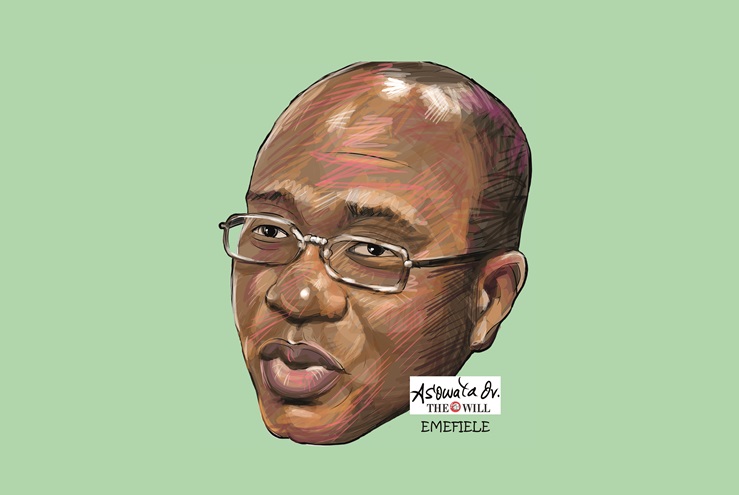
In October 2023, Mr Justice Robin Knowles of the High Court ruled in Nigeria’s favour, describing the award as obtained by fraud and contrary to public policy. He declared the contract itself a product of corruption from its inception, noting that P&ID had concealed the bribes from the tribunal and used stolen documents to strengthen its case. Justice Knowles ordered the award set aside and required P&ID to cover Nigeria’s legal costs, initially assessed at £43 million. P&ID, by then in liquidation, denied the fraud allegations, with its lawyers characterising Nigeria’s evidence as speculative and attributing the project’s failure to bureaucratic delays.
Appeals followed in quick succession. In July 2024, the Court of Appeal upheld the High Court’s decision, rejecting arguments that the tribunal had acted within its discretion. The costs dispute then escalated to the Supreme Court, where P&ID contended that payment in pounds would impose an undue burden, given the naira’s devaluation of over 70 per cent against the sterling since 2019 due to inflation and oil price volatility. Nigeria countered that conversion to naira would grant P&ID an unmerited windfall, effectively reducing the real value of the costs it owed.
Lord Reed, delivering the judgement, sided with Nigeria, emphasising that costs serve to compensate the prevailing party for expenses incurred and that altering the currency retrospectively would undermine that principle. The court observed that Nigeria had funded its defence in pounds, hiring United Kingdom-based lawyers and experts. To rule otherwise, the justices reasoned, would reward P&ID for the very misconduct that invalidated the award. This ruling not only secures the payment but also closes a prolonged saga that has cost Nigeria hundreds of millions in fees and frozen assets.
From Nigeria’s perspective, the case underscores governance lapses during the early 2010s. The rushed agreement reflected broader issues in resource contracts, where political urgency to monetise gas reserves outpaced safeguards against corruption. Credit, however, belongs to those who mounted the defence: Buhari’s authorisation enabled swift resource allocation, Emefiele’s intervention protected reserves and Malami’s coordination bridged domestic and international efforts. Nigerian media outlets played their part by publicising the bribes early, sustaining pressure for accountability.
The implications extend far beyond the immediate parties. For Nigeria, recovering the costs provides modest relief, yet the episode has strained relations with investors wary of arbitration risks. Globally, the judgement reinforces calls for transparency in investor-state contracts. The case illustrates how corruption erodes trust in legal systems, whilst also prompting reflection on arbitration’s role in developing economies. Nigeria emerges with its sovereignty intact, though vulnerabilities remain. The £44 million, payable in full, symbolises a hard lesson in vigilance for nations navigating the complexities of global commerce.