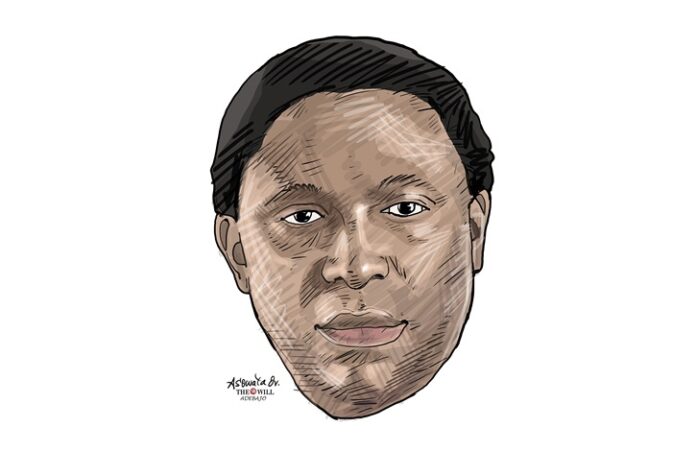
January 25, (THEWILL) — The Chief Executive Officer of CFG Advisory, a financial advisory firm, Mr. Adetilewa Adebajo, has cautioned that the economic benefits resulting from Nigeria’s monetary policy reforms could dissipate into significant financial losses unless stringent fiscal responsibility measures are implemented and upheld. He further emphasised that the Federal Government must take decisive actions to reevaluate its balance sheet by engaging in asset sales to address the ongoing economic crisis that is stifling growth and exacerbating the already dire living conditions of the populace.
Mr Adebajo made these assertions at the capacity building forum of the Finance Correspondents Association of Nigeria (FICAN) in Lagos, where he unveiled his firm’s 2026 economic outlook themed, “Economy at Inflection Point: Reform Fatigue Quagmire to Sustainable Growth.”
He noted that while recent reforms have yielded positive results, such as controlled inflation, robust foreign exchange reserves, and naira stability the government continues to face fiscal challenges as Nigeria grapples with “economic reform fatigue following two arduous years of adjustment”.

Adebajo highlighted that the decisive action taken by the Central Bank of Nigeria (CBN) to cease the infamous practice of broadening the ways and means channel, which thrived under the previous administration, was a praiseworthy initiative. He further noted that this decision played a role in the declining inflation rate.
“In the past two years, government policy has focused heavily on stabilising a battered macroeconomic environment. By most accounts, that stabilisation has largely been achieved. “Inflation, while still contested in terms of measurement, is widely acknowledged to be trending downward. But growth remains shallow and uneven, barely outpacing population expansion,” he said. He also warned that “excessive fiscal spending, a massive deficit, and failure of social intervention programs have left Nigerian households and firms despondent in an economy struggling with stagflation,” adding that it is time to restore social programs and give reforms a human face.
The investment banker highlighted assessments by multilateral institutions, including the World Bank and IMF, cautioning against budgetary expansion disconnected from realistic revenue projections which he attributed to Nigeria’s culture of fiscal rascality.
“Budget execution has been suboptimal, with revenue collections consistently falling short of expectations. This has resulted in record budget deficits and a government debt burden exceeding $100 billion,” he said. “Servicing this debt has become increasingly difficult, with 60 percent of government revenues, including $15 billion in fuel subsidy savings, going towards debt repayments. Consequently, expenditure that could stimulate economic growth has been neglected, and capital projects with strong multiplier effects were not funded last year.”
Adebajo pointed out that despite macroeconomic stability, the reforms have not yet delivered the level of growth needed to lift millions out of poverty. He emphasised that the projected N15.52 trillion debt servicing in the 2026 budget exceeds combined allocations to critical sectors such as security, education, and health.
“The current debt profile at over $100 billion is unsustainable. The 2026 budget allocates more to debt service than the combined budgets for security, defence, education, and health, which total N14.97 trillion. All gains from fuel subsidy removal are now going towards debt service. The 2026 Budget urgently needs to be reviewed downward for realistic implementation,” he said.
To boost government revenue, Adebajo proposed selling down at least 49 percent of the Federal Government’s interest in the 74 Licensed Concession Assets to raise $50 billion and restructure the NNPC balance sheet. He further recommended consolidating NNPC oil forwards contracts into a structured debt instrument to improve transparency, accountability, and management.
On monetary policy, he predicted that the CBN may cut rates in 2026 to stimulate growth, with official inflation expected to reach single digits by the end of Q2. He stressed that deliberate disinflation and growth policies should target 8–10 percent GDP growth to support productivity, employment, exchange rate stability, industry, and investment.
The CFG Advisory outlook projects that Nigeria could achieve about 5% GDP growth in 2026, supported by single-digit inflation, a sub-20 percent Monetary Policy Rate (MPR), and a more stable naira trading within the N1,400–N1,500 per dollar range, provided reforms are deepened and policy coordination improves.
“Stabilisation alone is not enough. Nigeria must now move decisively from reform fatigue to reforms that deliver productivity, jobs, investment, and inclusive growth,” he noted, cautioning that political developments ahead of the 2026 elections could introduce additional uncertainty and emphasised that economic priorities must not be overshadowed by electoral considerations.
He said Nigeria has the potential to become a $2 trillion or even $3 trillion economy, but it must overcome its pattern of inconsistent policies and macroeconomic instability.
Adebajo stressed that Nigeria’s trillion-dollar ambition will remain a slogan unless backed by clear, deliberate growth strategies. He regretted that while Nigeria has seen flashes of economic scale in the past, it has consistently failed to build the desired momentum.

Sam Diala is a Bloomberg Certified Financial Journalist with over a decade of experience in reporting Business and Economy. He is Business Editor at THEWILL Newspaper, and believes that work, not wishes, creates wealth.