
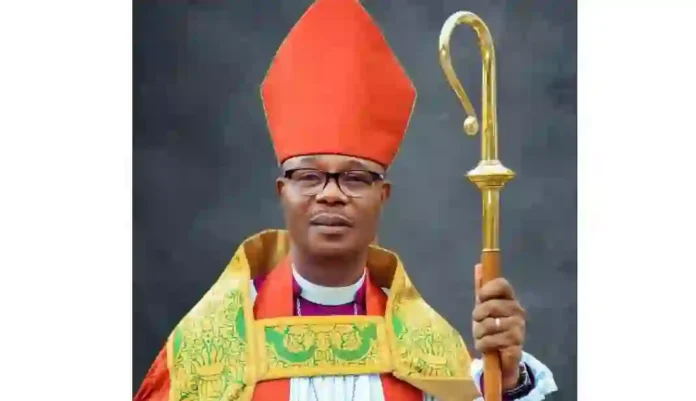
June 1 (THEWILL) — The first session of the 12th Synod of the Anglican Diocese of Mbaise gathered momentum on its third day as the Diocesan Bishop, Rt. Rev. Chamberlain Chinedum Ogunedo, delivered a far-reaching presidential address that blended spiritual reflection, institutional accountability, economic sustainability and a passionate call for justice.
The synod session, which attracted clerics, church leaders, dignitaries and worshippers from across the diocese, witnessed a solemn Holy Communion service, strong participation from guests, and several church activities that underscored the growing relevance of the Anglican communion in community and social development.
Addressing delegates, Bishop Ogunedo turned attention to diocesan companies and institutions, insisting on stronger professionalism, transparency and economic productivity. He disclosed that plans were underway for annual general meetings of diocesan companies, where board members would present their stewardship for scrutiny and evaluation.

According to the bishop, diocesan investments must not merely exist in name but function as productive ventures capable of strengthening the church’s economic base and sustaining its mission.
“We shall soon announce the date for annual meetings where activities of these companies will be thoroughly analysed and appraised”, he said, urging management teams and board members to rise to expectations and deliver positive outcomes.
The bishop also spotlighted the Akpodim Rehabilitation Centre, describing it as one of the diocese’s treasured institutions with a long-standing humanitarian mission, particularly in caring for vulnerable persons and contributing to food security.
He revealed that the centre, in partnership with Diamond Farms Limited under the supervision of Rev. Emmanuel Amechi, had intensified agricultural activities through crop farming, poultry and piggery ventures, yielding encouraging dividends.
Bishop Ogunedo praised parishes for supporting farm work, saying their participation had significantly reduced labour costs while strengthening communal ownership of diocesan projects.
He equally commended medical personnel at the rehabilitation centre, including nurses, matrons and midwives, for their commitment to quality care, though he challenged the management board to further reposition the institution for greater relevance and sustainability.
The presidential address also highlighted the growing impact of the Diocesan Christian Men’s Fellowship (CMF), which the bishop described as an increasingly influential platform for family values, church growth and community development.
He lauded the success of the fellowship’s annual convention and announced that the 2026 Father’s Sunday celebration would feature family-centred programmes, sporting events and other activities designed to strengthen relationships and deepen faith.
For the Diocesan Council of Knights, Bishop Ogunedo acknowledged renewed commitment and spiritual devotion among members, praising the leadership for what he called a proactive and purposeful approach to faith and service. He disclosed that preparations were ongoing for a knighthood vestiture after due screening and approval of candidates.
Youth development featured prominently in the address, as the bishop described the Anglican Youth Fellowship (AYF) as a strategic platform for raising future church leaders.
He applauded youth participation in Bible conferences and leadership programmes, urging young Anglicans to remain rooted in Christian values and inspired by the church’s heritage.
The Anglican Children’s Ministry (ACM) and Boys’ and Girls’ Brigade also received commendation for strengthening spiritual education and discipline among younger members, with the bishop praising chaplains, instructors and coordinators for their commitment to nurturing children in faith.
Yet, beyond institutional reports and commendations, the emotional high point of the bishop’s address came in a deeply reflective sermon challenging Christians to reject religious hypocrisy and embrace justice, sincerity and authentic faith.
Drawing from biblical teachings, Bishop Ogunedo warned against outward religiosity devoid of moral responsibility, insisting that God seeks justice, compassion and truth rather than empty rituals.
Invoking prophetic imagery, he urged believers to “let justice roll like a river,” warning that faith without righteousness risks becoming hollow performance.
The bishop cautioned against using religion as a cover for wrongdoing, stressing that hypocrisy flourishes when faith becomes a tool for personal gain rather than spiritual transformation.
“The hypocrite,” he warned, “is not merely someone who struggles in faith, but one who deliberately uses religion to hide sin and manipulate others.”
Calling for personal repentance and societal renewal, he challenged the faithful to move beyond ceremonial Christianity and embrace lives marked by integrity, accountability and fear of God.
As the synod progresses, delegates say the bishop’s address has set a reflective tone — one that combines administrative reform with spiritual revival while demanding justice, responsibility and renewed commitment from both leaders and worshippers.

