
October 19, (THEWILL) — Despite the highly celebrated tax reform laws recently enacted by the Federal Government, the states and local government councils are not likely to enjoy the benefits that the new system is said to offer.
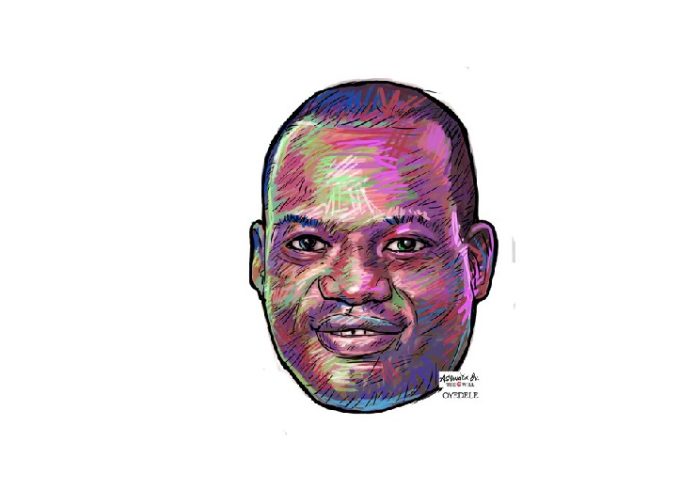
Taiwo Oyedele, Chairman of the Presidential Fiscal Policy and Tax Reform Committee, has said that Nigerians will start enjoying the benefits of the new tax laws beginning from January 2026.
Oyedele, who spoke at the last Nigerian Economic Summit (NES31) in October held in Abuja, said that about 98 per cent of Nigeria’s population will no longer pay the Pay As You Earn (PAYE) tax. Oyedele emphasised that the new tax laws are not targeted at the low-income earners or those at the poverty line.

“From January 2026, you will feel the impact. If you earn a salary, when you are paid your salary at the end of January 2026, for 97- 98 per cent of Nigerians they will either no longer pay PAYE, or they’ll pay less PAYE.
“That is about 33 percent of workers in the public and private sector combined, will no longer pay PAYE, because they will be exempted. The remaining 2 percent plus will pay more,” he said.
Plight of sub-nationals
However, state and local government residents who do not fall into the categories of citizens whom the new tax laws are meant to benefit, have a worrying experience.
They are still writhing on the throes of multiple taxes, excess levies and over-reaching arms of the law created by authorities of these tiers of government. The laws are enforced in the most brutal manner that has been the culture over the years. On a daily basis, these people are confronted with the realities of an abnormal system that is raised to state priority and executed willfully by government agencies without restraint.
The case of Niger
“Even if I sell everything, I can’t pay.” These are words of a distraught resident confronted by government officials on a revenue drive in Suleja, Niger state.
Outrage recently erupted in the state as the government reportedly demanded over N100,000 from individual shop owners under what it described as an ‘Environmental Protection Agency Levy.’
The most recent circular, issued by the Niger State Environmental Protection Agency (NISEPA), was titled “2025 Harmonised Levies,” and directed traders to make payments as part of the state’s new revenue drive.
“The officials came and despite seeing an almost empty shop, they asked that I pay over N100,000 as environmental levy. Even if I sell everything in this shop, I cannot afford to pay the money,” an affected trader lamented.
Another business owner said government officials had presented the same environmental levy document to traders just five months ago, in May, and forcibly collected money from shop owners at that time.
“Earlier, before now, they brought a bill of N24,000 under the guise of the same harmonised environmental protection fee. When we asked them if we would pay another environmental levy, we were told that we would not pay again till 2026. Despite this, they brought a fresh N100,800 levy,” the business owner lamented.
“The government is making doing business very difficult; we have paid not less than five different taxes in four to five months. The painful thing is that they would come and give you a few days’ ultimatum to raise the money and pay, if you do not pay, it is one embarrassment upon the other. We were told that some businesses were even asked to pay N200,000 tax, milking people dry ” another trader said.
In January 2024, the Niger State Government announced the harmonisation of revenue collection to curb multiple taxation by state and local government agencies. The Chairman of the Niger State Internal Revenue Service (NGSIRS), Mohammed Etsu, said the initiative was designed to block leakages and enhance revenue generation across the state.
Despite his claims that “all tax collections will henceforth be done through ICT platforms and point of sale (POS) terminals to give taxpayers the confidence that their monies are going directly into state government coffers,” reports showed that different personnel of the Niger State government, who often harass shop owners, demand cash payments when they come for collection.
Similar practice in other states
Enugu State Governor, Peter Mbah, this year signed into law a bill establishing a one-stop shop for tax collection and administration, towards ending the challenge of multiple taxation in the state.
The new legislation, titled Enugu State Internal Revenue Service (Establishment and Consolidation of Revenue Administration) Law, 2025, also grants autonomy to the state’s revenue agency, enabling it to operate independently without bureaucratic limitations.
“I have had engagements with the business community, organized private sector and market women who consistently expressed concerns about multiple taxation. With this law, we now have one revenue collection point for all taxpayers in the state. This eliminates the confusion and harassment associated with multiple tax collectors,” Mbah said.
However, Gov. Mbah raised the amount paid by shop owners from N5,500 in the previous administration to N35,000 each – an increase of 536.3 percent.
In Anambra State, the residents, particularly Onitsha, the commercial city, cry daily over the embarrassing number of taxes and levies, legal and illegal, imposed on them. They are worried over the violent manner they go about their activities of revenue collection. In Lagos, Chidi Anyanegbu, the chairman of Chisco Transport Ltd, said that multiple taxation is killing Nigeria’s transport sector. In an interview with the News Agency of Nigeria (NAN), Anyanegbu complained that multiple taxation was hitting transporters hard and killing the transport sector.
“Commercial transport operators are finding it difficult to break even, as they have to pay interest on loans borrowed from banks. We pay over 23 different taxes and it is affecting our businesses. The transport business is a business that touches the masses and most of the beneficiaries are the less-privileged and civil servants who earn meagre incomes. This is responsible for the frequent hike in transport fares.”
In Kano, despite the State and Local Government Revenue Administration (Consolidation & Codification Law, 2021) which was meant to unify revenue laws, multiple taxation persists in the markets and other business areas.
In Kaduna, while it operates under a decentralised tax system meant to eliminate multiple taxation and illegal levies introduced by the Kaduna State Internal Revenue Service, residents complain against multiple taxation imposed by the government.
Taraba state, like other Nigerian states, imposes various taxes, but it faces a significant problem with multiple taxation, where individuals and businesses are subject to overlapping and often illegal taxes from multiple government bodies, including the state and local governments.
This issue, which also involves illegal extortions by agents, is prevalent among transporters and small businesses like firewood vendors. In response, the state government is implementing measures such as a new digital tax system, but challenges with enforcement and coordination persist.
Oyedele speaks
Oyedele explained that the constitution empowers the states and local governments to enact revenue laws in their territories and that until a constitutional amendment is effected, the residents will continue to witness the challenge of multiple and illegal taxation.
“These are what we were taught while in school, we are still speaking about it today. The taxes have increased even more. But we must find the will and we must find the commitment as a people to solve that problem once and for all. But bear this in mind. Do not think that by the 1st of January 2026, you will see some of those taxes disappear from the roads. No; because the process involved in eradicating them goes beyond enacting a new tax law.
“A constitutional amendment is required to deal with the challenge of multiple taxation at the subnational level and until that is done, there is nothing we can do at this stage,” Oyedele explained at a recent interactive session with journalists and influencers in Lagos, organized by the Presidential Committee on Fiscal Policy and Tax Reform to explain the implementation of the new tax law.
Bleak outlook
Some stakeholders allege that the illegal revenue collectors are working for some senior government officials. That is the reason, in some states, touts openly operate freely. Even petty traders who display their wares on tables are not left out.
Shop owners in the markets complain too. Tricycle operators had on occasions embarked on protests in some states, against this. Commercial drivers, daily lament that they are at the mercy of the revenue collectors on their various routes.
Game-changer
President Bola Tinubu, in June 2025, signed the four (4) Tax Reform Bills into law. These laws include the Nigeria Tax Act (NTA), the Nigeria Tax Administration Act (NTAA), the Nigeria Revenue Service Act (NRSA) and the Joint Revenue Board Act (JRBA).
The Acts comprehensively overhaul the Nigerian tax landscape to drive economic growth, increase revenue generation, improve the business environment and enhance effective tax administration across the different levels of government.

Sam Diala is a Bloomberg Certified Financial Journalist with over a decade of experience in reporting Business and Economy. He is Business Editor at THEWILL Newspaper, and believes that work, not wishes, creates wealth.
