
April 27, (THEWILL) – Contrary to claims by the authorities, there is an indication that the recent unbundling of the Transmission Company of Nigeria (TCN) into two distinct entities will not alter the lingering energy challenge that has plagued Nigeria for decades – at least in the near future.
Stakeholders and industry experts also affirm that the new nomenclature will be quicker at creating jobs “for the boys” than it will lead to a new phase of life for businesses and an economy that has battled with epileptic energy supply for which Nigeria is notorious in the international community.
DUAL LICENCE
In 2013, the Transmission Company of Nigeria (TCN) was issued two licenses: for electricity transmission and system operations. Since then, the TCN has been saddled with the responsibility of transmitting power across the nation and, also, operating as an independent system operator (“ISO”).

This dual mandate granted the TCN oversight of the national grid and the authority to manage Nigeria’s transmission infrastructure, including substations and transmission lines.
THE UNBUNDLING
On April 30, 2024, the Nigerian Electricity Regulatory Commission (NERC) officially unbundled the Transmission Company of Nigeria (TCN), thereby terminating the existence of the entity called TCN. This process was mandated by the Electricity Act 2023 and resulted in the creation of two distinct entities: the Nigerian Independent System Operator Nigeria Limited (NISO) and the Transmission Service Provider (TSP).
In simple terms, the Independent System Operator (ISO) in Nigeria’s electricity sector manages and controls the entire electricity grid, ensuring reliable and efficient power delivery. It’s like the traffic controller of the electricity system, making sure the right amount of power is delivered to the right places at the right time.
On the other hand, the Transmission Service Provider (TSP), which used to be a unit within the now defunct Transmission Company of Nigeria (TCN) is primarily responsible for building, maintaining, and operating the national electricity transmission network. This includes the transmission lines and substations that carry electricity from power plants to distribution companies.
According to the authorities, the unbundling was intended to improve the efficiency and reliability of the electricity grid. Since then, many commentators have escalated the premise that unbundling of the TCN into NISO and TSP would facilitate improved operational efficiency and grid reliability.
‘POTENTIAL BENEFITS’
The authorities emphasise that the unbundling of TCN into the NISO and TSP presents significant opportunities for Nigeria’s power sector, some of which include operational focus, access to financing, and grid reliability.
“With distinct roles and responsibilities, the NISO can focus solely on system operations, ensuring better coordination, efficiency, and grid stability while the TSP can concentrate on infrastructure development and maintenance, potentially leading to improved overall operational performance.
“The specialised focus of NISO on system operations should significantly enhance grid reliability. Through improved monitoring, proactive maintenance, and optimised operational strategies, the NISO can ensure minimal downtime and disruptions in power supply, thereby improving overall grid reliability,” said the Nigerian Electricity Regulatory Commission (NERC).
THE FLIPSIDE
However, industry experts and insider sources who spoke to THEWILL emphasised that the recent unbundling of TCN which gave effect to the stipulated legal framework under the Electricity Act of 2023, will have little or no impact on the energy efficiency that has eluded Nigeria for many decades.
THEWILL findings showed that both units had operated as divisions under the same TCN management. Inside sources noted, however, that while the TCN held the dual licence of system management and transmission, the underperforming energy sector which has been the bane of Nigeria’s economic development does not have its cure in the unbundling exercise.
“There is so much corruption in the system. It is endemic and pierces through the entire organisation’s setup. The unbundling is not going to impact positively on the shameful underperforming electricity sector, because the problem is not in unbundling or not,” said a top management member of staff who would not want her name published because she does not have the authority to speak on the matter.
The sources maintained that inadequate supply remains the major challenge in the problematic electricity sector. They argued that the generating companies (GenCos) are not producing enough to feed the transmission system for supply to the distribution companies (DisCos).
“The GenCos are complaining of inadequate gas supply. The government seems to lay more emphasis on gas export to earn foreign exchange to address the nation’s mounting debt stock. There is little investment in the power industry and many international oil and gas companies are divesting from the country and relocating to other parts of the continent,” said Engr Caleb Ailemen, a Port Harcourt-based oil and gas operator.
According to Ailemen, “How can a country of over 200 million people depend on 4,000 megawatts of electricity, yet the government is combing the globe for foreign investors as if they do not know that we operate a generator economy, which is antithetical to economic development?”
“Unbundling without expansion in power generation amounts to celebrating business as usual in a different style. That is not what Nigeria needs for now. It would amount to a national embarrassment if, in the next two or three years, we are still celebrating the unbundling of TCN without counting the benefits by way of improved electricity supply.”
‘JOB FOR THE BOYS’
The unbundling of TCN will lead to reorganizing the two new entities and creating new staff positions – to fill occurring vacancies or repositioning the existing employees according to the organisations’ structure.
Insider sources said the employees are already jostling for positions, especially in NISO which manages the revenue of the system, and that powerful lobbying has started from the outside – especially the political class. This is why many people believe that filling the vacancies now would be higher in the list of policy choices of the government than aligning the unbundling exercise with the economic realities of the country.
When asked for comments, the General Manager Public Affairs in the defunct TCN now TSP, Mrs Ndidi Mbah, asked the inquirer to contact the Ministry of Power and the Nigerian Electricity Regulatory Commission (NERC). She noted that the ministry and the commission are the supervising and regulatory authorities to speak on the matter. “They speak for the government and have the right to speak for Nigeria,” she said in a note.
LINGERING LITANY
Nigeria’s underperforming power sector has been characterised by frequent grid collapse over the years. In Nigeria, the national electricity grid has experienced frequent collapses, causing widespread power outages and affecting citizens and businesses.
The grid has collapsed 107 times in the past 10 years. It collapsed 12 times in 2024 and has collapsed two times in 2025 as of March 7, including a string of disturbances leading to a complete shutdown. These collapses result in financial losses for power generation companies and inconvenience for the public.
COUNTING THE COST
In Nigeria, power can account for a significant portion of business operating costs, sometimes reaching up to 40 per cent or even 50 per cent of production costs. Some estimates suggest that up to 60 per cent of operating costs for businesses in Nigeria are attributed to power generation.
This high percentage is due to factors like unstable power supply, reliance on generators, and the costs associated with those generators. Nigerian manufacturers are expressing serious concern about the rising cost of energy, which they say is significantly impacting their production costs and competitiveness.
The Manufacturers Association of Nigeria (MAN) has stated that energy costs, particularly electricity tariffs and fuel prices, can account for a substantial portion of their total operating expenses. These escalating costs are viewed as a major challenge, potentially leading to increased production costs, decreased profit margins, and even business closures.
Power generating companies in Nigeria are experiencing hardship due to a shortage of gas supply, impacting their ability to operate at full capacity and leading to revenue losses. This shortage is a significant issue as many power plants rely on gas for electricity generation. The NERC reports that over 70 per cent of generation companies in Nigeria
depend on gas for production.
Stakeholders and industry experts emphasise that the gas shortage is directly affecting the amount of electricity being generated as many power plants are unable to operate at their full capacity, leading to reduced power output.
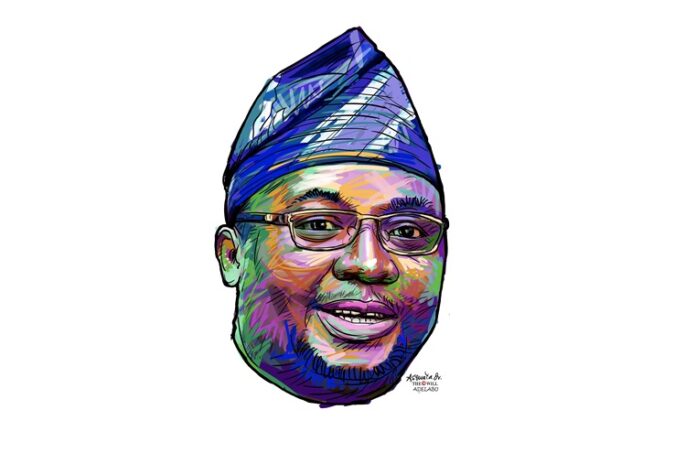
Recently, the Nigeria Labour Congress (NLC) condemned as outrageous the statement credited to Minister of Power, Adebayo Adelabu, claiming that 150 million Nigerians now enjoyed adequate electricity with 5,500MW.
The NLC said it was an insult and a joke taken too far for a government to make such a wild claim in a country that still struggled to generate a meagre and inconsistent 5,000 megawatts—far below the global benchmark of 1,000MW per one million people.
In a statement signed by NLC President Joe Ajaero, the labour movement urged the minister to stop making such unsubstantiated claims, adding that Nigerians are “tired of propaganda and sophisticated gymnastics”.
It said it was disheartening that in the last 12 years of privatisation of the power sector, no significant capacity had been added to the existing facilities.

Sam Diala is a Bloomberg Certified Financial Journalist with over a decade of experience in reporting Business and Economy. He is Business Editor at THEWILL Newspaper, and believes that work, not wishes, creates wealth.
