
November 02, (THEWILL) — When armed men stormed a village in Zamfara State before dawn on 24 September 2025, killing 12 people and abducting 37 others, the attack represented far more than an isolated tragedy. It was one of hundreds of such incidents across Nigeria’s north-west, offering stark evidence of a security crisis that has claimed thousands of lives and displaced millions. Just a few weeks after, President Bola Tinubu announced a complete overhaul of the country’s military leadership, a decision that signals both the scale of the challenge and the urgency of finding solutions that have so far proved elusive.
The changes, ratified by the National Assembly and formalised in a ceremony at the State House in Abuja on October 30, brought an end to the tenure of General Christopher Musa as Chief of Defence Staff, along with his counterparts in the army, navy and air force, all of whom had served since June 2023. Taking their places are Lieutenant-General Olufemi Oluyede as Chief of Defence Staff, Major-General Waidi Shaibu as Chief of Army Staff, Rear Admiral Idi Abbas as Chief of Naval Staff, and Air Vice-Marshal Sunday Kelvin Aneke as Chief of Air Staff. Only Major-General Emmanuel Undiandeye remains in post, retaining his role as Chief of Defence Intelligence, suggesting an intention to maintain continuity in analytical capacity, even as operational command shifts hands.
President Tinubu’s message to the new leadership was direct and unambiguous. Nigerians, he said, demand results rather than excuses and the appointees must dismantle threats decisively. The numbers underline why such bluntness was necessary. Data from the National Human Rights Commission show that at least 2,266 people were killed by bandits or insurgents during the first half of 2025 alone, exceeding the total recorded throughout 2024. This escalation occurs against a backdrop of violence that has persisted for well over a decade, with the Boko Haram uprising now in its 16th year and the broader insecurity having cost thousands of lives and billions in economic damage.

The outgoing leadership under General Musa had begun its tenure with considerable optimism. Musa assumed command promising renewed focus on joint operations and tighter border control. He also acknowledged the scale of the manpower challenge, noting that Nigeria’s population of over 220 million and its vast landmass overwhelmed available security personnel. Early in the year, he declared 2025 would be the period to eliminate banditry and terrorism entirely, emphasising unity among the forces. There were successes, including the reclamation of territories in Borno State and the rescue of over 200 hostages from Boko Haram in Sambisa Forest.
Yet these gains proved insufficient against the rising tide of violence. According to the Armed Conflict Location and Event Data Project, attacks in the north-east increased by 25 per cent in the first half of 2025, compared to the previous year, with Boko Haram’s Jamā’at Ahl as-Sunnah faction and the Islamic State West Africa Province launching near-daily assaults on civilians and military bases. Porous borders facilitated this uptick, with fighters crossing from Cameroon and exploiting gaps in patrols. Musa’s strategy of establishing fortified “super camps” for troops inadvertently left remote villages exposed, allowing insurgents to impose taxes and recruit locally.
The situation in the north-west and north-central geopolitical zones proved equally troubling, where banditry has become intertwined with jihadist elements. Armed groups, numbering over 30,000 fighters according to estimates, have gained control of mining sites for gold and lithium, funding operations that include mass killings. The Soufan Centre documented what it described as a “convergence” in 2025, with bandits adopting ideological ties to groups such as Ansaru, a Boko Haram splinter faction. This shift has enabled more coordinated raids.
Further complexity emerged with the rise of Lakurawa, a group of Fulani herders from Mali and Niger formed around 2010. By mid-2025, Lakurawa had imposed levies on locals and clashed with troops, exploiting strained relations between Nigeria and Niger that halted joint patrols following Niamey’s 2023 coup. The group initially entered Nigeria offering to help local leaders combat bandits, but after driving out some criminal elements it imposed its own version of Islamic law, collected taxes and established control over approximately 500 villages across five local government areas in Sokoto. The fact that Lakurawa operated for years before official recognition in November 2024 raises serious questions about intelligence capabilities and border security.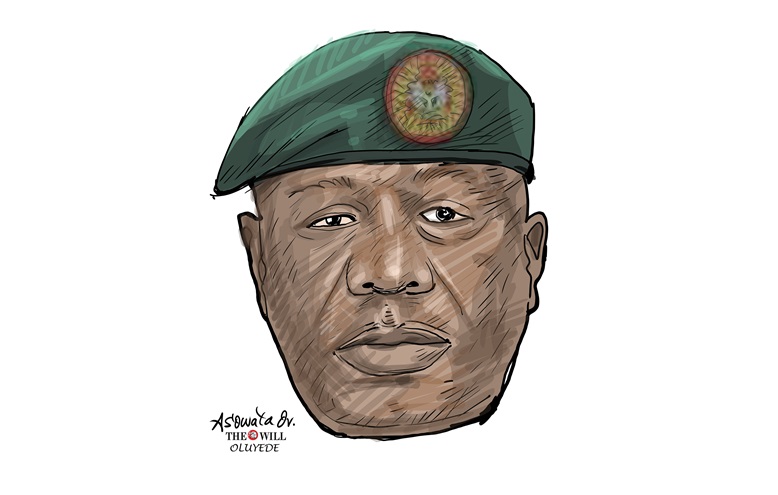
Mass kidnappings of schoolchildren exemplify the human cost of these security failures most vividly. Since the 2014 Chibok abduction by Boko Haram, more than 1,680 students have been kidnapped from Nigerian schools, many between the ages of five and 11. In 2024 alone, Boko Haram abducted people from an internally displaced persons camp in Borno State, whilst Ansaru militants kidnapped students and staff from a Kaduna State school, demanding the sum of N1billion in ransom. These attacks represent systematic assaults on education and community stability, generating fear that has led parents to withdraw children from schools, particularly in the north-east and north-west. According to UNICEF, 66 per cent of all out-of-school children in Nigeria come from these two regions, creating an education deficit that will affect the nation for generations.
The new command structure inherits these formidable challenges but also brings credentials that suggest potential for reform. Oluyede’s extensive infantry experience positions him to prioritise ground intelligence, essential for pre-emptive action against threats such as Lakurawa’s border incursions. His career includes commanding roles in counter-insurgency operations and advanced studies at the National Institute for Policy and Strategic Studies. Shaibu brings operational experience from multiple theatres, having participated in Operations Harmony, Boyona, Lafiya Dole and Hadin Kai, whilst serving as Theatre Commander of the flagship counter-insurgency campaign. Aneke has specifically outlined plans for technology-driven offensive strategies, using unmanned aerial systems to enhance quick response capabilities, reflecting recognition that modern insurgencies require modern solutions.
Beyond individual credentials, the new leadership faces immediate imperatives that will determine whether this represents genuine strategic renewal or merely another rotation of commanders confronting intractable problems. Intelligence-led operations require better surveillance technology and information sharing across agencies, particularly given that insurgent groups such as Lakurawa reportedly use drones to monitor military formations. Border security demands attention beyond military deployment, including enhanced cooperation with neighbouring countries despite political tensions. The breakdown of security cooperation following Niger’s July 2023 coup created gaps that armed groups exploited, demonstrating that security threats do not respect diplomatic disagreements.
Community engagement represents perhaps the most crucial element for lasting success. The fact that communities initially welcomed groups like Lakurawa because they provided protection against bandits demonstrates that government presence was absent or ineffective. Building trust with communities, ensuring their voices influence security strategies and demonstrating that the government can provide safety all require sustained commitment beyond military operations. The reliance on armed groups for protection reveals state failure at its most fundamental level, whilst the commercialisation of kidnapping reflects deeper failures in governance and economic development.
The welfare of military personnel will directly affect operational effectiveness, with reports indicating that more than 1,000 soldiers resigned from the Nigerian Army between 2020 and 2024, pointing to challenges with morale, compensation and working conditions. Troops operating in conflict zones face combat stress, inadequate equipment in some cases and concerns about their families’ welfare. Addressing these human resource challenges whilst maintaining operational tempo will test the new leadership’s capacity to deliver on multiple fronts simultaneously.
Yet, President Tinubu’s directive was explicit, warning that emerging security threats must not be allowed to fester and demanding proactive action. The coming months will reveal whether decisiveness translates into strategic coherence, as the past decade has seen numerous military operations, leadership changes and tactical victories that have not produced lasting security improvements for Nigerian citizens. Terrorism, banditry and kidnapping reflect governance failures, economic distress and social fractures that military force alone cannot repair. Success will depend not only on operational excellence but also on the ability to work within a comprehensive national security framework that addresses root causes whilst protecting communities from immediate threats. For millions of Nigerians who seek nothing more than safety and routine, the question is whether fresh leadership can finally change the daily reality on the ground.