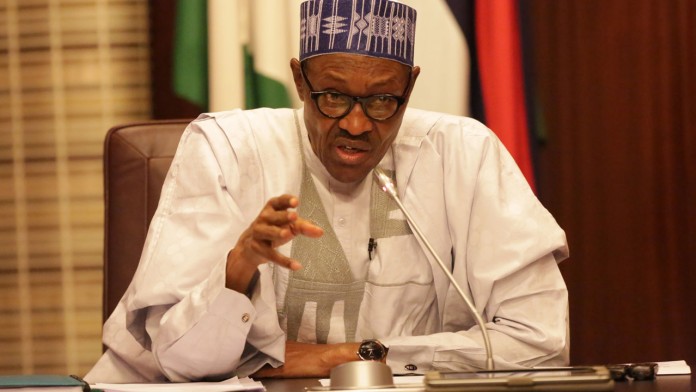
BEVERLY HILLS, July 9, (THEWILL) – Since President Muhammadu Buhari assumed office in May last year, there have been concerns about his choice of appointments into key federal portfolios. The arguments are that those appointed were mainly from the northern part of the country, where he hails from. While the anxieties were earlier considered to be too hasty, there were assurances that the lopsidedness would be addressed with time.
This was reaffirmed by the presidency, which defended those initial appointments to fill what it described as a few kitchen cabinet positions within the presidency, stressing that more appointments would be made to assuage the perceived bias in favour of the north.
Unfortunately, one year after, that assurance has been ridiculed by the number of other appointments made so far, thus reinforcing the anxieties expressed by other geopolitical zones that they are excluded from governance.

These worries are genuine, given that the President was elected courtesy of votes by Nigerians from all the states of the federation. He is therefore not a sectional leader, but President of the Federal Republic of Nigeria, whose Constitution he swore to defend. The lopsidedness has also invalidated the President’s famous declaration at his inauguration where he said: “I belong to everybody and I belong to nobody.”
Apart from the fact that it is a clear breach of the federal character principle as enshrined in the Constitution, it is a gross misfit that only one section of the country is given opportunity to contribute to nation-building.
Curiously, a dangerous religious dimension has been added to it, as a cursory look shows these vital positions were filled by mostly Muslims. It is worrisome, for instance, that personnel in key positions as the Director-General of the Department of State Services (DSS), Minister of Defence, Minister of Internal Affairs, Inspector-General of Police, National Security Adviser, Chairman, Economic and Financial Crimes Commission, among numerous others, are not only northerners but Muslims.
THEWILL roundly condemns the President’s action and remind him that it is not only a breach of the principle of federal character, but that it also widens the lacuna between the north, which is believed to be predominantly Muslim and the South which is believed to be mainly Christian.
The president’s choices of appointments are appalling, dangerous and unrealistic in the face of decades of mutual suspicions between the two divides. More so, the situation has been worsened by the current insecurity challenge posed by the Boko Haram insurgents, Niger Delta militants and the growing agitations for autonomy by some tribes in the south.
We urge the President to make moves towards correcting these anomalies immediately, not just in the spirit of fairness and equity, but because of the secularity of Nigeria as enshrined in the Constitution. Individuals and organizations have faulted these bias appointments as detrimental to the much-needed unity and oneness of the country. The Christian Association of Nigeria, CAN, aver and rightly so, that the nation’s entire security intelligence is concentrated in the hands of the northern Muslims. The fear expressed by CAN that it can be deployed as “instruments of the state to oppress, suppress and intimidate other parts of the nation,” is rife.
Proponents of this theory allege that this trend is already playing out in the prosecution of perceived enemies of government. Some issues in recent times appear to have confirmed this unease. For instance, the Muslim-dominated Federal Government has been accused of giving undue protection to the marauding Fulani herdsmen, despite their atrocities across the nation.
The controversial grazing rights bill currently before the House of Representatives is purportedly aimed at giving bite to this agenda.
THEWILL demands that everything that injects religious bias into governance and government should be expunged completely as they are inimical to Nigeria’s secularity and oneness. Nigeria must not in any way be seen to promote one religion above the other.
However, recent government actions tend to give credibility to suspicions that this government is executing a pro-north and pro-Muslim agenda.
Some days back, criticisms mounted against the decision by the Ministry of Internal Affairs to extend the Eid-el-Fitr public holiday, reportedly in obedience to call by the Sultan of Sokoto. The decision was unmindful of the associated economic losses, at this time of our economic recession.
Earlier in the year, the President led Nigeria to join the Saudi Arabia-led 34-member ISMAT coalition of Muslim countries against terrorism. In his explanation, Nigeria joined it because we have terrorists in our midst, who claim to be Islamic.
Critics have averred that taking this step was capable of creating tension even among Muslims, especially as Saudi Arabia is home to the Sunni Muslims, while Iran leads the Shiites, both of which have had skirmishes in the past.
THEWILL is however encouraged by President Buhari’s explanation in the midst of criticisms, asking, “How can I change the religious identity of Nigeria?” We however insist that until the President matches his words with action(s), his explanation will only remain rhetorical and not assuage heightened fears.
THEWILL respects the views of Muslims, Christians, other religions and tribes and their inalienable rights to fair treatment, but all should be in parity with others in the federating unit called Nigeria.