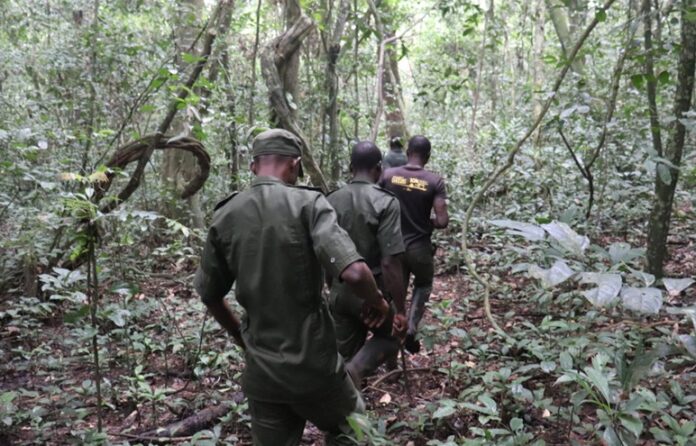
May 18, (THEWILL) – The Federal Government’s decision to recruit 130,000 new forest guards nationwide as part of the ongoing onslaught against insecurity is a most welcome development. Currently, there are 1,129 forest reserves in the country and almost all of them have become dens for terrorists and kidnappers lying in wait for unsuspecting Nigeria travellers, farmers and business persons.
From Kwara State where the new terror outfit Mahmuda has attacked Duruma and Kaiama communities close to forest reserves and the Kainji Lake National Park, which links the state with Niger, to Benue State where Governor Hyacinth Alia recently alerted the security agencies to infiltration of foreign criminal into the state’s forests and Oyo State where the Old Oyo National Park, near the forest reserves, has been identified as haven for criminals, forest reserves have in recent times been taken over by criminals-kidnappers, terrorists and insurgents who daily terrorise Nigerians from these hideouts.
According to the government, following Monday, May 12, 2025 Federal Executive Council meeting, each state will have to recruit between 2,000 and 5,000 forest guards based on their capacity. The Office of the National Security Adviser, Nuhu Ribadu, and Federal Ministry of the Environment will supervise the recruitment and training of the new forest guards.
What is, perhaps, gladdening about the directive is that apart from increasing the numbers, the new recruits will be properly trained and armed for combat readiness. 11 states are known to be operating a lower scale of forest reserve or forest ranger’ outfit, but the new federal government directive will not only added fire power to the existing structure but also ensure proper coordination and sustainability.
We hope that sufficient time and proper study has been made by both the state and federal government since the February 2024 meeting between the President and the governors, when the agreement was reached to recruit forest rangers and invest in their training and arming.
According to the Minister of Information, Mohammed Idris, who briefed State House correspondents after that February meeting over a year ago, the President asked the governors to discuss the issue of forest guards further at the state level.
Traditional leaders, community leaders and security agencies will; be involved in the recruitment process.
Interestingly, the Senate on Thursday, four days after the federal government directive on forest guard, urged President Bola Tinubu to urgently sign the Nigerian Forest Security Service (Establishment) Bill, 2025, into law.
The bill, which was recently passed by the National Assembly, is currently awaiting presidential assent.

According to the senior lawmakers, signing the bill into law would significantly enhance efforts to tackle insecurity, especially in rural and forested areas prone to criminal activities.
The Senate also called for a security intervention in unsafe communities, noting that the Forest Security Bill could be amended to accommodate the government’s proposed Forest Guard initiative, aimed at combating insecurity in forest zones.
The Senate emphasized that swift presidential assent to the Forest Security Bill would provide a legal framework to bolster security efforts and protect communities vulnerable to banditry and kidnappings.
This move will definitely involve the communities to an extent. This is crucial to the success of the new initiative because the recruits will be native to their environment; the traditional and community leaders and their people will be able to detect and fish out strange elements in their midst, thereby enhancing the intelligence gathering capacity of the security agencies.
This new addition to the forces fighting the terrorists will boost and strengthen the currently overstretched armed forces, which had made the gains of every battle appear lost and in effect dampened the morale of the troops.
In the long run the armed forces will be able to conserve their men and concentrate on long drawn out war against the enemy.