November 11, (THEWILL) – About 17 years since the beginning of the Boko Haram insurgency in Nigeria, the country, particularly the North-East, has not known peace. Thousands of innocent and law-abiding citizens have lost their lives, families have been displaced and property valued at several millions of naira have been destroyed.
While the Federal Government and the military focused on ridding the country of this menace, committing available resources at their disposal to fighting the insurgents, Nigerians suddenly found themselves at the mercy of armed bandits whose sole purpose seemed to be to kidnap for ransom and to plunder.
The activities of these bandits, most of who turned out to be foreign mercenaries that had infiltrated the country through its porous borders, added another dimension to terrorism. Suffice it to add that, sadly, bandits have become quite audacious and now bestride the Nigerian landscape like giants. They have taken over the forests, from where they launch deadly attacks on local communities, killing at will and kidnapping for ransom.

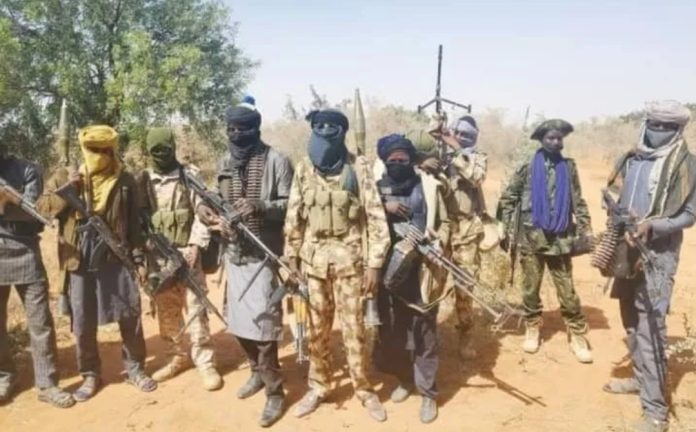
As if to worsen the situation and deepen the collective misery of millions of Nigerians, last Friday, the nation woke up to an announcement by the military that a new terrorist group known as the Lukarawas had started operating in the country.
The Director, Defence Media Operations, Major-General Edward Buba, made this revelation.
According to Buba, Lukarawas is linked with the jihadist group, the Islamic State (ISIS). It originated from neighbouring Republic of Niger and relocated to some forests around Sokoto and Kebbi States where its members are currently hiding.
Just a few days ago, Lukarawas reportedly attacked a town in Augie Local Government Area of Kebbi State, killing 15 residents and rustling about 100 cattle.
The terrorists, it is claimed, do not speak Fulani or any other Nigerian language, except Tuareg, Arabic, French and some English. They arrived in Nigeria after the last military coup in Niger, taking advantage of the lull in cooperation between Niger and Nigeria on security to make incursions into some remote and ungoverned parts of some North-West states to carry out their activities.
Additional reports say the group is currently engaging in a recruitment drive among the locals in the communities in Sokoto and Kebbi States, using money as incentives. This is exactly how Boko Haram got its initial recruits in the North-East.
The terrorists have become so bold as to demand payment of tax from the members of the communities. More disturbing is the ease with which they relocated their activities to Nigeria without being noticed or challenged by the security forces.
Although Gen Buba appeared to blame this on the initial warm reception from the unsuspecting members of the communities in Sokoto and Kebbi, it underscores the Federal Government’s lack of seriousness in the fight against terrorism.
Bubba’s claim that the group took advantage of the break in cooperation between Nigeria and its neighbour to secure their mutual borders from terrorist activities suggests that the security forces allowed themselves to be distracted from such a sensitive objective.
Security is very serious business. Fighting insecurity, especially the type that threatens the survival of any country, is a sacred task that must be accomplished.
What happened to intelligence? How come there was no intelligence report to alert the country to the presence and activities of the terrorists before the attack that claimed 15 lives in Kebbi?
The subtle attempt by the military, as reflected in Buba’s statement, to put the blame on the local communities for initially accommodating the terrorist instead of reporting them to the relevant authority, says a lot about a break in communication with the grassroots and a lack of proper orientation on the fight against terrorism.
The military and other security agencies ought to understand that no campaign can be successful without the involvement of the locals. The rural folk should be carried along every step of the way.
Although the Nigerian military has recorded some success in the war against terrorism and its efforts are commendable, yet it has not succeeded in flushing out Boko Haram, I SWAP and ANSARU, despite billions of naira committed into funding the war.
Lukarawas poses a fresh and serious challenge that must be tackled urgently. Nigerians are waiting.