June 30, (THEWILL) – SAM DIALA x-rays how Nigeria’s equities market hit over N29 trillion capitalisation – the highest in 61 years – amid economic downturn, and the implications.
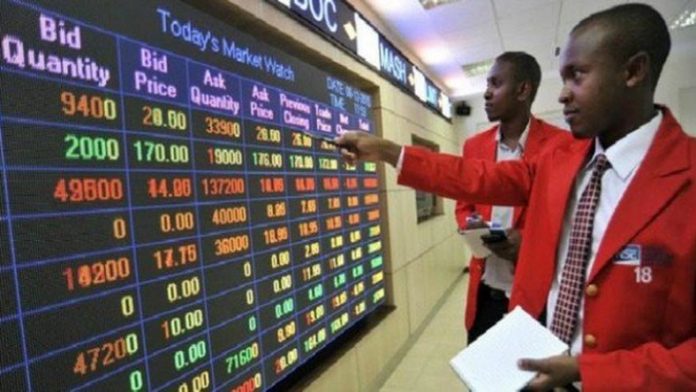
The Nigerian Stock Exchange (now the Nigerian Exchange) hit the peak of its growth on Friday, May 27, 2022 when it recorded a market capitalization of N29.15 trillion and an All-Share Index (ASI) of 54,085.30. It was a historic performance being the highest since the birth of the establishment in 1961. Secondly, the Exchange achieved this feat amid a downturn that saw the economy hemorrhaging from severe headwinds occasioned by high cost of diesel and aviation fuel and high spate of insecurity.
The gloomy state
During this period, the inflation rate which had surged to 19.64 percent in June, its highest level in more than 16 years, had put a damper on investment returns. The Naira had depreciated to an all-time low of N420/USS1 dollar at the official market and worse at the parallel market where it dipped to N700/US$1. With a frightening rate of business closures (50 companies shut down over forex, power crises as at June 2022 according to Manufacturing Association of Nigeria) the unemployment rate at 33 percent became an added woe.

Furthermore, the steep decline in foreign investment inflow which hit the economy in the wake of COVID-19 seemed unabated. Foreign investment inflow declined by 20.9 percent to $757 million according to data by the National Bureau of Statistics (NBS). Foreign investment inflow as reported by the Nigerian Exchange Group also declined by 79.5 percent to N13.7 billion in July 2022, from N24.6 billion the previous month, the lowest since January this year when it was N18 billion.
Experts attribute the decline in investment inflow to a loss of confidence in the Nigerian foreign exchange market due to persistent illiquidity. Only recently, the Central Bank of Nigeria (CBN) announced the release of $265 million out of the $464 million trapped funds to the foreign carriers which could not repatriate their backlog of ticket sales due to foreign exchange scarcity. Nigeria’s foreign reserves have dropped by 40.8 percent to N38.4 billion in August 2008 as shown by the CBN’s foreign reserves data.
Similarly, the country’s Excess Crude Account (ECA) created as the country’s rainy day fund, which stood at over $2 billion in 2015 when the President Muhammadu Buhari-led administration was inaugurated, has dropped to $376.66 million. This was despite the fact that crude oil prices consistently exceeded the benchmark oil price of the budget.
Nigeria’s foreign exchange crisis is worsened by a combination of huge oil theft estimated at 400,000 barrel per day and under-production (1.2 million as against OPEC’s production quota of 1.8 million per day). A bitter dimension is that NNPC Limited which stands as the nation’s cash cow, has made zero remittance to the Federation Accounts Allocation Committee (FAAC) since January as a result of using the proceeds of crude oil sales to pay for petrol subsidy. The government revealed recently that it spends N2.8 billion on petrol subsidy daily.
Thriving in Anomalies
Amid the frightening socio-economic scenario, Nigeria’s stocks emerge Africa’s best performers, yielding 24 percent returns to beat market expectations at the peak of the growth in the second quarter of 2022. This was when it recorded the highest market capitalisation of N29.15 trillion.
Investigation revealed that Nigerian stocks have rewarded local investors with the highest returns among other African stocks this year according to a report by Financial Times, especially in the premium stocks which yielded three-fold returns.
According to Bloomberg data, some of the companies spurring the stock market rally to create the largest returns in eight years include Meyer Plc, a Lagos-based paint maker which returned 552 percent in half a year. That implies that an investor who staked N1 million in Mayer Plc’s shares at the beginning of the year would have made an extra N5.52 million as at the end of May.
Other companies leading the bullish rally included Guinness Nigeria Plc, Wema Bank and palm oil maker, Presco Plc all of which rewarded their investors with double the their investment within five months. Another major market shaker is MTN Nigeria which returned over 30 percent, exciting news for those who took the risk to partake in the firm’s initial purchase offer (IPO) last year.
“We are only five months into the year and the stock market is already running ahead of our full-year estimate of a 16 percent return,” Tajudeen Ibrahim, director of research at an investment bank, Chapel Hill Denham, had said.
Many observers are perplexed over the unusually bullish trend that earned Nigeria the best performing stock exchange in Africa amid unfavourable business environment. By conventional wisdom, the stock market is a barometer of the economy. As an important component of a country’s economic and financial set-up, stock markets reflect and mirror the conditions of an economy at a given time. They are termed “barometer” because changes in the stock market index are indicative of the concurrent changes in the economy.
How then did Nigeria’s equities market hit the highest peak in its 61 years of existence by the end of May 2022 when the people and businesses were lamenting over a very challenging environment?
“It is a positive anomaly,” said Patrick Ikekhide, a stock broker. Ikekhide told THEWILL that the economy was awash with idle cash that could not find the right investment platform because of the poor macroeconomic environment. “There is money, but no one wants to invest to lose because this is a very bad time to go into the real sector investment as all indices work against such a decision,” Ikehide argued.
Among the reasons for the “floating” cash was the accommodative monetary policy by the CBN at the time when benchmark interest rate was left at 11.5 percent for two years despite rising inflation. There was a sudden bullish trend created by the exodus of investors from the low interest environment of the fixed income market to the equities market.
The Nigerian government had ‘decreed’ low-yield returns for the T-Bills and Bonds instruments which was aimed to discourage the influx of investors to the safe haven of the fixed income market incubating idle assets. The government believed it could stimulate the real sector by ‘starving’ the fixed income market of funds so as to boost the equity market where long-term funds exist. The sustained Central Bank of Nigeria (CBN) dovish position spurred a rally in the equities market which provided haven for investors fleeing low T-Bill and Bond yields. So, the equities market witnessed an influx of investors on pilgrimage who could also be described as bargain hunters in exile
The benchmark interest rate has been hiked to 14 percent as of July 2022, and the government has begun to increase the interest rate in the fixed income market such as Bonds and Treasury Bills. The CBN has also directed banks to increase interest on their savings deposit to four percent as against the two percent that had existed. This confirms the position of analysts who predicted that the unusual rally witnessed in the equities market in May was going to be temporary.
“The bubble will burst as we move into the second half of the year because that unusual rally was not sustainable for two main reasons: There were no real sector investments and foreign direct investments had virtually dried up. Secondly, the government will increase its domestic borrowing. To achieve that, it has to raise the yield to make it attractive for people to invest,” said Paul Uzum, a stockbroker.
Another reason was that the period coincided with the earning season when companies release their results and investors take position for dividend earnings before deciding on whether to remain or to move ahead with their investments. Uzum said that the recovery by many companies from the COVID-19 and from the effects of the 15 months border closure created a boom time for the market and provided cash that investors needed to move to the capital market.
The next factor that led to the stock market quantum leap in May 2022 was the palpable ‘frustration’ of foreign investors who could not access foreign exchange (forex) to repatriate their profits or import raw materials. They “had no better choice than to reinvest in the stock market”, said Uche Uwaleke, Professor of Capital Market at Nasarawa State University. Evidently, the biting forex scarcity discouraged investments even in the real sector.
Reports showed that manufacturers and other businesses relied more on the unofficial forex market to fund their operations which ate into their earnings. Some manufacturers who benefited from the CBN COVID-19 intervention funds lamented over their inability to source forex to bring in the required machinery for their operations. The safest way to go is the equities market.
Doyen of Stockbrokers, Sam Ndata, said the pre-election season is awash with cash and politicians push a lot of money into the equities market. “This is election season; it is usual at this time for politicians to push their idle funds into the equities market and to gradually exit with time. He noted that the depreciation of the Naira and inflationary trends have created a situation where too much Naira is available but with less value compared with last year.
Underlying Implications
The historic development in Nigeria’s financial services industry points to one fact: Nigeria runs a public sector-driven economy which, sadly, crowds out the private sector – the engine of economic development. The ‘growth’ in the equity market was the outcome of ‘Caesar’s’ command. It was an uncommon phenomenon not expected to assume an immutable stance.
Conventionally, capital does not obey the command of dictatorship. You do not decree the route that capital should stick to. Naturally, money works for whoever employs it the efficient way. When you decree on the route that capital must follow, be sure that it will ultimately make a detour to find the suitable course.
According to Benjamin Disraell, there can be no economy where there is no efficiency. For the government to borrow at 0.1 percent in T-Bills and Bond and ‘push’ investors to the equity market smacks of inefficiency; it mirrors no wealth-creating fundamentals in the first place.
Institutional investors such as Pension Fund Administrators who are the major ‘movers and shakers’ of the stock market rally that created the “irrational resurgence” of the equity market will, naturally, ‘amend their ways’. They have now staged a vigorous comeback to the fixed income market with the excitement of captives returning from exile.
Enters Moment of Reality
Stakeholders have predicted that a bust of the bullish stock market would occur later in the year. This is because the May 2022 rally was not a creation of strong fundamentals. In the government’s unbridled bid for borrowing, experts predict early reversal in the government’s low interest policy. This has shown in both the T-Bill and Bond sale programmes published earlier in 2021. “Government is already returning to the fixed income market for borrowing; so, we expect a bust any time soon”, said Uzum, suggesting that the recent stock market rally was a hanging object.
“What is not in doubt is that given the bullish behaviour of the stock market which can be likened to a tide that lifted some stocks beyond their intrinsic values, the stock market will pull back [decline] this year. I expect some sort of market correction since the conditions that pushed up the stock prices (especially low interest rate environment) are likely to reverse,” Prof. Uwaleke said in a note to THEWILL.

Sam Diala is a Bloomberg Certified Financial Journalist with over a decade of experience in reporting Business and Economy. He is Business Editor at THEWILL Newspaper, and believes that work, not wishes, creates wealth.