July 20, (THEWILL) — Former presidential spokesman Femi Adesina sparked national debate with his assertion that if the late President Buhari had depended on Nigerian hospitals, “He could have long been dead,” because “There may not be the expertise needed in the country.”
Adesina further noted that Buhari’s preference for London medical care pre-dated his presidency and was, in his view, a medical necessity rather than a luxury. The irony lies in the fact that Buhari, like many of his predecessors, as well as state governors, invested little in building domestic healthcare capacity till date.
Nigeria’s health system has long suffered from inadequate funding, poor infrastructure and an exodus of medical professionals. In 2019, government spending on health reached only 3.7 per cent of gross domestic product, well below the World Health Organisation’s recommended minimum of 5 per cent. With such low investment, public hospitals often lack power, functional laboratories, diagnostic equipment and basic amenities, such as ventilators. It is little wonder that the country’s leaders and the affluent choose to seek medical treatment abroad and they are often treated by Nigerian trained medical personnel who migrated abroad in search of better opportunities.

Millions of dollars leave Nigeria every year for health services overseas. In 2022 alone, Nigerians spent over $1 billion on medical tourism. Beyond personal budgets this trend has a profound national cost. The Mo Ibrahim Foundation estimates it costs between $21,000 and $51,000 to train a medical doctor in Africa. Since 2010, the country has lost more than $2 billion in training costs alone, with over half of the doctors registered with the Medical and Dental Council practising abroad. Nigeria’s doctor-to-patient ratio stands at one doctor for 5,000 patients, falling far short of the WHO benchmark of 1:600.
The scale of medical migration is staggering. Between 2016 and 2018 more than 9,000 Nigerian doctors moved to the United Kingdom. Around 40,000 Nigerian-trained doctors are practising abroad, including 4,000 in the United States and 8,000 in the United Kingdom. Almost half of licensed Nigerian medical doctors have emigrated, triggering a critical shortage.
The consequences of this exodus are dire. Rural communities frequently endure a single doctor serving over 20,000 people, while urban tertiary institutions struggle with overworked staff and limited equipment. The void created by outward migration is not merely quantitative but qualitative. Many Nigerians seek routine check-ups overseas, while others travel for more complex care such as heart surgery or cancer treatment. Among these patients are influential public officials. Yet within the destination countries, Nigerian doctors are routinely among the most qualified, trusted and accomplished.
It saddens me that a country that used to play host to foreign medical tourists in the 1960s, including the powerful Saudi Royal Family has destroyed its healthcare system through neglect, corruption and poor leadership.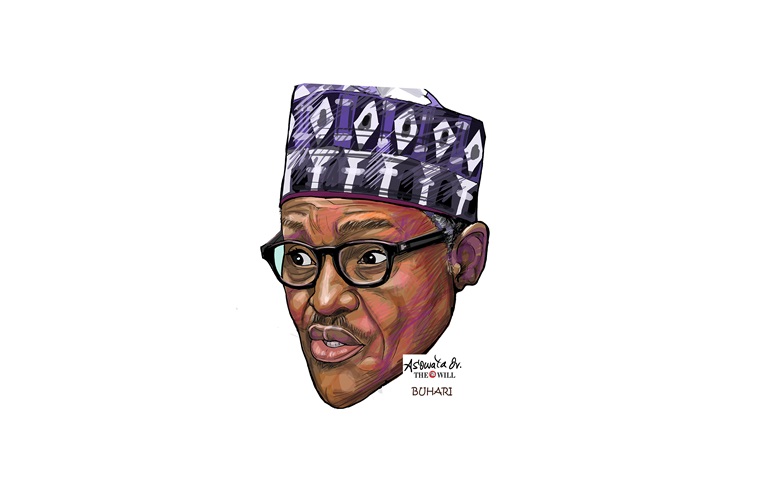
It is painful to note that these same Nigerian political leaders who now travel abroad for care remain in government at federal and state levels but take no action to strengthen the domestic systems. The failure to build a world-class hospital with well-remunerated staff and modern infrastructure is not for want of resources alone but it reflects misplaced political priorities.
There is also an economic distortion. Billions of Naira drain out of public finance via government-funded medical trips for top officials, including former top officials – Presidents, Vice Presidents, Governors, Deputy Governors, et al.
That money might better improve local hospitals. Instead, it fuels a medical tourist trade that benefits foreign health systems. It as a self-reinforcing cycle: Weak domestic care drives foreign travel, which further reduces investment in public hospitals.
This stands in stark contrast to South Africa, where high-level investment enabled late ex-President Nelson Mandela to receive world-standard care in Johannesburg or at home, even into his 90s. During hospital stays for pneumonia or gallstones he was discharged to home-based high care, with a medical team giving him care in his own residence. His example shows that investing in domestic health infrastructure benefits society broadly and allows citizens, including former leaders, to receive care domestically.
South Africa’s system allows underlying benefits to cascade. A robust healthcare system and strong tertiary institutions can support all citizens, not only leaders. That does not require endless funding. It demands clear leadership, accountability and willingness to empower domestic professionals now, not after office.
In Nigeria, the cycle continues. Funds are channelled abroad, domestic hospitals deteriorate, professionals emigrate, citizens lose confidence and leaders grow more willing to fly out for even routine check-ups. This spiral has persisted across successive administrations at national and sub-national levels.
The core problem lies in the political ecosystem. Because the electoral system fails to reliably express the will of the people, public office is often detached from accountability. Officials invest in self-interest or foreign healthcare rather than in domestic institutions that would serve the electorate. That will only change when votes count and public office carries genuine consequences.
If elections were free and votes were honestly counted, political candidates would have to show results, whether in roads, schools or hospitals, to retain power. Medical tourism for the few would end and domestic health capacity will become a symbol of competence.
Mandela never had to leave his country for the best medical care. Nigeria’s leaders insist on doing so. That refusal is shameful. Are they even thinking about the national security implications for the country in allowing foreigners to gain access to our president, vice president, governors, top officials and obtaining their medical records? This is troubling!
We must wake up from our trance in this country now and begin to fix the problems with the urgency they deserve.