April 17, (THEWILL) – President Bola Tinubu has approved the release of N15 billion as part of a proactive disaster response strategy to mitigate the anticipated impact of heavy flooding across the country.
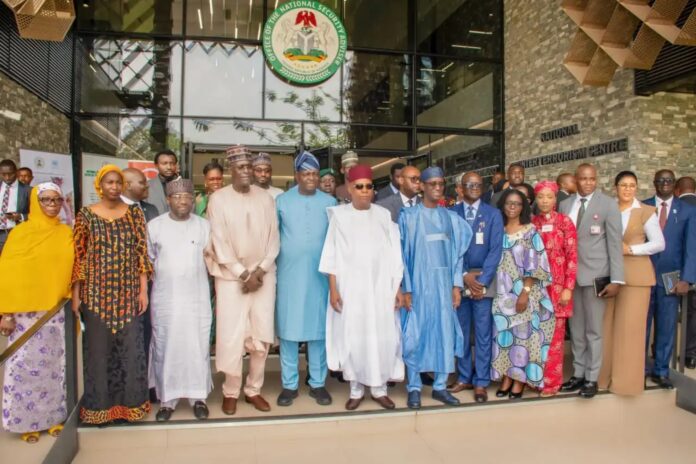
Vice President Kashim Shettima announced the approval on Wednesday at the Validation Workshop for the Anticipatory Action Framework for Nigeria, held at the National Counter Terrorism Centre, Office of the National Security Adviser (ONSA) in Abuja.
This development comes amid warnings by the Federal Government that 30 states, including the Federal Capital Territory, are at high risk of severe flooding this year.

The states identified include Abia, Adamawa, Akwa Ibom, Anambra, Bauchi, Bayelsa, Benue, Borno, Cross River, Delta, Ebonyi, Edo, Gombe, Imo, Jigawa, Kebbi, Kogi, Kwara, Lagos, Nasarawa, Niger, Ogun, Ondo, Osun, Oyo, Rivers, Sokoto, Taraba, Yobe, and Zamfara.
According to Shettima, the N15 billion intervention is intended to reduce the adverse effects of expected floods during the rainy season, which could place no fewer than 15 million Nigerians at significant risk.
He stressed the importance of early warning systems, pre-arranged financing, and community-driven preparedness, describing them as the three pillars of the new Anticipatory Action Framework.
“For decades, our response to floods and other climate-induced disasters has been reactive. We wait for the waters to rise, for homes to vanish, and then we scramble for relief. This late arrival of support costs more and saves fewer lives,” Shettima said.
“Our Anticipatory Action Framework is based on early warning systems powered by satellite technology, pre-triggered financing to ensure funds are ready before the storm hits, and localised preparedness that empowers communities as frontline responders,” he added.
The Vice President revealed that a trigger group, comprising the Nigerian Meteorological Agency (NiMet), Nigeria Hydrological Services Agency (NiHSA), National Emergency Management Agency (NEMA), National Space Research and Development Agency (NASRDA), National Orientation Agency (NOA), and development partners such as the United Nations Office for the Coordination of Humanitarian Affairs (UNOCHA), World Food Programme (WFP), Food and Agriculture Organization (FAO), and the International Federation of Red Cross (IFRC), will be responsible for synthesising real-time meteorological and hydrological data to enable flood forecasts 10 to 14 days in advance.

Felix Ifijeh is a journalist with years of professional reporting experience. Known for his keen news sense, compelling storytelling and commitment to accurate, impactful reporting, he has built a reputation for turning leads into clear, engaging, and well-structured reports that resonate with readers. His work reflects deep newsroom experience and a commitment to accurate, impactful journalism.