
-
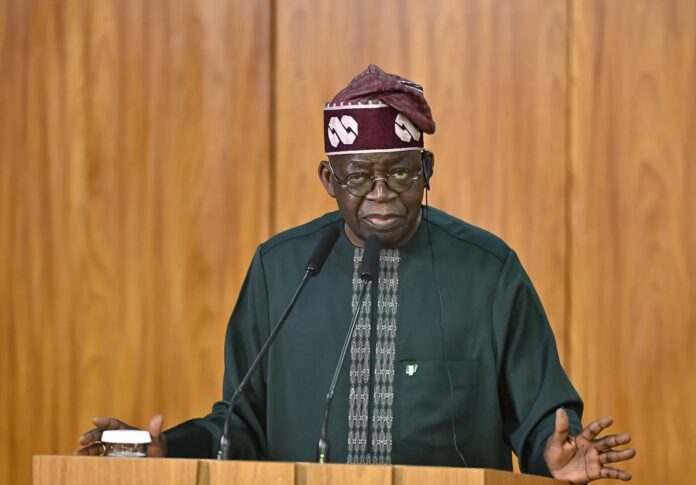
President Tinubu dissolves the Presidential Implementation Committee (PIC) after over two decades of overseeing the sale and lease of Federal Government properties.
-
The Presidency says the committee exceeded its original mandate, leading to multiple litigations and making its continued existence unjustifiable.
-
Attorney General of the Federation, Prince Lateef Fagbemi (SAN), assumes responsibility for all outstanding matters relating to the disposal of Federal Government assets.
-
Former PIC Secretary, B.S. Dutsin-Ma, ordered to immediately cease acting on behalf of the dissolved committee or the Federal Government on matters connected to its activities.
July 30, (THEWILL) — President Bola Tinubu has approved the immediate dissolution of the Presidential Implementation Committee (PIC) on the Alienation of Federal Government Properties, ending the operations of a committee that has supervised the disposal, lease, and monetisation of Federal Government assets for more than two decades.
The Presidency said the decision followed a comprehensive review of the committee’s operations, which revealed that it had outlived the mandate for which it was established and had become entangled in numerous legal disputes across the country.
THEWILL reports that the dissolution, announced on Thursday in a statement by the Special Adviser to the President on Information and Strategy, Bayo Onanuga, also transfers all responsibilities relating to the committee’s activities to the Attorney General of the Federation and Minister of Justice, Prince Lateef Fagbemi (SAN), with immediate effect from November 5, 2025.

The move is expected to centralise the management of all pending issues relating to the sale, lease, and alienation of Federal Government properties under the supervision of the nation’s chief law officer.
Explaining the rationale for the decision, the Presidency said the committee had gradually strayed beyond the responsibilities for which it was originally established, creating administrative complications and exposing the Federal Government to widespread litigation.
According to the statement, the government concluded that the committee’s continued existence could no longer be justified after assessing its current operations and legal implications.
“After careful consideration, the Government has noted that the activities of the PIC had extended beyond its original mandate, resulting in multiple litigations across the country, and the continued existence of the Committee is no longer justified,” the statement read.
Consequently, President Tinubu directed that the Attorney General of the Federation should immediately coordinate all matters relating to the committee, including ongoing transactions and legal issues arising from its activities.
The Presidency also directed the committee’s former Secretary, B. S. Dutsin-Ma, to immediately cease representing either the dissolved committee or the Federal Government in any matter connected with the committee’s former responsibilities.
“Following the President’s directive, the PIC stands dissolved, and the erstwhile Secretary, B. S. Dutsin-Ma, is hereby further directed to cease acting on behalf of the committee and the Federal Government on related matters,” the statement added.
The directive effectively strips the committee of any authority to continue handling Federal Government property transactions or intervene in ongoing disputes linked to its previous operations.
Committee Created Under Obasanjo’s Monetisation Policy
The Presidential Implementation Committee was established in 2000 during the administration of former President Olusegun Obasanjo as part of the Federal Government’s monetisation policy designed to dispose of surplus government assets, reduce the cost of governance, and promote more efficient management of public property.
The committee was responsible for supervising the sale, lease, and transfer of Federal Government landed assets across the country.
Its membership comprised the then Minister of Housing as chairperson, representatives of the Federal Ministries of Transportation, Justice, Health, and Agriculture, as well as the Nigeria Police Force. Professor P. T. Ahire, then a Deputy Director in the Office of the Secretary to the Government of the Federation, served as the pioneer secretary.
The Presidency recalled that the Federal Executive Council (FEC), on March 22, 2001, approved the establishment of a Panel of Inquiry to examine issues surrounding the implementation of the monetisation programme and prepare a White Paper to guide government action. The panel reportedly spent 21 months before submitting its report.
Over the ye,ars, the committee handled numerous transactions involving Federal Government residential and commercial properties, including sales, leases and transfers to public officials and private individuals.
However, several of those transactions later became subjects of ownership disputes, court cases, and competing claims in different jurisdictions.
The Tinubu administration believes that transferring all outstanding matters to the Office of the Attorney General will strengthen legal oversight, improve accountability in the management of Federal Government assets, and provide a unified framework for resolving pending disputes arising from the committee’s activities.
The dissolution also represents another step in the administration’s broader efforts to streamline governance structures, eliminate overlapping responsibilities among government bodies, and reinforce institutional accountability in the management of public assets.
Felix Ifijeh is a journalist with years of professional reporting experience. Known for his keen news sense, compelling storytelling and commitment to accurate, impactful reporting, he has built a reputation for turning leads into clear, engaging, and well-structured reports that resonate with readers. His work reflects deep newsroom experience and a commitment to accurate, impactful journalism.
