
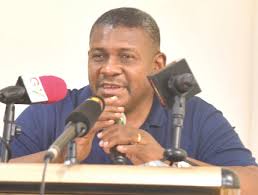
July 14, (THEWILL) — Dr Tony Luka-Elumelu, the Director of Private Sector at the ECOWAS Commission, has said that tourism holds the key to Africa’s integration, economic growth, and cultural preservation. In an exclusive interview with Berexnews, Luka-Elumelu urged regional stakeholders to move beyond seeing tourism merely as leisure and instead embrace it as a strategic engine of development and unity.
He described mobility as deeply embedded in African identity, noting that people in the region have always moved, for trade, family, refuge, or celebration, long before colonial borders were imposed. He argued that tourism offers a formal structure to this ancestral movement, while also safeguarding a heritage under threat.
“Movement has always defined us. Across Benin, Togo, and Nigeria, we share language, food, and cultural values. So why should such people face barriers in visiting one another? Tourism is cultural exchange; it is unity in motion.”

Luka-Elumelu criticised the use of security concerns as a blanket excuse to restrict movement. While acknowledging the need for safety, he insisted that such issues be addressed by the appropriate authorities, not at the cost of regional integration. He advocated for structured, responsible travel through regional festivals, packaged tours, and cultural initiatives that keep value circulating within the continent.
The ECOWAS Commission, he said, has made deliberate efforts to support regional tourism, notably through the ECOTOUR Policy, which provides a legal framework for member states. One key achievement, he noted, is the harmonisation of hotel classifications across the bloc to ensure consistency in hospitality standards.
“A four-star hotel in Ghana should meet the same benchmark as one in Nigeria. The same applies to ecolodges and guesthouses.”
However, he warned that policies without implementation were ineffective, describing enforcement as the region’s greatest weakness. While the ECOWAS Protocol on Free Movement was adopted as far back as 1979, illegal fees, harassment, and poor border attitudes still undermine its goals.
Recalling his early years as an immigration officer, Luka-Elumelu said border crossings were once simpler. “The legal instruments are intact, but implementation has been weakened by poor leadership and corruption.” He also blamed the proliferation of non-state actors posing as officials and disrupting legitimate travel.
He disclosed that the Commission is currently working to simplify travel within the region through new initiatives. These include biometric identity cards to replace passports and a regional COVID digital certificate to harmonise public health entry requirements. More ambitiously, ECOWAS is advocating for a single tourist visa that would grant access to all member states, a proposal that will require significant political commitment.
Beyond policies, Luka-Elumelu said the Commission is investing in people. He highlighted support for tourism entrepreneurs, especially small and medium-sized enterprises (SMEs), through funding access, a regional Coalition of SMEs, and investment promotion agencies.
He cited the ECOWAS MSME Charter as a guiding framework, particularly its support for women-owned businesses and tax incentives. Yet, he stressed that national governments must take responsibility for enforcement and implementation.
He urged African governments to reposition tourism as a gateway to investment, pointing out that many investors first arrive as tourists before committing capital.
“If you downplay tourism, you push away investment,” he said.
Dr Luka-Elumelu also challenged the narrative of “off-season” tourism. He encouraged countries to look inward and promote intra-African tourism, which, according to him, can thrive year-round by showcasing culture, nature, and people to neighbouring travellers.
On the future of West African tourism over the next decade, he was optimistic. He observed that public perception is gradually shifting, with more Africans now showing interest in exploring destinations within the continent rather than prioritising Europe or North America. He credited digital technology, artificial intelligence, and social media for the change, but insisted that nothing beats word of mouth.
“When a traveller enjoys Ghana, Nigeria, or The Gambia, they go home and influence others. That is how movements start. That is how destinations grow”, he said.
Despite the optimism, he acknowledged persistent infrastructural challenges, especially in transportation, electricity, and road access to tourist sites. But he maintained that solutions will not come from the government alone.
“We need private sector investment, community ownership, and a strong media presence”, he noted.
According to him, media visibility is central to tourism growth. “You cannot do tourism in silence. If you light a candle and hide it under a bed, it may give light, but it could also burn the house down,” he warned.
Luka-Elumelu expressed satisfaction with ECOWAS’ role in the 2025 edition of Accraweizo, describing the event as evidence that regional integration is becoming tangible. He said it was not about numbers, but about meaningful participation, citing a Nigerian actor performing in a Ghanaian production as a powerful symbol of living the ECOWAS Protocol.
In conclusion, he reaffirmed the Commission’s vision of a region where Africans feel at home across borders.
“You should not feel foreign in Guinea or Gambia. That is what the right of entry and residence means.
“If we do this right, tourism will no longer be seen as a soft sector. It will not just be the new order — it will be Africa’s new power.”

Janefrances Ebere Chibuzor is a Tourism Writer at THEWILL
