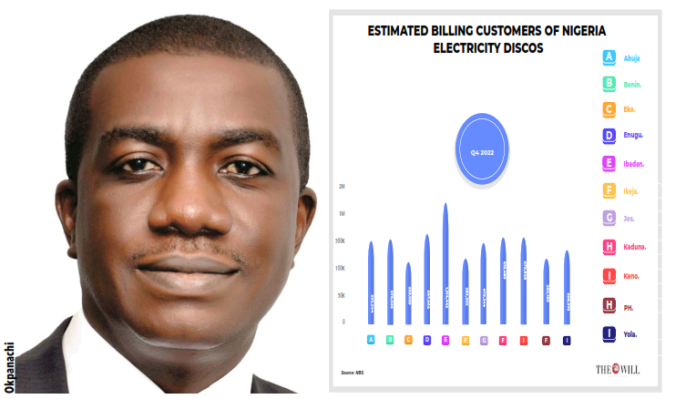
The Development Bank of Nigeria (DBN) has unveiled strategies to step up its support for the micro, small and medium enterprises (MSMEs) to navigate the current troubled economy, triggered by the recent fuel and electricity subsidies removal, naira devaluation, high inflation and deepening pains of multiple taxes, among other challenges.
In its policy document seen by THEWILL, the development financing institution articulated action steps to pursue its mandate of supporting and developing small businesses, a sector it acknowledged as the springboard to economic development worldwide.
“Small businesses are known to be the springboard of development worldwide, creating economic opportunities, especially for those at the lower rung of the economic ladder. Nigeria, being an ever-entrepreneurial nation, is no exception.

“With over 40 million MSMEs, accounting for 96 percent of all businesses, 84 percent of employment, and approximately 50 percent of the entire GDP, MSMEs make a remarkable contribution to our nation’s development,” the bank said in the document signed by its managing director/CEO, Tony Okpanachi.
Outlining the strategies to propel the MSMEs to greater heights, the bank said it would leverage their strength to facilitate growth in crucial sectors such as Agriculture, Education, Health, Manufacturing and work towards tackling challenges like energy poverty and struggling tourism sectors.
A glimpse into the document showed that the bank plans to build on the financing support it has offered to its participating financial institutions. This will result in increasing the over 313,000 MSMEs that have benefited from its financing support amounting to the tune of N631 billion as of December 2022 and leading to the creation of more than 900,000 jobs.
It said it would harness the potential of the sector to support green transactions and combat climate change, a move he said represents the compelling vision it has for Nigeria’s short- to medium-term future.
“They underpin our mandate and drive to continue supporting MSMEs with development financing, with the hope that our efforts will result in enviable growth and development that other parts of the world can learn from,” the bank said.
According to the policy document, the bank plans to build on the support it offered to its participating financial institutions in 2022. The target is to increase the over 313,000 MSMEs that have benefited from its financing from which over 900,000 jobs were created.
To fast-track growth of the MSMEs during the challenging period, DBN has created a sector-focused plan that would build on the current achievement.
Data from the plan showed that more than N230 billion have been channelled to support small businesses in the Trade and Commerce sector over the past 5 years leading up to December 2022, based on which it would offer support to the sector in the 2023 short-term arrangement.
The Bank recognises that over the past 3-5 years, the Manufacturing sector has been contributing between 12 per cent and 17 per cent to the national economy and is one of the highest labour-intensive sectors. It records that the Manufacturing will also, to a great extent, play a vital role in Nigeria’s industrialisation journey.
As a result, the Bank plans to increase support to MSME players in the Manufacturing sector which it has committed over N69 billion in financing.
“The Development Bank of Nigeria (DBN) recognises the significance of agriculture in the country’s economy and has allocated substantial funding to agro-MSMEs. As of December 2022, the Bank has provided N27 billion to Agro-MSMEs.
“This funding has played a vital role in supporting agricultural activities, empowering farmers, and promoting agro-entrepreneurship. The financial support provided by DBN has helped agro-MSMEs to enhance their operations, invest in modern farming techniques, acquire machinery and equipment, expand their production capacity, and access new markets,” the bank said. .
DBN has provided N13 billion in financing support to MSMEs operating in the hospitality and tourism sector. This funding has helped these businesses to expand their operations, improve infrastructure, enhance service quality, and contribute to the growth of Nigeria’s tourism industry. The sector will be allocated more funds under the programme.
The document further revealed that DBN has allocated N12 billion in financing to support quality education in Nigeria. It recognizes that this funding has been instrumental in improving educational facilities, promoting skill development programs, and enhancing access to education across the country.
Under the Health, the bank said it has channeled N11.5 billion in financing support to the sector, aiming to improve access to healthcare services and enhance the health conditions of the Nigerian populace. This funding, it said, has supported the development and expansion of healthcare facilities, the procurement of medical equipment, and the training of healthcare professionals.
On Technology, DBN said it recognises the immense potential of technology and innovation in driving development and digital transformation across sectors. Therefore, it has allocated N11 billion to the technology sector, supporting businesses involved in technology and innovation initiatives. This funding aims to foster increased efficiency, productivity, and expanded market access for Nigerian businesses.
The organised private sector, the National Bureau of Statistics (NBS), and the Small and Medium Enterprises Development Agency of Nigeria (SMEDAN) have at various times drawn attention to the high rate of business closure and job losses among the MSME operators in the past eight years.
The Manufacturers Association of Nigeria (MAN) has continued to lament over the country’s tough operating environment which forces its members to shut down operations or relocate to other neighbouring countries, which constrains the sector’s growth, especially the MSMEs involved in the value chain.
This was affirmed by executives of the association at the 2022 CEOs breakfast meeting of MAN, Ikeja branch held on July 22, 2022 who maintain that the country’s operating environment is characterized by overregulation, high production cost, FX shortage, unfriendly policies, infrastructure deficit, among other issues.
“The foremost casualties are the MSMEs whose survival hinges on their contribution to the value chain, especially those actively involved in backward integration, that is the process through which companies source their raw materials locally,” said David Ogom, a Lagos-based small business operator engaged in logistics services.
The financing and capacity building support offered by the Development Bank of Nigeria (DBN) to small and medium enterprises (SMEs) will enable the operators to step up their activities in the real sector value-chain. This is more significant in the backward integration scheme where SMEs have played active roles to support the Fast-Moving Consumer Goods (FMCG) firms which are currently challenged as reports have shown.
Backward integration is a practice where companies are encouraged to cultivate their own raw materials locally and purchase from their local suppliers or establish farms to grow produce for their factories. The government put the measure in place to save foreign exchange, create jobs, boost productivity and grow the GDP.
The FMCG firms wholly embraced the scheme and the result has been satisfactory. The SME operators who keyed into the initiative, especially those in agribusiness and transportation, have also benefited immensely through the support of the manufacturing firms.
For instance, under the backward integration initiative, Nestlé Nigeria established a project that engages 5,000 smallholder farmers for the supply of raw materials for its agro-business operations. Nigerian breweries have stepped up production of sorghum and cassava to boost local raw material supply for its plants using local farmers.
Experts believe that DBN should step up its support to enable the SMEs to play a more active role in the value chain ecosystem.
The CEO, Centre for the Promotion of Private Enterprise (CPPE), Dr Muda Yusuf, applauds the role of DBN in developing the SMEs which constitute the engine of the economy. He urged the DBN to do more at this time and suggested that the development bank be recapitalized, if it is necessary, to enable it to play a bigger role in providing financing and capacity building to the SMEs.
“I know Development Bank of Nigeria focuses on SMEs financing and it has played this role effectively. This is the time to do more given the present economic realities. They can raise the capital base, if necessary, to enable the bank to play a greater role in the backward integration scheme”, Yusuf, immediate past Director-General of the Lagos Chamber of Commerce and Industry, had told THEWELL in a phone chat last year.
According to NBS, small and medium-scale enterprises (SMEs) in Nigeria have contributed about 48 per cent of the national GDP (Gross Domestic Product) in the last five years. With a total number of about 17.4 million, they account for about 50 per cent of industrial jobs and nearly 90 per cent of the manufacturing sector.
The Federal Government of Nigeria inaugurated the DBN in March 2015, to alleviate financing constraints faced by SMEs.

Sam Diala is a Bloomberg Certified Financial Journalist with over a decade of experience in reporting Business and Economy. He is Business Editor at THEWILL Newspaper, and believes that work, not wishes, creates wealth.