
-
US launches massive retaliatory strikes: American forces hit multiple Iranian military targets after Tehran fired missiles at US bases in Jordan, with Washington describing the operation as a “powerful response” aimed at degrading Iran’s military capabilities.
-
Conflict spreads across the region: Fresh violence engulfed Iraq, Lebanon and the Gulf as Iran-backed militias, Hezbollah and US allies became increasingly drawn into the confrontation, heightening fears of a wider Middle East war.
-
Oil markets and global economy jolted: Crude oil prices climbed sharply while global stock markets retreated amid concerns that the conflict could disrupt energy supplies through the Strait of Hormuz.
-
Diplomatic efforts collapse: The latest military exchange shattered hopes of reviving negotiations between Washington and Tehran, with both sides warning of further retaliation.
July 30, (THEWILL) — The United States has launched a new wave of large-scale airstrikes against Iranian military targets in retaliation for Tehran’s missile attack on American bases in Jordan, dramatically escalating tensions in the Middle East and raising fears that the conflict could spiral into a broader regional war.
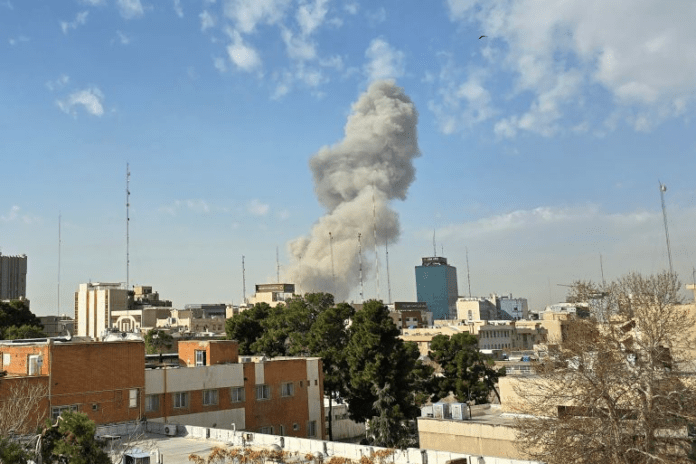
The strikes, carried out overnight by US Central Command (CENTCOM), targeted facilities linked to Iran’s Islamic Revolutionary Guard Corps (IRGC), including missile launch sites, drone infrastructure, command-and-control centres, air defence systems and logistics hubs.
US military officials described the operation as a “powerful response” intended to deter further Iranian attacks and safeguard American troops stationed across the region.

The retaliation came less than 24 hours after Iran launched ballistic missiles at US military installations in Jordan. Jordanian authorities said their air defence systems intercepted several of the missiles as they crossed the country’s airspace, while Iran insisted the attack was directed solely at American forces and not the Hashemite Kingdom.
US President Donald Trump had earlier vowed a forceful military response, declaring that Washington would strike Iran “hard” for targeting American personnel. Shortly after the operation commenced, senior US officials maintained that the strikes were carefully planned to reduce Iran’s offensive capabilities while limiting civilian casualties.
Iranian state media confirmed explosions near the country’s western border, particularly around the Piranshahr area, but reported no immediate civilian deaths. Tehran’s Revolutionary Guards defended the missile attack on US bases, insisting it was a legitimate response to previous American military operations and warning that any further aggression would be met with additional retaliation.
Conflict Expands Beyond Iran
The renewed confrontation has spread well beyond Iran’s borders, threatening to engulf several flashpoints across the Middle East.
In Iraq, the United States and Saudi Arabia conducted coordinated operations against Iran-backed armed groups following drone attacks on Saudi oil facilities that Riyadh blamed on militias aligned with Tehran.
Iraq’s Popular Mobilisation Forces (Hashed al-Shaabi) claimed at least 20 of its fighters were killed, describing the strikes as a dangerous escalation. Baghdad condemned the operation, insisting that Iraqi sovereignty must be respected and warning against using its territory as a battlefield for regional rivalries.
Meanwhile, Israel accused Lebanon’s Hezbollah movement of violating an existing ceasefire after alleging that the Iran-backed group launched a drone towards an Israeli military vehicle inside Lebanese territory. Although Israel has not joined the latest US strikes on Iran, military analysts warn that any further escalation involving Hezbollah could rapidly open another front in the conflict.
Global Markets React
Financial markets reacted swiftly to the renewed fighting. International oil prices surged as investors weighed the possibility of prolonged disruption to crude exports from the Gulf, while US and European equity markets fell amid growing geopolitical uncertainty. Investors also moved into traditional safe-haven assets as fears mounted over the prospect of a wider regional conflict.
The latest hostilities have renewed international concern over the Strait of Hormuz, through which roughly one-fifth of the world’s traded crude oil passes.
Washington accused Tehran of threatening freedom of navigation in the strategic waterway and announced fresh sanctions targeting individuals and entities linked to the Revolutionary Guards over alleged interference with commercial shipping.
Iran, however, insisted it would continue exercising control over its territorial waters and rejected what it described as foreign intimidation. The heightened tensions have raised fresh concerns among energy traders that any disruption to shipping through the Gulf could send oil prices significantly higher and worsen inflationary pressures worldwide.

Felix Ifijeh is a journalist with years of professional reporting experience. Known for his keen news sense, compelling storytelling and commitment to accurate, impactful reporting, he has built a reputation for turning leads into clear, engaging, and well-structured reports that resonate with readers. His work reflects deep newsroom experience and a commitment to accurate, impactful journalism.
