
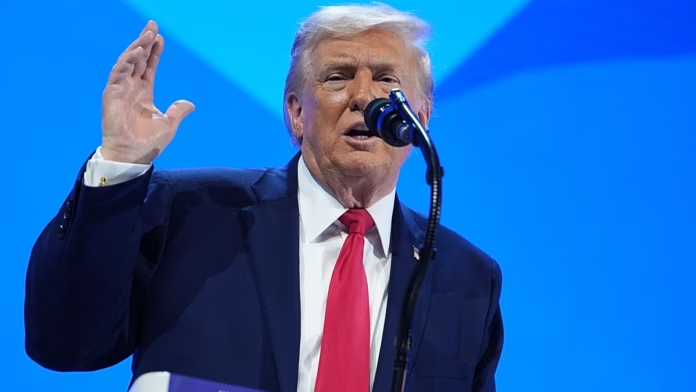
March 23, (THEWILL) — United States President, Donald Trump, has ordered a temporary suspension of planned military strikes targeting Iranian power plants and energy infrastructure, following what he described as “very good and productive conversations” with Iran.
THEWILL reports that the directive halts imminent military action for an initial five-day period, with further decisions dependent on the outcome of ongoing diplomatic engagements. The move signals a notable shift in tone after weeks of escalating tensions between Washington and Tehran over regional security concerns and maritime access in the Gulf.
Announcing the pause via his Truth social platform, Trump said discussions aimed at achieving “a complete and total resolution of hostilities in the Middle East” had taken place over the past two days and would continue throughout the week. The development has raised cautious optimism about a possible diplomatic breakthrough in a crisis that has stretched into its fourth week.

The standoff had earlier heightened fears of a broader regional conflict, particularly after Iran warned it could retaliate against U.S. interests and allied infrastructure if its energy facilities were attacked. Strategic concerns surrounding the Strait of Hormuz—a critical artery for global oil supply—further intensified market anxieties.
THEWILL further reported that the de-escalation signal from Washington has already had a stabilising effect on global markets. Oil prices dipped sharply, while equities rebounded after days of volatility driven by fears of supply disruptions.
However, the diplomatic outlook remains clouded by sharply conflicting narratives from both sides. Iranian state media, Press TV, has denied that any direct or indirect negotiations have taken place. A senior Iranian security official, quoted by international outlets, dismissed Trump’s claims, asserting that no talks were ongoing and attributing the U.S. pause to mounting military and economic pressures.
The official further described Washington’s posture as “psychological warfare”, insisting that Iran remained prepared to mount a full-scale defence response if attacked. He also argued that the five-day suspension did not signal de-escalation but rather underscored lingering threats of military action.
The contradictory accounts have deepened uncertainty over the true state of U.S.-Iran relations, leaving global observers and energy markets navigating divergent signals. While Washington projects cautious diplomatic progress, Tehran’s denial suggests that a comprehensive resolution to the crisis may still be some distance away.
Nonetheless, the temporary suspension of hostilities has provided a narrow window for dialogue, offering a glimmer of hope that sustained engagement could avert further escalation in an already fragile region.

Felix Ifijeh is a journalist with years of professional reporting experience. Known for his keen news sense, compelling storytelling and commitment to accurate, impactful reporting, he has built a reputation for turning leads into clear, engaging, and well-structured reports that resonate with readers. His work reflects deep newsroom experience and a commitment to accurate, impactful journalism.
