
-
Trump orders immediate Section 301 investigation into European Union trade practices, accusing the bloc of unfairly targeting American companies through hefty digital regulations and multibillion-dollar antitrust penalties.
-
Move follows the European Commission’s €890 million ($1 billion) antitrust fine against Google, with Washington warning Europe will ‘pay a very big price’ if unfair treatment of U.S. firms continues.
-
Investigation could pave the way for sweeping retaliatory tariffs, import restrictions and other trade sanctions against EU exports under the U.S. Trade Act of 1974.
-
Latest escalation threatens to deepen transatlantic trade tensions, raising concerns over the future of U.S.-EU economic relations, global technology regulation and international commerce.
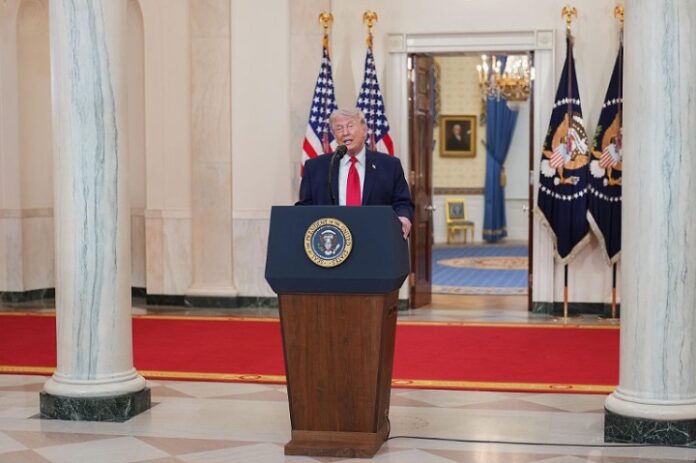
July 24 , (THEWILL) — U.S. President Donald Trump has announced that his administration will immediately launch a Section 301 investigation into the European Union’s trade practices, dramatically escalating tensions with Brussels after the bloc imposed a €890 million ($1 billion) antitrust fine on Google.
The announcement, made on Friday in a post on Truth Social, signals the opening of what could become one of the most consequential trade disputes between the United States and the European Union since Trump’s return to the White House.
Accusing Europe of unfairly profiting from American businesses, Trump declared that the United States would no longer tolerate what he described as systematic exploitation of U.S. companies through regulatory penalties and digital market rules.

“The United States of America is not a ‘PIGGYBANK’ for Europe, nor will we allow it to be! Please let this TRUTH serve to represent that we will immediately initiate a 301 Investigation into the practice of ‘ROBBING’ American Companies and, in turn, the American Taxpayer”, Trump wrote.
Trump further warned that the European Union would ultimately “pay a very big price” for what he called illegal and unethical actions against U.S. technology firms, suggesting that substantial tariffs on European imports could follow if the investigation finds evidence of discriminatory trade practices.
Google Penalty Triggers Fresh Confrontation
Trump’s announcement came barely a day after the European Commission imposed an €890 million ($1 billion) competition fine on Google after concluding that the company violated provisions of the European Union’s Digital Markets Act by giving preferential treatment to its own services on Google Search and the Google Play Store.
EU regulators argued that the sanctions were necessary to restore fair competition in digital markets and prevent dominant technology firms from abusing their market position.
The White House, however, views the growing number of European regulatory actions against American technology giants (including Google, Apple, Meta, Amazon and Microsoft), as an unfair campaign targeting successful U.S. companies while generating billions of euros in revenue for European governments.
Trump has repeatedly criticised the EU’s digital regulations, describing them as disguised taxes on American innovation.
What a Section 301 Investigation Means
Section 301 of the U.S. Trade Act of 1974 empowers the Office of the United States Trade Representative (USTR) to investigate foreign governments whose policies are considered unreasonable, discriminatory or harmful to U.S. commerce.
Where violations are established, the President may authorise retaliatory actions, including higher tariffs, import restrictions or other economic sanctions designed to pressure the offending country or trading bloc into changing its policies.
The provision was widely used during Trump’s first administration against China and has increasingly become one of Washington’s most powerful trade enforcement tools.
Trade analysts say that if the EU investigation proceeds, it could result in significant new duties on European exports entering the U.S. market, potentially affecting industries ranging from automobiles and pharmaceuticals to luxury goods, agriculture and industrial equipment.
Growing Friction Across the Atlantic
The latest development comes amid deteriorating U.S.-EU relations over technology regulation, industrial subsidies and market access.
Earlier this week, a bipartisan group of U.S. lawmakers urged the Trump administration to investigate whether the European Union’s Digital Markets Act unfairly discriminates against American companies, arguing that the legislation disproportionately affects U.S.-based technology firms.
European officials have rejected that claim, insisting that the rules apply equally to all large digital platforms regardless of nationality and are intended solely to promote competition and protect consumers.
The dispute also unfolds against the backdrop of broader disagreements over tariffs, artificial intelligence regulation, digital taxation, data privacy and clean energy subsidies, all of which have strained relations between the world’s two largest democratic economies.

Felix Ifijeh is a journalist with years of professional reporting experience. Known for his keen news sense, compelling storytelling and commitment to accurate, impactful reporting, he has built a reputation for turning leads into clear, engaging, and well-structured reports that resonate with readers. His work reflects deep newsroom experience and a commitment to accurate, impactful journalism.
