
May 04, (THEWILL) — Africa’s Global Bank, United Bank for Africa (UBA) Plc, has commenced the post-recapitalisation phase with a robust performance in Q1 2026, which will strengthen its growth trajectory and leadership dominance across the continent.
According to the unaudited financial results for the first quarter ending March 31, 2026, submitted to the Nigerian Exchange (NGX), the Group disclosed substantial earnings that rose by 4.8 percent to N801.42 billion, compared to N764.3 billion reported in the previous year, propelled by significant growth in both interest and non-interest income.
A brief examination of the results indicates a robust top-line performance; however, there has been a decrease in the bottom line, which is attributed to increasing operating expenses. Nevertheless, the Group’s core income in Q1 2026 was more robust compared to the same timeframe last year.

For example, net operating income after the impairment charge increased by 6.57 percent to N479.60 billion, up from N450.05 billion in Q1 2025, supported by various factors. These factors include a strong interest income of N641.09 billion, which has consistently propelled the bank’s gross earnings, representing approximately 80 percent of total gross earnings.
The nearly stagnant growth in interest expenses, which rose by only 1.91 percent to N257.3 billion against N247.9 billion in Q1 2025, coupled with the substantial interest income, resulted in a net interest income growth exceeding 10 percent.
In Q1 2026, UBA’s non-interest income—which includes e-banking and electronic transaction fees—grew by 17.3 percent to N137.1 billion. While this reflects strong growth in digital revenue, specific standalone figures for e-banking are part of this total non-interest income, supported by a 14 percent rise in net fee and commission income.
Overall, UBA maintained its growth momentum, with total assets exceeding N33 trillion during the quarter. This reflects a strong balance sheet and ongoing market confidence, even in a moderately challenging profit environment.
The intentional enhancement of the balance sheet in 2025 aimed at preparing for a sustained digital income stream in 2026 has achieved the intended goals, as evidenced by the Q1 2026 results.
The Group said that the operating performance reflects ongoing investments to support scalability across markets. Funding discipline remained strong, with Cost of Funds declined to 3.7 percent, while net interest margin was 6.5 percent reflecting core earnings resilience.
Overall, the Group remains strongly capitalised, highly liquid, and well positioned to execute the priorities set in 2025, with continued focus on disciplined growth, efficient capital deployment, and long-term value.
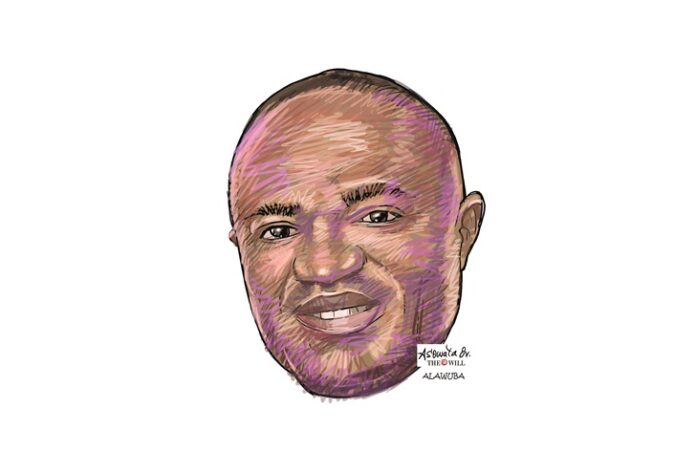
Commenting on the results, Oliver Alawuba, the Group Managing Director, said: “UBA’s Q1 2026 reflects the continued strength of our Pan-African diversified model and the benefits of our strong franchise in the markets we operate in.”
“The Group delivered Profit before tax of N160.7 billion, with improved operating momentum across our core banking franchises and sustained balance sheet resilience. Post tax return on equity stood at 13.7 percent, while return on assets was 1.8 percent, reflecting a more normalized post recapitalization earnings environment, as previously guided.
“Customer confidence remains strong, with stable deposit growth and continued balance sheet expansion supporting our operations across 20 African markets and beyond. While profitability has moderated relative to the prior year, this remains consistent with our expectation of a transition year marked by disciplined provisioning, strategic investments, and higher-quality earnings formation.
“We continue to see encouraging progress from our digital investments and regional diversification strategy, which are strengthening revenue resilience and positioning the Group for more sustainable growth. As outlined in 2025, our focus remains firmly on financial inclusion, intra-African trade facilitation, and delivering long-term value through a balanced approach to growth and risk management.”
Nigerian banks engaged in a two-year recapitalisation initiative that raised their statutory capital base to unprecedented levels, aiming to create stronger, healthier, and more resilient banks capable of supporting the objective of a $1 trillion economy by 2030, as stated by the CBN.
Under the new framework, international commercial banks were required to obtain a N500 billion authorisation license. National commercial banks increased to N200 billion, while regional commercial banks rose to N50 billion. National merchant banks also moved to N50 billion. The authorization license for national non-interest banks was elevated to N20 billion, and regional non-interest banks increased to N10 billion.
According to the CBN, the two-year recapitalisation programme, which began on April 1, 2024, and concluded on March 31, 2026, attracted N4.62 trillion in new capital to the banking sector. The apex regulator reported that 33 banks fulfilled the updated minimum capital requirements, with 72.55 percent of the capital sourced domestically and 27.45 percent from international markets.
United Bank for Africa, which satisfied the criteria for Tier-1 international banking authorisation prior to the March 31, 2026 deadline, is preparing for the post-recapitalisation challenges that will signify a remarkable transformation in the industry status of financial services institutions.
Following the successful hosting of its inaugural Fintech Conference recently themed “Navigating Regulatory Milestones: The Future of Bank–Fintech Partnerships,” UBA has reinforced its commitment to deepening collaboration between banks and fintechs across Africa as it transits to the post-recapitalisation environment.
The conference convened more than 20 leading fintechs and ecosystem stakeholders, including PalmPay, OPay, PayAza, Mastercard, Visa, Nigeria Inter-Bank Settlement System, and representatives of the Central Bank of Nigeria. Discussions focused on regulation, innovation, security, and the evolution of payments across the continent.
The conference concluded with a unified call for sustained collaboration as the primary lever for scaling financial inclusion, strengthening resilience, and unlocking long-term growth across Africa’s financial ecosystem. Industry analysts consider this a key success factor as the banks move into the post-recapitalisation phase.

Sam Diala is a Bloomberg Certified Financial Journalist with over a decade of experience in reporting Business and Economy. He is Business Editor at THEWILL Newspaper, and believes that work, not wishes, creates wealth.
