
-
Outgoing British High Commissioner Richard Montgomery says Nigeria must grow its economy by at least seven per cent annually over the next four years
-
While backing President Bola Tinubu’s bold economic reforms, the British envoy says the next phase of governance must focus on translating macroeconomic stability into jobs, higher incomes, lower poverty, and inclusive growth.
-
Montgomery commends Nigeria’s economic management team for pursuing difficult but necessary reforms and describes the Nigeria Revenue Service as one of the United Kingdom’s most trusted institutional partners in Nigeria.
-
NRS Chairman Zacch Adedeji credits British technical assistance for strengthening Nigeria’s tax administration and fiscal reforms, expressing optimism that cooperation between both countries will continue under a new British envoy.
July 22 , (THEWILL) —The outgoing British High Commissioner to Nigeria, Richard Montgomery, has challenged the President Bola Tinubu administration to shift its attention from economic stabilisation to rapid economic expansion.
He insisted that Nigeria must achieve a minimum annual growth rate of seven per cent over the next four years if the benefits of ongoing reforms are to be felt by ordinary citizens.
Montgomery’s remarks come at a time when the Federal Government continues to defend a series of far-reaching economic reforms that have earned international commendation but have also fuelled inflation, weakened consumer purchasing power, and intensified pressure on households across the country.

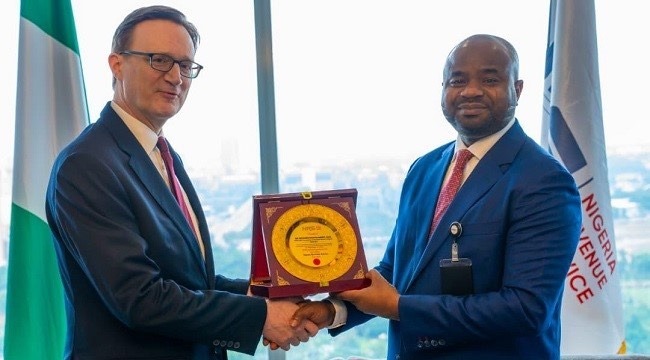
Speaking during a farewell visit to the Chairman of the Nigeria Revenue Service (NRS), Zacch Adedeji, in Abuja on Tuesday, the British envoy argued that while the administration had taken politically difficult decisions to reset the economy, sustained economic growth had now become the most critical measure of the reforms’ success.
According to a statement issued by Adedeji’s Special Adviser on Media, Dare Adekanmbi, Montgomery said Nigeria’s economic priorities must evolve beyond stabilisation towards achieving the level of growth capable of transforming livelihoods.
“And I have been quietly saying to a couple of senior people, the next four years need to be about getting the growth rate from four to seven percent because that’s what will make a difference for ordinary people,” he said.
‘Reforms Were Necessary, But Nigerians Must See the Benefits’
Montgomery acknowledged that the Tinubu administration’s reforms—including exchange-rate liberalisation, fiscal restructuring, and broader public finance reforms—had imposed painful short-term consequences on businesses and households through inflationary pressures and currency depreciation.
However, he maintained that the measures were unavoidable if Nigeria was to address long-standing structural distortions that had constrained economic growth for decades.
He said the real challenge before the government was ensuring that macroeconomic reforms evolve into inclusive growth capable of creating employment opportunities, boosting private sector investment, expanding productive industries, and improving household incomes.
The envoy noted that sustained growth of seven per cent annually would significantly enhance Nigeria’s ability to reduce poverty, strengthen public finances, and improve the quality of life for millions of citizens.
Montgomery also praised members of the Federal Government’s economic management team, saying they had demonstrated exceptional technical expertise and political resolve in implementing reforms that previous administrations had struggled to execute.
He further commended efforts to strengthen fiscal governance and improve public finance management, describing the Nigeria Revenue Service as one of the United Kingdom’s closest and most productive institutional partners in Nigeria.
Adedeji Salutes UK Support for Tax Reforms
Responding, the Chairman of the Nigeria Revenue Service, Zacch Adedeji, expressed appreciation for the British government’s sustained support for Nigeria’s fiscal transformation agenda.
He said the technical assistance provided by the United Kingdom had strengthened ongoing tax administration reforms, enhanced institutional capacity, and supported efforts to modernise Nigeria’s revenue collection system.
Adedeji described Montgomery’s tenure as one that significantly deepened economic and institutional cooperation between both countries, particularly in tax policy, revenue administration, and public financial management.
He expressed confidence that the strong working relationship established during Montgomery’s tenure would continue under his successor, noting that international partnerships remain critical to the success of Nigeria’s fiscal and economic reform programme.
Background
President Bola Tinubu’s administration has embarked on one of Nigeria’s most extensive economic reform programmes since the country’s return to democratic rule in 1999.
Key measures include the removal of petrol subsidy, liberalisation of the foreign exchange market, comprehensive tax reforms, and initiatives aimed at increasing non-oil revenue and restoring fiscal sustainability.
While international institutions such as the International Monetary Fund and the World Bank have broadly endorsed the reforms as necessary steps towards macroeconomic stability, Nigerians have continued to grapple with soaring inflation, rising food prices, elevated transportation costs, and declining purchasing power.
Nigeria’s economy has recorded modest growth in recent quarters, but economists argue that annual growth of around four per cent remains inadequate for a country with one of the world’s fastest-growing populations.
Many analysts believe sustained growth of between six and eight per cent is required to generate sufficient employment, reduce poverty, and deliver broad-based economic prosperity.
Montgomery’s intervention is therefore likely to reinforce ongoing debates over the next phase of the Tinubu administration’s economic agenda, with increasing attention expected to shift from the implementation of reforms to whether those policies can produce measurable improvements in the everyday lives of Nigerians.

Felix Ifijeh is a journalist with years of professional reporting experience. Known for his keen news sense, compelling storytelling and commitment to accurate, impactful reporting, he has built a reputation for turning leads into clear, engaging, and well-structured reports that resonate with readers. His work reflects deep newsroom experience and a commitment to accurate, impactful journalism.
