
February 11, (THEWILL) — Nigeria has been thrust into renewed international focus following the introduction of legislation in the United States aimed at addressing alleged religious persecution and extremist violence in the country.
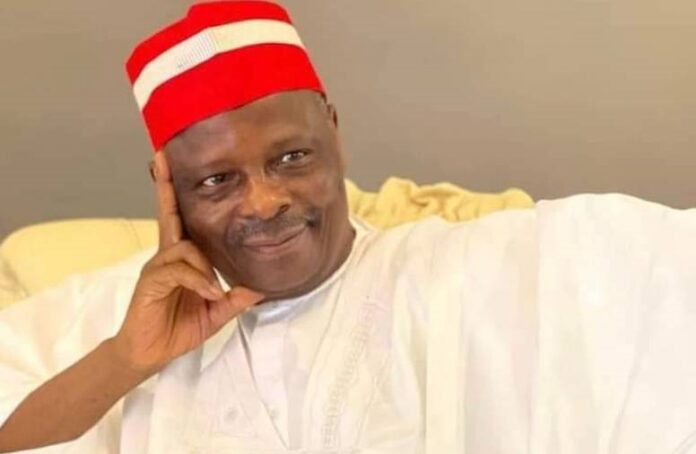
The Nigeria Religious Freedom and Accountability Act of 2026 (H.R. 7457), introduced on Tuesday, February 10, 2026, by Republican lawmakers Riley Moore and Chris Smith, seeks to impose visa restrictions and freeze assets belonging to former Kano State governor Rabiu Musa Kwankwaso, the Miyetti Allah Cattle Breeders Association of Nigeria (MACBAN), Miyetti Allah Kautal Hore, and specific Fulani ethnic militias.
The bill mandates the U.S. Secretary of State to assess whether certain Fulani-ethnic militias operating in Nigeria meet the legal threshold for designation as a Foreign Terrorist Organization.

It also requires the Secretary to submit annual reports to Congress detailing Nigeria’s compliance with international religious freedom obligations, efforts to protect vulnerable communities, and the effectiveness of U.S. security and development assistance in preventing systemic violence.
Announcing the legislation on X, Moore stated that the U.S. must stand with persecuted Christians around the world.
He noted that the legislation builds upon President Donald Trump’s redesignation of Nigeria as a Country of Particular Concern and the recent U.S.–Nigeria security framework agreement.
The bill directs the Departments of State and Treasury to consider targeted sanctions, including visa bans and asset freezes under the Global Magnitsky Human Rights Accountability Act, on individuals or entities responsible for severe religious freedom violations.
Specifically, the bill identifies Fulani-ethnic nomad militias in Nigeria, Rabiu Musa Kwankwaso, the Miyetti Allah Cattle Breeders Association of Nigeria, and Miyetti Allah Kautal Hore.
The legislation stipulates that U.S. humanitarian assistance, co-funded by the Government of Nigeria, should be delivered through trusted civil society organizations, including faith-based groups, particularly in Nigeria’s Middle Belt states.
It also encourages collaboration with international partners such as France, Hungary, and the United Kingdom to promote religious freedom and peace.
Lawmakers backing the bill cited alarming statistics, including estimates that between 50,000 and 125,000 Christians were killed in Nigeria between 2009 and 2025, with more than 19,000 churches destroyed.
According to the Open Doors 2026 World Watch List, Nigeria accounts for 72 percent of Christians killed worldwide.
Rep. Chris Smith criticized the Nigerian government, stating that the blatant denial of religious persecution occurring within its borders has enabled religious-based violence to fester.
The Nigerian government has rejected the characterization of the country as religiously intolerant. President Bola Tinubu has maintained that Nigeria is a democracy governed by constitutional guarantees of religious liberty and that his administration is committed to working with the international community to protect all communities.
Furthermore, reports indicate that the Nigerian government has hired a U.S. lobbying firm in a $9 million contract to engage with American lawmakers and demonstrate the country’s commitment to protecting religious freedom.
Last week, General Dagvin Anderson, Commander of the United States Africa Command (AFRICOM), visited Abuja for high-level talks with President Tinubu and National Security Adviser Nuhu Ribadu.
Discussions focused on countering terrorist groups across Nigeria’s northern axis and the wider Sahel region.
Despite the legislative pressure, Nigeria maintains that its security challenges—including insurgency, banditry, and farmer-herder clashes—are largely driven by competition over land and resources rather than religion.
Felix Ifijeh is a journalist with years of professional reporting experience. Known for his keen news sense, compelling storytelling and commitment to accurate, impactful reporting, he has built a reputation for turning leads into clear, engaging, and well-structured reports that resonate with readers. His work reflects deep newsroom experience and a commitment to accurate, impactful journalism.
