
February 17, (THEWILL) — Abuja witnessed high political tension on Tuesday, as divisions within the National Assembly came to the fore, with opposition lawmakers staging a walkout, while both chambers endorsed a hybrid system of electronic and manual transmission of election results in the revised Electoral Act.
THEWILL reports that the drama unfolded as the Nigerian Senate rescinded, re-enacted and passed the Electoral Act, 2022 (Repeal and Re-Enactment) Bill, 2026, retaining electronic transmission of results but allowing manual procedures as a fallback where technology fails. The decision followed hours of tense debate, procedural disputes and consultations, particularly over the contentious Clause 60.
The Senate’s move was prompted by concerns over technical inconsistencies in the Bill earlier passed on February 10, 2026, and its potential clash with preparations for the 2027 general elections.

Senate Leader, Senator Michael Opeyemi Bamidele (Ekiti Central), who moved the motion for rescission, said the exercise was necessary to ensure legal clarity, consistency and alignment with the Independent National Electoral Commission’s (INEC) revised timetable.
Clause 60, which governs the counting and transmission of votes, became the flashpoint of deliberations. Senator Enyinnaya Abaribe (PDP, Abia South) objected to provisions recognising Form EC8A as the primary source of results where electronic transmission fails, warning that excessive reliance on manual processes could undermine transparency. A division was eventually called under Order 72(1), with 55 senators voting in favour of retaining the manual backup and 16 opposing it.
Presiding over the session, Senate President Godswill Akpabio and Deputy Senate President, Barau Jibrin, oversaw a charged atmosphere marked by sharp exchanges across party lines. Bamidele explained that the rescission and re-enactment nullified previous decisions, enabling a detailed clause-by-clause review to strengthen the law and accommodate practical challenges at polling units nationwide.
The re-enacted Bill also proposed adjustment of the 2027 general elections to February 13, 2027, to avoid the Ramadan period and promote wider voter participation. Chairman of the Senate Committee on Electoral Matters, Senator Simon Lalong, said the amendments were aimed at enhancing transparency, boosting public confidence and balancing technology with Nigeria’s on-the-ground realities.
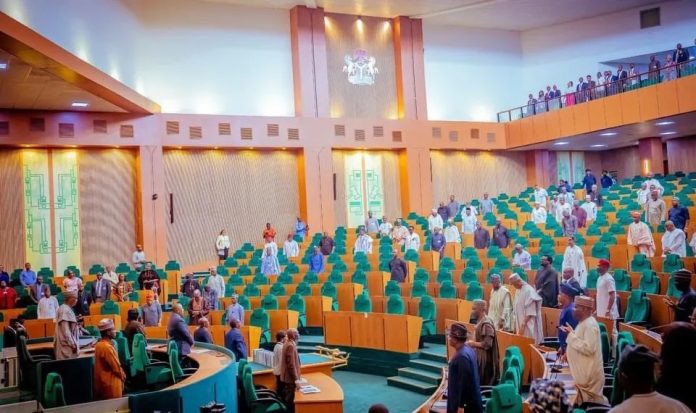
Meanwhile, the House of Representatives also passed a revision to the Electoral Act (Amendment) Bill, adopting a similar electronic and manual transmission framework. The House rescinded the original Section 60(3), which had mandated real-time electronic transmission of results to INEC’s Result Viewing Portal (IREV) alongside physical collation.
Under the revised provision, presiding officers are to transmit results electronically only after Form EC8A has been signed and stamped, and, where available, countersigned by candidates or polling agents. Where electronic transmission is impossible due to communication challenges, the signed Form EC8A will serve as the primary basis for collation and declaration of results.
The House decision sparked immediate protest, with Minority Leader Kingsley Chinda leading opposition lawmakers in a walkout of the chamber. Addressing journalists afterwards, they described the amendments as “anti-people” and warned that the changes could weaken electoral transparency and public trust.
Supporters of the hybrid system, however, argue that it provides a realistic safeguard against network failures, particularly in rural and hard-to-reach areas, while preserving the gains of electronic transmission.
Tuesday’s proceedings underscored deep divisions within the legislature but also marked a significant step in Nigeria’s electoral reform process, as lawmakers settled on a compromise framework ahead of the 2027 general elections.

Felix Ifijeh is a journalist with years of professional reporting experience. Known for his keen news sense, compelling storytelling and commitment to accurate, impactful reporting, he has built a reputation for turning leads into clear, engaging, and well-structured reports that resonate with readers. His work reflects deep newsroom experience and a commitment to accurate, impactful journalism.
