
-
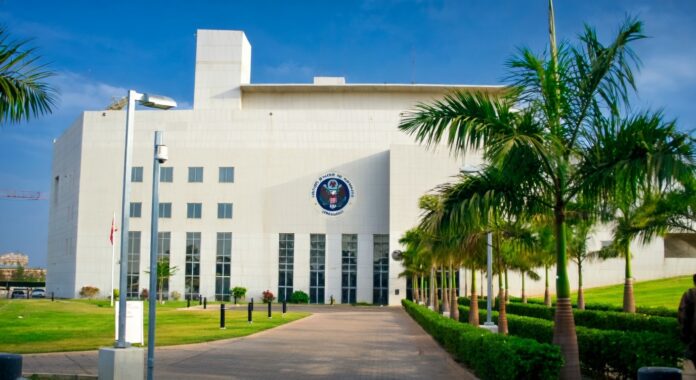
United States to halt routine immigrant and non-immigrant visa processing at 25 diplomatic missions across Africa, including the U.S. Embassy in Abuja, effective August 1, 2026.
-
Nigeria’s routine visa applicants will now be processed through the U.S. Consulate General in Lagos as part of a regional hub system aimed at improving efficiency and security.
-
Washington says the restructuring is designed to strengthen visa screening and vetting, reduce operational costs, and align overseas consular operations with U.S. national security priorities.
-
Embassies and consulates affected by the policy will remain open for diplomatic engagements, emergency consular services, and assistance to American citizens, while all previously issued visas remain valid.
July 29, (THEWILL) — The United States government has announced a sweeping restructuring of its consular operations across Africa, ending routine visa processing at 25 diplomatic missions, including the U.S. Embassy in Abuja, from August 1, 2026.
The move will now require thousands of applicants to seek visas through designated regional processing hubs.
The policy, unveiled by the U.S. Department of State, forms part of a broader overhaul of America’s overseas visa operations aimed at strengthening national security, enhancing the integrity of visa adjudication, reducing operational costs, and deploying consular resources more efficiently.

Under the new arrangement, Nigeria’s routine immigrant and non-immigrant visa applications will be processed exclusively at the U.S. Consulate General in Lagos, which has been designated as one of 20 regional visa hubs serving the African continent.
The department said the realignment reflects the administration of President Donald Trump’s commitment to tightening border security while ensuring that visa operations meet uniform global standards for screening, vetting, and adjudication.
“The Department of State is constantly evaluating its overseas operations to advance America’s priorities as efficiently and effectively as possible.
“The Trump administration has no higher priority than the safety and security of Americans,” stressing that the changes are intended to improve operational effectiveness without compromising consular support for U.S. citizens abroad,” the department said in a statement. .
The policy affects U.S. diplomatic missions in Antananarivo, Abuja, Asmara, Bamako, Banjul, Brazzaville, Bujumbura, Conakry, Cotonou, Durban, Freetown, Gaborone, Harare, Juba, Libreville, Lilongwe, Lusaka, Maputo, Maseru, Mbabane, N’Djamena, Niamey, Nouakchott, Ouagadougou, and Windhoek.
While routine visa processing will cease at these locations, the embassies and consulates will remain fully operational, continuing to provide emergency consular assistance, services to U.S. citizens, diplomatic representation, and other statutory responsibilities.
The State Department also clarified that visas already issued will remain valid until their expiration dates and that applicants with existing appointments will receive direct communication regarding the next steps in their application process.
Lagos Becomes Nigeria’s Sole Routine Visa Centre
For Nigeria, the most immediate impact of the policy is the consolidation of routine visa services in Lagos.
This means prospective travellers from Abuja and other parts of northern and central Nigeria will now be required to travel to Lagos for interviews and visa processing, a development likely to increase passenger traffic and appointment demand at the Consulate General.
Lagos joins other regional processing centres located in Abidjan, Accra, Addis Ababa, Cape Town, Dakar, Dar es Salaam, Djibouti, Johannesburg, Kampala, Kigali, Kinshasa, Lomé, Luanda, Malabo, Monrovia, Nairobi, Port Louis, Praia, and Yaoundé.
According to the State Department, concentrating visa adjudication at regional hubs will allow the United States to deploy experienced consular officers more effectively while maintaining rigorous security standards.
Security and Cost Efficiency
The U.S. government said the restructuring is part of a long-term strategy to modernise overseas consular operations.
Officials maintained that consolidating routine visa processing would improve consistency in decision-making, strengthen fraud detection capabilities, optimise staffing levels, and reduce administrative costs without diminishing America’s diplomatic footprint across Africa.
The department noted that similar regional visa processing models have already been implemented successfully in parts of Europe and Africa, where they have enhanced efficiency while preserving access to consular services.
The latest restructuring comes amid a broader review of U.S. immigration and border policies under President Donald Trump, whose administration has prioritised enhanced immigration screening and stricter visa vetting procedures.
The State Department said the changes do not signal a reduction in the United States’ diplomatic presence in Africa.
Instead, they represent an administrative realignment of routine visa services designed to strengthen national security, improve operational efficiency, and ensure uniform application of U.S. immigration laws across the continent.

Felix Ifijeh is a journalist with years of professional reporting experience. Known for his keen news sense, compelling storytelling and commitment to accurate, impactful reporting, he has built a reputation for turning leads into clear, engaging, and well-structured reports that resonate with readers. His work reflects deep newsroom experience and a commitment to accurate, impactful journalism.
