
-
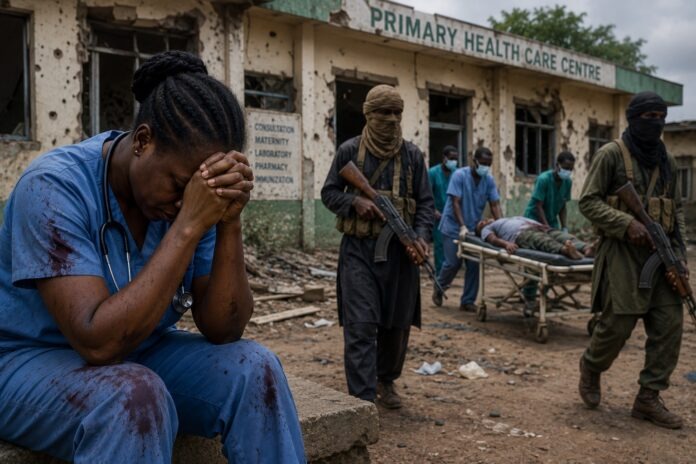
International report documents 101 attacks on Nigerian healthcare facilities and personnel between 2023 and 2025, underscoring worsening insecurity in the sector.
-
At least 91 health workers were kidnapped and 15 killed during the three years, while 25 abducted victims remain unaccounted for.
-
Violence spread to 16 states in 2025, with Zamfara recording the sharpest increase in attacks as banditry and militia violence intensified.
-
Report warns that persistent attacks, coupled with the loss of USAID funding that reportedly cost about 28,000 health workers their jobs, are pushing Nigeria’s fragile healthcare system deeper into crisis.
July 23, (THEWILL) — A disturbing new international report has revealed that Nigeria’s healthcare sector came under unprecedented assault between 2023 and 2025, with armed groups, criminal bandits, and jihadist insurgents abducting at least 91 health workers, killing 15 others, and carrying out 101 separate attacks on hospitals, clinics, and medical personnel across the country.
THEWILL reports that the findings, contained in the Care in the Crosshairs: Violence Against Health Care in Conflict 2025 report published on July 17, 2026, by the Safeguarding Health in Conflict Coalition, paint a grim picture of a health system increasingly trapped in the country’s worsening security crisis.
Compiled using data from Insecurity Insight’s global monitoring system, the report identified Nigeria as one of the countries where attacks on healthcare facilities and personnel have escalated sharply over the last three years.

The report showed that attacks reached a three-year high in 2025, when 43 separate incidents were recorded across 16 states, compared to 34 incidents in 2024 and 24 incidents in 2023.
Kidnappings, Killings Reach Alarming Levels
According to the report, a total of 91 healthcare workers were kidnapped during the three years, while 15 lost their lives in separate attacks.
Of those abducted, only 10 were confirmed to have regained their freedom, while 25 remained missing as of the time the report was completed.
One of the most tragic incidents involved a doctor who was shot and kidnapped in December 2025, released in January 2026, only to be shot dead shortly after returning home.
The report further showed that 24 health workers were abducted and six killed in 2023.
The figures worsened in 2024, with 35 health workers kidnapped and three killed.
In 2025 alone, 32 health workers were abducted in 21 separate kidnapping incidents, while six others were killed in five attacks.
Although the total number of abducted victims was slightly lower than in 2024, the number of kidnapping incidents increased significantly, highlighting the growing frequency of attacks targeting healthcare personnel.
The report noted that about 95 per cent of the kidnappings recorded in 2025 occurred outside Nigeria’s insurgency-ravaged North-East, particularly across the North-West and North-Central regions where criminal gangs increasingly kidnap victims for ransom.
Victims included doctors, surgeons, pharmacists, hospital owners, drivers, and other medical personnel seized from hospitals, private clinics, highways, and illegal roadblocks.
While many victims were abducted for ransom, the report stated that some armed groups kidnapped healthcare workers specifically to provide medical treatment to wounded fighters.
Violence Expands Across More States
The report showed that attacks on healthcare facilities spread significantly across Nigeria in 2025, affecting 16 states, compared to 12 states the previous year.
New incidents were recorded in Anambra, Adamawa, Kano, Ondo, Edo, and Nasarawa states, indicating an expanding geographical spread of violence.
Zamfara State recorded one of the sharpest increases, with attacks nearly tripling compared to 2024.
The worsening insecurity coincided with the displacement of more than 74,648 residents in Zamfara between December 2025 and May 2026, according to humanitarian assessments referenced in the report.
Most incidents were attributed to unidentified gunmen, although investigators linked several attacks to organised armed groups.
Militia groups operating in Katsina were blamed for attacks on health centres that left workers dead or injured.
In Zamfara, militia members reportedly ambushed vehicles transporting civilians and abducted healthcare workers.
The report also accused armed Fulani militants of raiding a hospital, abducting health workers and women, with some victims reportedly subjected to sexual violence.
In the North-East, the Islamic State West Africa Province (ISWAP) was linked to five separate attacks across Borno, Adamawa, and Yobe states, where health facilities were looted, burnt, and stripped of medicines and food supplies.
Boko Haram fighters were also reported to have ambushed an ambulance in Borno State, injuring its driver and carting away the vehicle.
The report further alleged that security agencies arrested some health workers in Katsina, Niger and Sokoto states over suspected links with armed opposition groups.
It also documented an airstrike by the Nigerian Air Force targeting a militant camp that reportedly killed a health worker who was treating an injured fighter at the time.
Three healthcare workers were reportedly killed during shootings inside hospitals in Edo and Katsina states.
Among them was a physiotherapist murdered after gunmen invaded the University of Benin Teaching Hospital in Benin City, an attack that sparked protests by medical personnel demanding improved security at the facility.
In Kaduna State, armed attackers stormed a nursing and maternity centre, abducting a health worker, a security guard, and five patients, including a woman nine months pregnant and another nursing mother with her infant.
Funding Crisis Deepens Healthcare Challenges
Beyond insecurity, the report warned that Nigeria’s healthcare system is also battling severe financial constraints following the suspension of funding from the United States Agency for International Development (USAID) under the administration of former US President Donald Trump in 2025.
According to the coalition, Nigeria received approximately $8 billion in USAID health assistance between 2022 and 2024.
However, the abrupt funding freeze reportedly led to the loss of nearly 28,000 healthcare jobs, worsening manpower shortages across the country’s already overstretched health system.
The report noted that the Federal Government responded by providing an additional $200 million to the health sector through the 2026 budget to mitigate the impact of the funding gap.
Background
Nigeria has witnessed a steady deterioration in security over the past decade, with insurgency in the North-East, widespread banditry in the North-West, communal violence in the North-Central, and rising criminality across other parts of the country increasingly affecting critical national infrastructure, including healthcare facilities.
International humanitarian organisations have repeatedly warned that attacks on hospitals, clinics, and medical workers violate international humanitarian law and significantly undermine access to healthcare for millions of vulnerable Nigerians.
The latest findings by the Safeguarding Health in Conflict Coalition underscore growing concerns that unless security around healthcare facilities is substantially strengthened, the country risks a deeper public health crisis as medical professionals continue to flee high-risk communities amid persistent violence.

Felix Ifijeh is a journalist with years of professional reporting experience. Known for his keen news sense, compelling storytelling and commitment to accurate, impactful reporting, he has built a reputation for turning leads into clear, engaging, and well-structured reports that resonate with readers. His work reflects deep newsroom experience and a commitment to accurate, impactful journalism.
