November 17, (THEWILL) – Wema Bank Plc, a lower-rung Tier-2 financial services institution, may face additional challenge of achieving effective national spread under the recapitalization policy initiated by the Central Bank of Nigeria (CBN).
The apex bank had on March 28, 2024 issued a circular announcing a new recapitalisation policy for commercial, merchant and non-interest banks in Nigeria, effective from April 1, 2026.
For commercial banks, the requirement for international, national and regional operating licences was set at N500 billion, N200 billion and N50 billion, respectively. Wema Bank falls under the national operating licence.

In 2001, the bank received a universal banking license from the CBN, however, it had to revert to regional banking license in 2009.
THEWILL recalls that during the 2008-2009 banking crisis, Wema Bank had to take a strategic step of revising its licence to a regional banking license, which restricted its operation to a maximum of 12 states. By 2015, the bank raised sufficient funds to elevate its license to one of national authorisation.
Notwithstanding the elevation, the bank has not been able to achieve an effective national spread, and there are concerns that the recapitalisation exercise would place additional hurdle towards achieving a true national visibility as it has most of its operation domiciled in the South-West.
Currently, Wema Bank has 149 branches across 19 states and the FCT in Nigeria, with 17 states hosting no Wema Bank branch. The bank has no branches across the five states in the South-East region, and in the North-East it boasts branches only in Bauchi State.
Wema Bank has branches in Lagos, Oyo, Osun, Ekiti, Ondo, Ogun, FCT, Rivers, Delta, Edo, Akwa Ibom, Niger, Kogi, Kaduna, Cross River, Nasarawa, Kano, Bauchi, and Kwara states.
Concerning the capital base, Wema Bank presently has a paid-up share capital of about N15.1 billion, thus requiring about N184.1 billion to meet up with the N200 billion minimum capital requirement for a national banking licence.
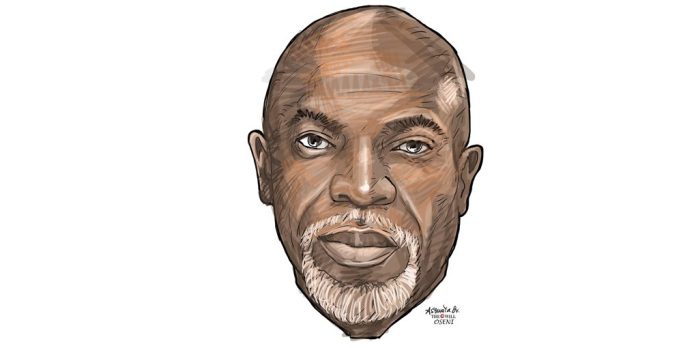
Wema Bank raised about N40 billion in a rights issue in December 2023. When this sum is reflected in its share capital, the bank’s required capital raise is expected to drop to N144.9 billion. The bank however looks to raise N200 billion through rights issue and other means as it mulls new 37.14 billion shares via rights issuance.The Managing Director/CEO of Wema Bank Plc, Moruf Oseni had declared that the bank will retain its national banking license when the recapitalization deadline expires in 2026.
He noted while answering questions from shareholders at the bank’s Annual General Meeting in May 2024 that the bank would not go back to its regional banking license. Oseni highlighted that capital raise was the next major hurdle for the bank hence he sought the support of the shareholders.
According to Oseni, “Capital raise is a major one in front of us, but please be rest assured that your bank will do all we can to get the funds in. And in two years’ time, come 2026, Wema Bank will remain a national bank. We have no plans of going back to regional banking.”
Some industry experts express doubts over the ability of Wema Bank to achieve the N200 billion national operation authorization and cover the areas that it currently lacks presence. “Much as banking is now effectively run on technology, for a bank that operates a national licence, Wema cannot operate like a regional bank – seen in limited areas, while its presence is lacking in others,” said George Edigin, an investor analyst.
I cannot see Wema Bank come out of the recapitalization hurdle and maintain presence in virtually all the states,” observed Matthew Olalekan, a retired banker, adding that the tough operating environment calls for efficient management of resources, even if the bank operates a national licence “by mouth”.
Investor group leaders who spoke to THEWILL maintained that Wema Bank would not fail to meet the recapitalisation deadline.
“Wema Bank will definitely meet up the target.
The present GMD and the management team are doing marvelously in repositioning the bank.
Going through the bank’s financials since he assumed office, nobody can be in doubt that the bank is gaining momentum with investor confidence going higher every day.” said Mukhtar Mukhtar, chairman, Trusted Shareholders Association of Nigeria, in a note to THEWILL.
Similarly, Prince Anthony Omojola, National Coordinator, Independent Shareholders Association of Nigeria expressed strong optimism about Wema Bank’s capacity to meet the N200 billion requirement in two years’ time.
“Every bank sets its priorities towards certain objectives. Wema Bank is able to channel its efforts towards the N200 billion recapitalization and will achieve it within the set period,” Omojola said in a note to THEWILL, citing the bank’s impressive performance since the year.
Wema Bank Plc posted impressive results for the Q3 2024 operations incorporating its 9-month performance for the period ended September 30, 2024 in what is seen as a mark of efficient management of its assets.
As in the half year, the bank’s topline and bottom line profits were positively impacted by the efficiency in asset allocation during the Q3 period.
The bank hauled N289.1 billion in revenue, which is 90.6 percent more than the N151.6 billion achieved in Q3 of the preceding year; while it constitutes a 27.4 percent year-to-date growth against N226.9 billion as of December 31, 2023.
Profit before tax rose significantly to N60.6 billion from N22.1 billion constituting a 27.4 percent rise year-to-year and 174.1 percent jump year-to-date against N22.1 billion.
The bank posted a 33.49 percent growth in profit after tax which jumped to N52.7 billion against N19.2 billion in Q3 2023, or a 51 percent rise year-to-date from N34.9 billion.
The high interest regime decreed by the CBN’s Monetary Policy Committee impacted on Wema Bank’s interest income which surged to N229.9 billion during the review period from N127.4 billion in Q3 2023 representing a growth of 81.7 percent.
Forex revaluation which stood at a marginal N3.9 billion in Q3 2023 accelerated to N14.2 billion representing a 264.1 percent surge. However total assets rose by a moderate 37.5 percent to N3.0 trillion compared to N2.2 trillion as of December 31, 2023.
Industry experts argue that the forex revaluation windfall harvested by the banks in 2024 would thin down to reality in 2025 when inflation and other macroeconomic challenges have taken their due course.
On the equities market, Wema Bank closed its last trading day (Friday, November 15, 2024) at N8.50 per share on the Nigerian Exchange (NGX). Wema began the year with a share price of N5.60 and has since gained 51.8 percent on that price valuation, ranking it 35th on the NGX in terms of year-to-date performance.
Data from the NGX showed that Wema Bank stock is the 25th most traded stock on the Nigerian Stock Exchange over the past three months (Aug 19 – November 15, 2024). It has traded a total volume of 282 million shares—in 7,624 deals—valued at N2.03 billion over the period, with an average of 4.47 million traded shares per session.
A volume high of 14.9 million was achieved on July 11th, and a low of 457,422 on May 10th, for the same period.

Sam Diala is a Bloomberg Certified Financial Journalist with over a decade of experience in reporting Business and Economy. He is Business Editor at THEWILL Newspaper, and believes that work, not wishes, creates wealth.