
-
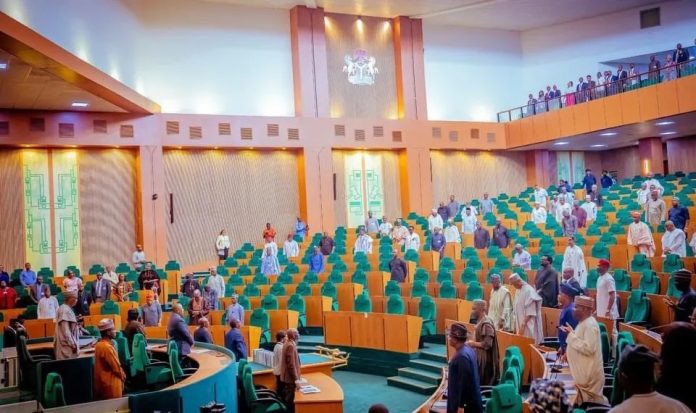
House Rescinds Earlier Bill: Reps withdraw their previously passed State Police Constitution Alteration Bill to consider President Tinubu’s Executive-sponsored proposal.
-
Conference Committee Dissolved: Lawmakers scrap the 12-member panel set up to harmonise differences between the House and Senate versions of the bill.
-
Executive Bill Advances: Tinubu’s State Police Bill scales first and second readings and is referred to the House Committee on Constitution Review.
-
Support for State Police Unchanged: House says the decision is to produce a stronger, more coherent constitutional framework—not a reversal of its support for state policing.
July 14, (THEWILL) — The House of Representatives has explained why it rescinded its earlier Constitution Alteration Bill seeking the establishment of State Police Services across the federation, saying the decision was taken to pave the way for the consideration of President Bola Tinubu’s Executive-sponsored proposal and ensure a single, comprehensive constitutional framework for the reform.
The decision was taken during Tuesday’s plenary, where lawmakers formally withdrew their earlier State Police Constitution Alteration Bill, dissolved the conference committee constituted to harmonise differences with the Senate’s version, and immediately proceeded to consider the Executive-backed legislation.
The Executive Bill, titled Constitution of the Federal Republic of Nigeria, 1999 (Alteration) Bill, 2026 (HB. 2797), subsequently passed first and second readings after a debate led by House Leader, Julius Ihonvbere, before it was referred to the House Committee on Constitution Review for further legislative action.

Why The House Changed Course
The House said its decision followed the transmission of the Executive Bill by President Tinubu, which introduced additional proposals on the structure, institutional framework and implementation of State Police Services that required fresh legislative consideration.
According to the House, proceeding simultaneously with its earlier bill and the Executive proposal would have resulted in parallel constitutional amendment processes on the same subject.
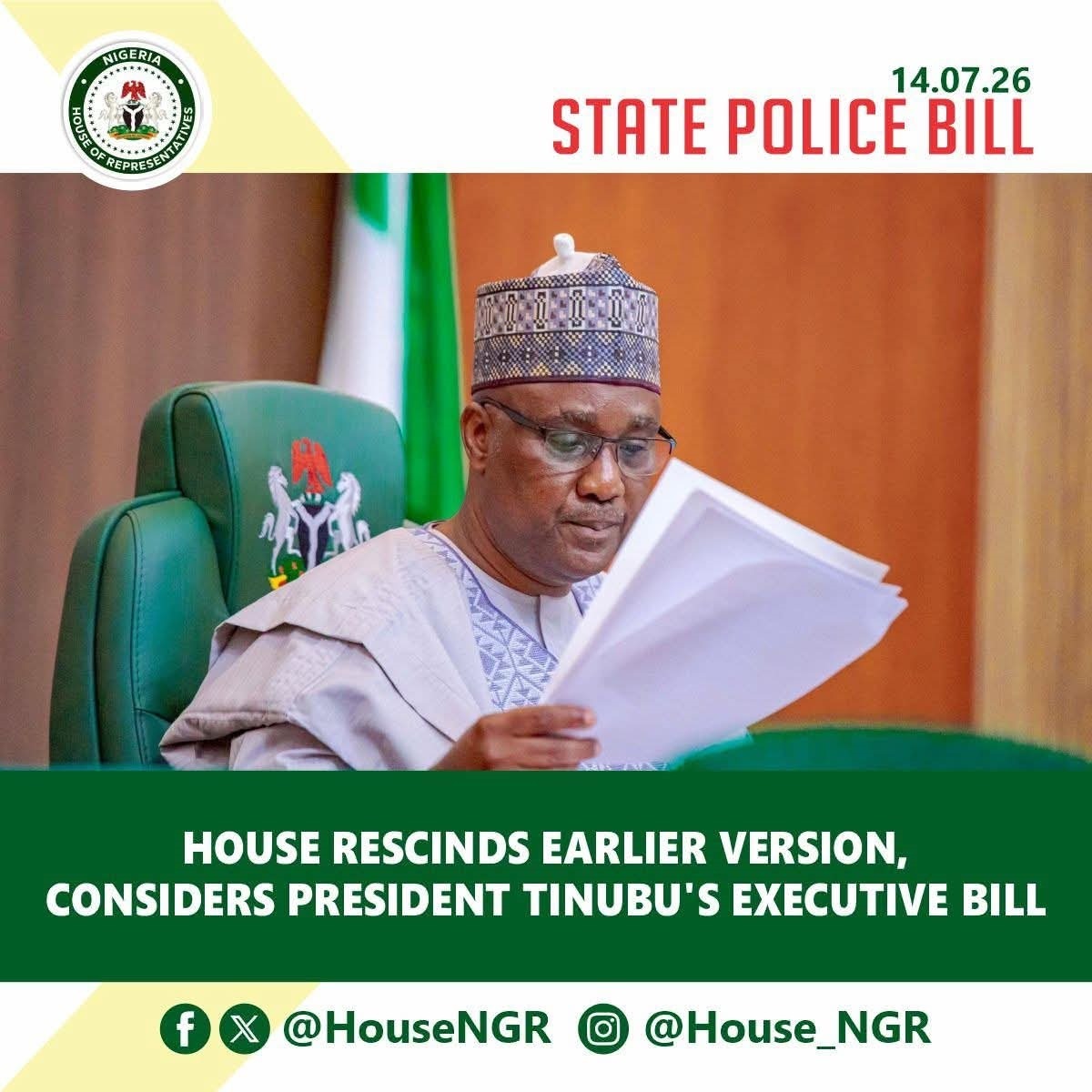
Lawmakers, therefore, resolved to rescind the earlier resolution to ensure a more efficient legislative process capable of producing a unified constitutional framework for state policing.
The resolution followed the adoption of a motion titled “Need to Rescind the Resolution on a Bill for an Act to Alter the Constitution of the Federal Republic of Nigeria, 1999 to Provide for the Establishment of State Police Services and for Related Matters and the Composition of the Conference Committee Pursuant to Order Nine, Rule 6 of the Standing Orders of the House of Representatives.”
The motion was sponsored by the Chairman of the House Committee on Rules and Business, Rep. Francis Waive (APC, Delta).
The House had earlier passed its own Constitution Alteration Bill establishing State Police Services on June 11, 2026, as part of the ongoing review of the 1999 Constitution.
Following the Senate’s consideration of a similar proposal, lawmakers on July 9, 2026, constituted a 12-member Conference Committee to reconcile differences between the versions passed by both chambers.
However, with the arrival of President Tinubu’s Executive Bill, lawmakers concluded that the new proposal should become the principal legislative vehicle for the constitutional amendment.
Consequently, the House rescinded its earlier resolution and dissolved the Conference Committee, effectively ending work on the previous version of the bill.
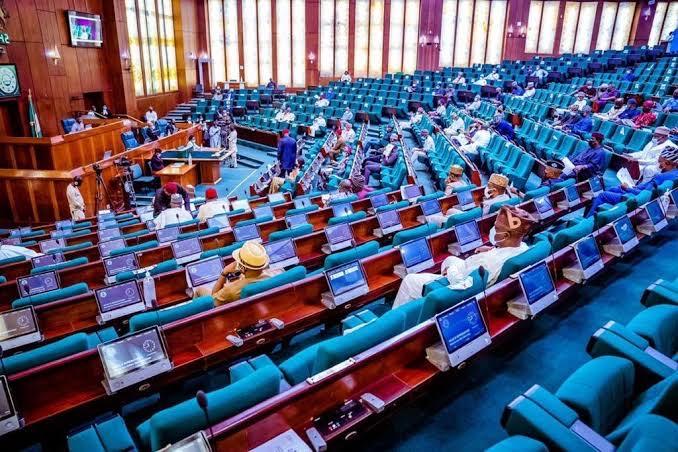
THEWILL recalls that the proposed legislation was earlier passed by the Senate on June 24, 2026.
Executive Bill Takes Centre Stage
President Tinubu transmitted the constitutional amendment as part of his administration’s broader efforts to overhaul Nigeria’s security architecture by introducing a dual policing system.
The proposed legislation seeks to amend the 1999 Constitution to enable states to establish and operate their own police services alongside the Federal Police.
Supporters of the proposal argue that decentralising policing will improve intelligence gathering, strengthen community policing, enhance rapid response to criminal activities and enable state governments to play a greater role in securing lives and property.
The Executive Bill has now been referred to the House Committee on Constitution Review, which is expected to conduct detailed scrutiny of its provisions before presenting its report to the House.

The House stressed that rescinding its earlier bill should not be interpreted as a withdrawal of legislative support for the establishment of state police.
Rather, lawmakers said the decision reflects their commitment to working with the Executive to produce a comprehensive, effective and constitutionally sound legal framework capable of addressing Nigeria’s evolving security realities.
According to the House, adopting a single Executive-backed proposal will eliminate duplication, enhance legislative efficiency and strengthen the eventual constitutional amendment.
What Happens Next
The House Committee on Constitution Review will now examine the Executive Bill, including its provisions on the establishment, administration, funding, oversight and operational framework of State Police Services.
The committee is also expected to review safeguards against political interference, command structures, accountability mechanisms and the relationship between state police formations and the Federal Police.
After committee consideration, the bill will return to the House for further legislative action.
If eventually passed by both the House of Representatives and the Senate, the constitutional amendment must secure the approval of at least two-thirds of the 36 State Houses of Assembly before it can be transmitted to the President for assent.

Felix Ifijeh is a journalist with years of professional reporting experience. Known for his keen news sense, compelling storytelling and commitment to accurate, impactful reporting, he has built a reputation for turning leads into clear, engaging, and well-structured reports that resonate with readers. His work reflects deep newsroom experience and a commitment to accurate, impactful journalism.
