
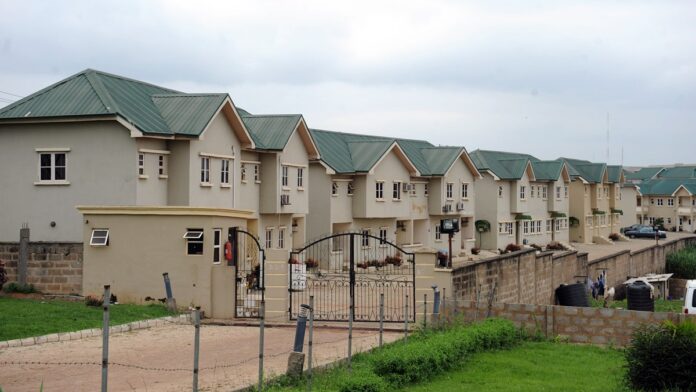
July 19, (THEWILL) — The sharp rise in residential rents across Nigeria’s major cities has exposed a widening disconnect between workers’ earnings and the cost of shelter, with new data showing that even employees earning the higher N85,000 minimum wage in Lagos and Rivers states are effectively priced out of the formal housing market.
Fresh rental estimates indicate that the cost of a modest two-bedroom apartment in Lagos can consume nearly eight years of a minimum-wage worker’s entire income, while the equivalent rent in Port Harcourt would require almost four years’ earnings.
That calculation assumes the worker spends nothing on food, transport, healthcare, electricity, education or other basic necessities.

The figures have intensified concerns about Nigeria’s deepening cost-of-living crisis. Although wages have risen in some states, rents and other household expenses have increased considerably faster, making decent accommodation increasingly unattainable for millions of working families.
According to June 2026 rental estimates released by Statisense, using data from Nigeria Property Centre, Lagos remains the country’s most expensive rental market. The average annual asking rent for a two-bedroom apartment climbed to N8.1 million, representing a 22.7 per cent increase from the previous year.
In Port Harcourt, Nigeria’s oil and gas hub, the average rent for a similar apartment doubled to N4 million, marking a 100 per cent year-on-year increase and one of the sharpest rental jumps recorded nationwide.
A Salary That Cannot Pay for Shelter
Nigeria’s statutory national minimum wage stands at N70,000 a month, but Lagos and Rivers states pay their lowest-paid workers N85,000 in recognition of the higher cost of living in both states.
Even that enhanced wage has failed to keep pace with soaring accommodation costs.
A worker earning N85,000 monthly receives approximately N1.02 million annually before deductions. At that income level, the worker would need almost eight years of total earnings to raise the N8.1 million average annual rent for a two-bedroom apartment in Lagos.
In Port Harcourt, where the average annual rent stands at N4 million, the same worker would need almost four years of earnings.
The situation is even more severe for workers in states implementing only the N70,000 national benchmark. With an annual income of N840,000, they would require nearly 10 years of earnings to match the average Lagos rent and close to five years to afford a similar apartment in Port Harcourt.
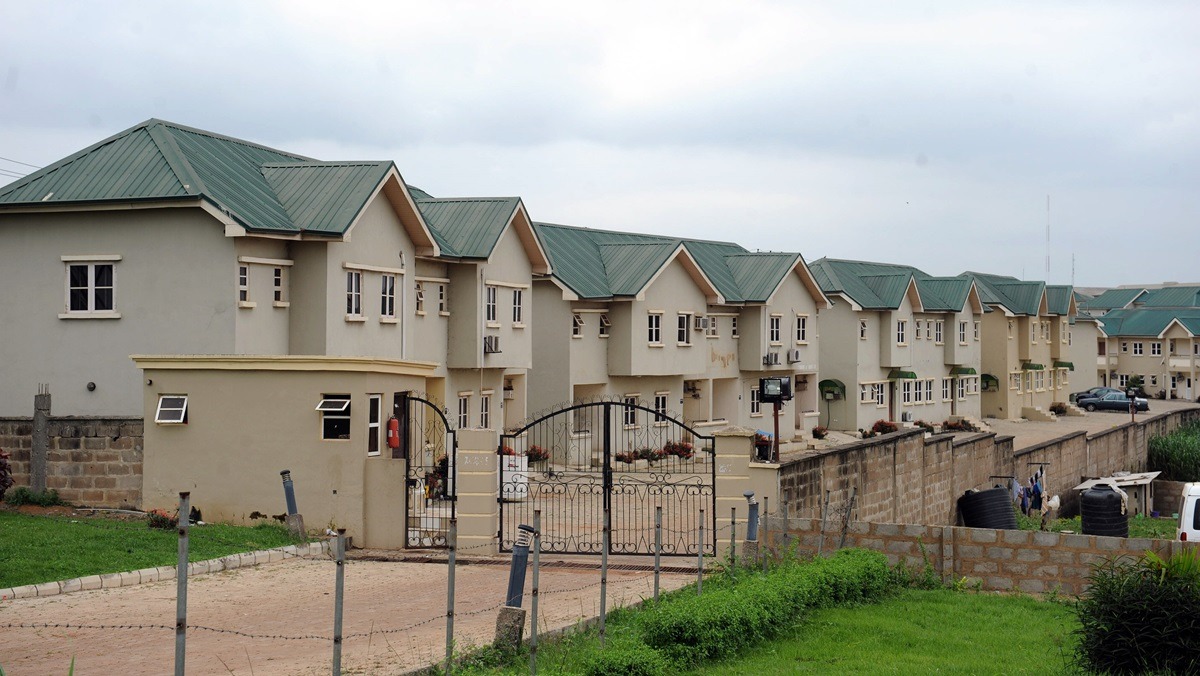
Housing costs at that level are far beyond conventional affordability standards, under which households should not have to devote most of their income to accommodation. The market realities reported by residents and property professionals suggest that the problem extends well beyond Lagos and Port Harcourt.
In Abuja, property developers said two-bedroom apartments in central districts such as Wuye and Jabi typically command between N5 million and N10 million annually, depending on the quality, age and accessibility of the property.
Even satellite communities once regarded as affordable alternatives are becoming increasingly expensive. Two-bedroom apartments in Lugbe and Kubwa can cost between N3 million and N5 million, while properties in more distant suburbs may still attract rents of N2 million or more.
Gideon Sule, chief executive of Gidi Steel Properties Limited, Abuja, said two-bedroom apartments had traditionally represented the middle ground between low-end and luxury housing but were now disappearing from the reach of average families.
“A two-bedroom in somewhere like Lugbe, for instance, is about N3 million. How many average Nigerian families can afford N3 million for rent in a year?” he said.
The Hidden Costs of Renting
Annual rent represents only part of the financial burden confronting prospective tenants.
Securing accommodation in Lagos, Port Harcourt and Abuja often requires additional payments for agency services, legal documentation, tenancy agreements, caution deposits and service charges. In many cases, tenants are also required to pay one or two years’ rent in advance.
These charges can add hundreds of thousands of naira, or even millions of naira to the amount required before a tenant receives the keys to a property.
Emmanuel Joshua, chief executive of Danga Homes Limited, Abuja said estate agents and property managers frequently charge between 15 and 20 per cent of the rent as agency and legal fees.
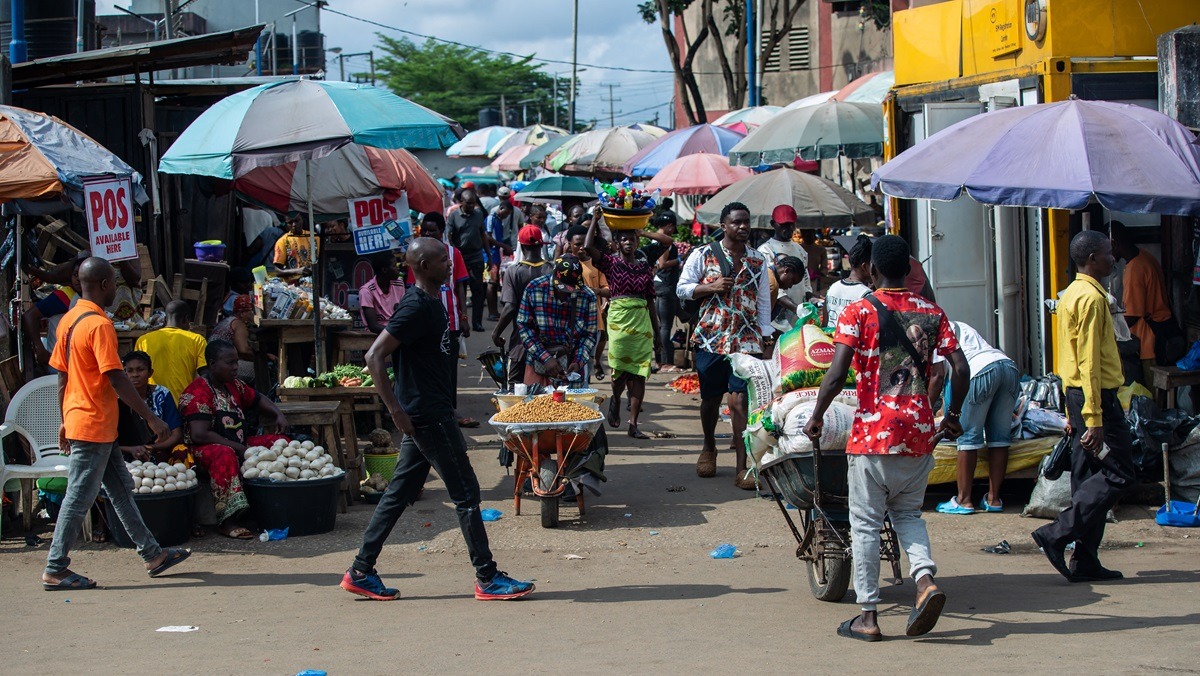
He said some agents also encourage landlords to demand at least two years’ rent upfront, while a smaller number seek payments covering as many as five years.
“If you are taking a house of N10 million and you have to pay 20 per cent in charges and two years’ rent, it becomes a burden on the tenant,” Joshua said.
Sule argued that excessive charges imposed by some property managers had further distorted the market. According to him, agency and legal fees on some properties now range between 25 and 30 per cent after management companies and independent agents add separate commissions.
He also questioned the practice of making tenants pay legal fees for tenancy agreements primarily prepared to protect landlords.
“It has never made sense to me why a tenant should pay the legal fee when the lawyer is the landlord’s lawyer and the tenancy agreement favours the landlord,” he said.
Service charges and caution deposits are another source of concern. Sule said some managers inflate estate service costs or impose caution fees on unfurnished properties with few fixtures that could reasonably be damaged.
In Port Harcourt, a resident identified as Mr Chibike said the cumulative demands had forced many prospective tenants to abandon their preferred neighbourhoods, share accommodation with relatives or friends, or remain in overcrowded homes.
For households already struggling with food inflation, transport costs and unreliable electricity, raising several years of rent alongside multiple transaction charges has become nearly impossible.
Why Rents Keep Rising
Property professionals attribute the rent surge to a combination of inflation, high construction costs, expensive land, exchange-rate volatility, limited access to affordable finance and a widening housing deficit.
The cost of cement, steel, tiles, roofing materials, electrical fittings and imported finishing products has risen sharply. Developers typically pass those expenses to buyers and tenants through higher property prices and rents.
Land acquisition and documentation costs have also increased, particularly in Lagos and Abuja, where infrastructure, commercial activity and population growth continue to drive demand.
At the same time, Nigeria’s major cities continue to attract workers and families searching for employment, education and better services. Lagos remains the country’s commercial centre, while Port Harcourt draws workers linked to the oil, gas and services industries.
With population growth and urban migration outpacing the construction of affordable homes, landlords retain considerable pricing power despite declining household incomes.
Adedoyin Ojikutu, managing director of Axial Global Integrated Limited, said two-bedroom apartments in mainland Lagos districts including Ikeja, Opebi, Surulere and Yaba can command between N5 million and N8 million.
Comparable prices are increasingly being demanded in parts of the Lekki corridor, including Ajah, Sangotedo and Ibeju-Lekki. Even Epe, once considered a more affordable alternative, now records rents of between N3 million and N6 million for some two-bedroom properties.
“How do you expect the common man to afford this kind of amount when the minimum wage is no more than what we are seeing?” Ojikutu asked.
The pressure is also spreading to cities with historically lower housing costs.
In Kano, two-bedroom apartments in areas such as Zoo Road, Gyadi-Gyadi and Badawa can cost between N700,000 and N1.5 million annually, while properties in Nasarawa GRA may command as much as N5 million.
Abdullahi Ishaq, a Kano resident, said homes priced between N350,000 and N500,000 could still be found in some suburbs, but these neighbourhoods frequently lack good roads, drainage and reliable water supply.
He attributed rising rents partly to the cost of renovations, as landlords increasingly install tiles, suspended ceilings, aluminium fittings and other modern features to attract higher-paying tenants.
In Benin City, rents remain lower than in Lagos, Abuja and Port Harcourt, but residents say the affordability problem is becoming more visible. Ibironke Agbojo, an interior designer and resident, said two-bedroom apartments in parts of the Government Reservation Area typically start from about N800,000, with modern fittings pushing prices higher.
The geographical differences are significant, but the pattern is similar: households must either pay more for habitable accommodation or accept cheaper homes in areas with poor infrastructure and longer commuting distances.
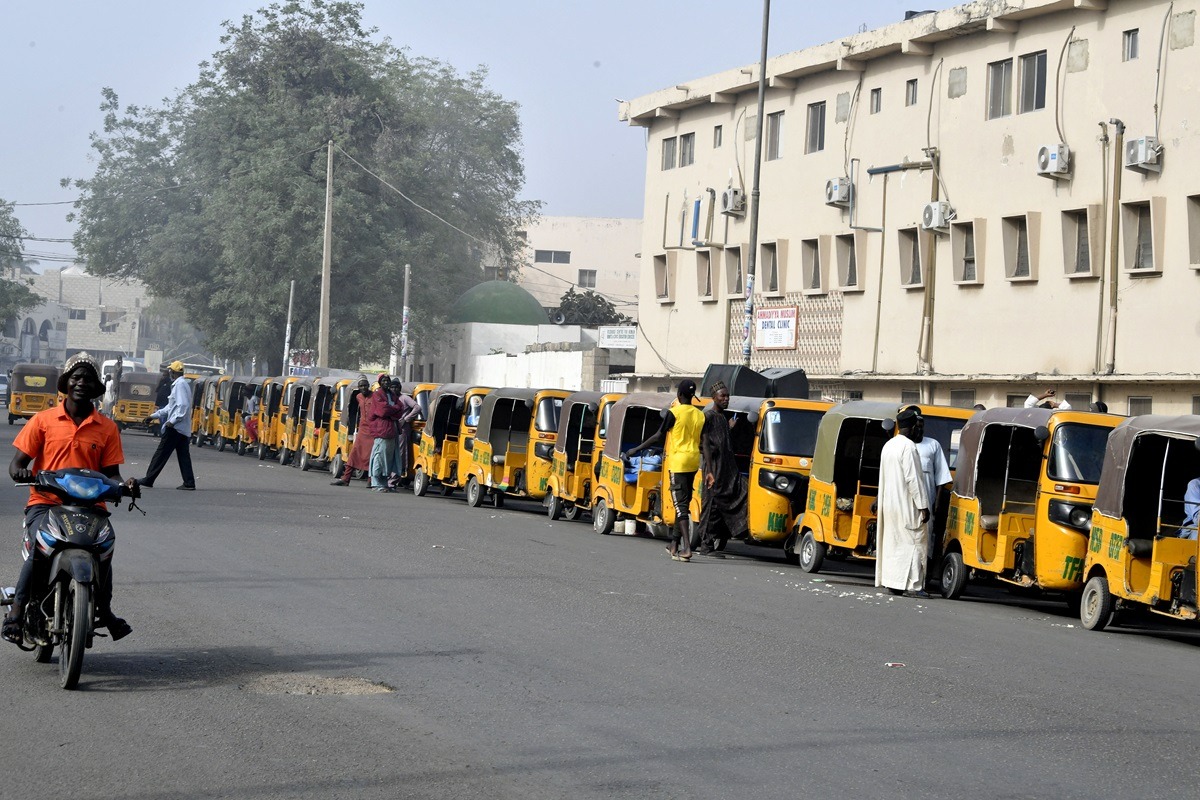
Minimum Wage Under Fresh Scrutiny
The latest rental estimates have reopened debate over whether Nigeria’s current wage structure reflects the country’s economic realities.
Although Lagos and Rivers states pay N85,000—above the N70,000 national benchmark—the figures suggest that salary adjustments alone will have little effect if inflation and housing costs continue rising more rapidly.
Housing affordability has become one of the clearest indicators of weakening purchasing power. Workers are not merely postponing the ambition of owning homes; many can no longer afford to rent suitable accommodation near their places of employment.
That pressure has encouraged overcrowding, informal settlements, longer commutes and shared housing arrangements. Workers pushed to distant outskirts may pay less in rent but spend more on transport, lose productive hours in traffic and remain exposed to communities with inadequate roads, water, sanitation and security.
The crisis also poses risks for employers. Workers dealing with unstable accommodation and lengthy commutes are more likely to experience fatigue, absenteeism and reduced productivity.
For Nigeria’s major cities, the mismatch between wages and housing costs is therefore no longer simply a private hardship. It has become an economic competitiveness and urban-planning problem.
Experts Demand Regulation and Mass Housing
Housing professionals are calling on federal and state governments to treat affordable accommodation as a national priority by accelerating mass housing programmes, expanding access to mortgages and reducing the administrative costs associated with land and construction.
Joshua said government-backed housing projects could help ease pressure on the rental market if homes were offered through affordable purchase, mortgage or rent-to-own arrangements.
He also suggested tax relief for landlords who provide accommodation at reasonable prices, alongside measures to widen access to property financing.
Nigeria’s mortgage market remains inaccessible to many low-income workers, leaving tenants with little choice but to produce large lump-sum payments. Expanding rent-to-own and long-term mortgage schemes could reduce the dependence on annual advance rent and provide households with a gradual path towards ownership.
Sule said regulation was equally important, arguing that rent increases, agency fees and other charges should not be determined without enforceable standards.
He proposed rental thresholds based on property size, quality and location, as well as stronger oversight of property managers and letting agents.
However, any rent-control system would need to be carefully designed. Limits imposed without expanding housing supply or reducing construction costs could discourage investment, push transactions into informal channels or lead landlords to withdraw properties from the market.
The more sustainable response would combine consumer protection with policies that make it cheaper and easier to build homes.
A Growing Social and Economic Emergency
Port Harcourt-based housing development expert Allwel Sekibo described the widening gap between wages and rents as an emerging social and economic emergency.
“Government can no longer leave affordable housing entirely to market forces,” Sekibo told THEWILL. “When a worker earning the minimum wage cannot afford decent accommodation despite working throughout the year, it becomes a governance issue, not just a housing issue.”
He urged governments to partner with private developers to construct affordable estates, review policies that increase building costs and establish financing schemes that allow low-income earners to rent or own decent homes without unbearable upfront payments.
“The reality today is that many workers are not just struggling to own homes—they are struggling to rent one,” he said. “Unless urgent action is taken, more families will be pushed into overcrowded settlements, and the social consequences will be enormous.”
For millions of Nigerians, the latest figures tell a sobering story: employment no longer guarantees access to shelter.
Until wages, housing supply, mortgage financing and the wider economy begin moving in the same direction, decent accommodation will remain beyond the reach of a growing share of the country’s working population.
Notice: Function wpdb::prepare was called incorrectly. Unsupported value type (object). Please see Debugging in WordPress for more information. (This message was added in version 4.8.2.) in /home/thewilln/public_html/staging.thewillnews.com/wp-includes/functions.php on line 6170
Notice: Function wpdb::prepare was called incorrectly. Unsupported value type (object). Please see Debugging in WordPress for more information. (This message was added in version 4.8.2.) in /home/thewilln/public_html/staging.thewillnews.com/wp-includes/functions.php on line 6170
Warning: Undefined variable $show_related in /home/thewilln/public_html/staging.thewillnews.com/wp-content/plugins/molongui-authorship/views/author-box/parts/html-tabs.php on line 30

Segun Adeyemi serves as the Associate Editor of THEWILL Newspaper, leveraging more than ten years of editorial expertise and a proven track record in mainstream journalism.

Felix Ifijeh is a journalist with years of professional reporting experience. Known for his keen news sense, compelling storytelling and commitment to accurate, impactful reporting, he has built a reputation for turning leads into clear, engaging, and well-structured reports that resonate with readers. His work reflects deep newsroom experience and a commitment to accurate, impactful journalism.
