
-
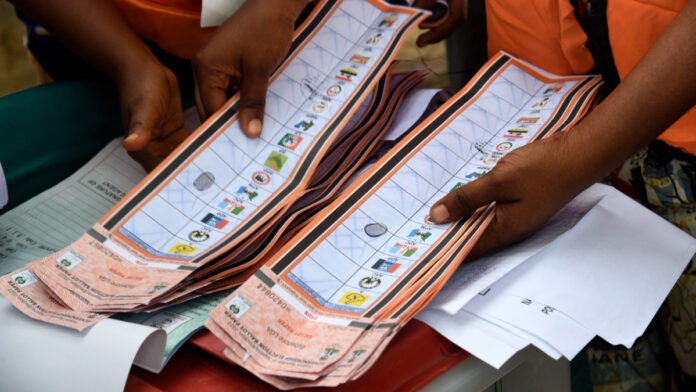
Yiaga Africa has raised concerns over an alleged shift from traditional vote buying to electronic voter inducement ahead of the Osun governorship election.
-
The election observer group said voters’ NINs, VINs and bank account details were allegedly collected months before ₦10,000 transfers were made to some residents.
-
The organisation also called on INEC to increase transparency in election result management by publishing its validation protocols and collation documents.
-
The report warns that while INEC’s preparations remain largely on schedule, voter inducement and insecurity pose significant risks to electoral integrity.
July 27, (THEWILL) — A new pre-election report by election observer group Yiaga Africa has raised concerns over what it describes as an emerging form of voter inducement in Osun State, alleging that personal data, including voters’ National Identification Numbers (NINs), Voter Identification Numbers (VINs) and bank account details, were collected months before electronic cash transfers were made to prospective voters ahead of the state’s governorship election.
The report, released ahead of the August 15, 2026 governorship poll, said the alleged practice represents a significant shift from the conventional vote-buying methods commonly associated with Election Day, warning that it could prove more difficult for election observers and law enforcement agencies to detect.
According to Yiaga Africa’s Watching the Vote (WTV) pre-election observation report covering 14 June to 13 July, residents of Ara Joshua Village in Osi Ward, Ife South Local Government Area, reportedly received electronic transfers of N10,000 on 7 July with the payment narration, Renewed Hope Ambassadors/APC EPYT.

The civil society organisation said its observers linked the payments to an earlier exercise carried out in March, during which individuals allegedly visited communities to collect voters’ VINs and NINs. The same individuals reportedly returned in June to obtain beneficiaries bank account details before the electronic transfers were made.
Yiaga Africa said the allegations were based on reports gathered by its trained long-term observers deployed across all 30 local government areas of the state. The organisation did not state whether the alleged payments were authorised by the All Progressives Congress (APC) or its governorship campaign, nor did it indicate that the party had admitted responsibility for the reported transfers. It warned, however, that the alleged pattern signals a new evolution in electoral malpractice.
“This emerging data-enabled model of voter inducement represents a growing electoral integrity concern,” the report stated, adding, “Unlike conventional vote buying at polling units, it occurs well before Election Day, leaves fewer visible traces, and is more difficult to detect through traditional election observation methods.” Beyond the alleged electronic transfers, Yiaga Africa documented other reported instances of cash and gift distribution in Irepodun, Ola-Oluwa, Olorunda and Osogbo local government areas.
According to the report, observers received reports that food items, including garri and beans, as well as cash gifts, were distributed during community engagements and campaign-related activities.
![Yiaga Africa Executive Director, Samson Itodo. [Photo Credit: Samson Itodo/Facebook]](https://staging.thewillnews.com/wp-content/uploads/2026/07/Samson-Itodo.jpg "Samson Itodo - THEWILL NEWS MEDIA")
Speaking on ARISE News, Yiaga Africa Executive Director, Samson Itodo, urged the Independent National Electoral Commission (INEC) to publish a comprehensive protocol explaining the movement of election results from polling units to final declaration.
“The public needs to understand what is the journey of results from the polling units to when declarations are made. And only when they understand that can they monitor and provide the oversight that is required to protect their votes in the elections and in the 2027 elections,” Itodo said.
Itodo said each polling unit now effectively produces three versions of election results: the physical EC8A result sheet completed at the polling unit, the electronic EC8A entered into the Bimodal Voter Accreditation System (BVAS), and the scanned EC8A uploaded to the IReV Portal.
He questioned how INEC intends to reconcile discrepancies if differences emerge among the three records.
The report comes as political activities intensify ahead of what observers describe as one of Nigeria’s most significant off-cycle elections before the 2027 general election.
The Osun governorship election is scheduled for August 15, 2026 and it is widely regarded as a key test of Nigeria’s evolving electoral framework ahead of the 2027 general election.
Notice: Function wpdb::prepare was called incorrectly. Unsupported value type (object). Please see Debugging in WordPress for more information. (This message was added in version 4.8.2.) in /home/thewilln/public_html/staging.thewillnews.com/wp-includes/functions.php on line 6170
Notice: Function wpdb::prepare was called incorrectly. Unsupported value type (object). Please see Debugging in WordPress for more information. (This message was added in version 4.8.2.) in /home/thewilln/public_html/staging.thewillnews.com/wp-includes/functions.php on line 6170
Warning: Undefined variable $show_related in /home/thewilln/public_html/staging.thewillnews.com/wp-content/plugins/molongui-authorship/views/author-box/parts/html-tabs.php on line 30

Segun Adeyemi serves as the Associate Editor of THEWILL Newspaper, leveraging more than ten years of editorial expertise and a proven track record in mainstream journalism.
Felix Ifijeh is a journalist with years of professional reporting experience. Known for his keen news sense, compelling storytelling and commitment to accurate, impactful reporting, he has built a reputation for turning leads into clear, engaging, and well-structured reports that resonate with readers. His work reflects deep newsroom experience and a commitment to accurate, impactful journalism.
