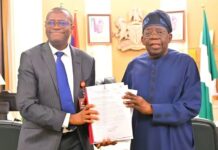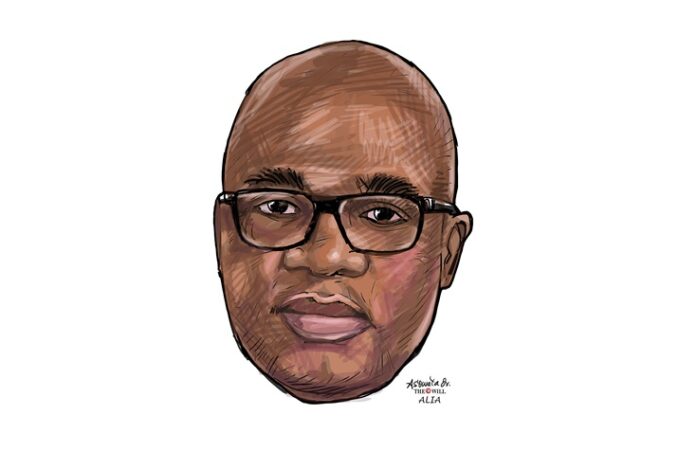
February 15, (THEWILL) — These are not the best of times for Governor Hyacinth Alia of Benue State. Battered politically from all fronts, his re-election bid faces stiff opposition from within and outside the state.
Governor Alia’s critics insist that the worsening insecurity in Benue has compounded his below average performance at the helm of the state.
In a shocking escalation of insecurity in Benue State, gunmen, on Sunday, February 10, 2025 abducted nine worshippers from Saint John’s Catholic Church, Ojije, in Utonkon District of Ado Local Government Area during a vigil service. Two days later, a Permanent Secretary, Dr. James Iorpuu, confirmed that at least 10 lives were lost and 10 motorcycles snatched by suspected armed herdsmen at Jato-Aka in Kwande Local Government Area of the state.

Confirming the attack, which took place in Utonkon District, Emmanuel Udah, a former councillor representing Ukwuenyo Ward in the Ado Local Government Legislative Council, described the abduction as “a targeted and planned crime against the Church, at the most sacred ground, a place of worship, peace, and refuge. Udah further decried what he called a growing sense of abandonment by government at all levels. He noted that similar attacks have become common across rural communities in Benue State.
“This incident is not isolated; it reflects a growing pattern of insecurity that rural communities in Benue State continue to endure in silence and neglect. We are raising our voices because silence will kill us all”, he stated.
Worse for the governor is the fact that his kinsmen from the Kunav bloc in Vandeikya Local Government Area are holding the growing insecurity in the state against him and as a point of assessment of his administration.
The group, comprising six governorship aspirants drawn from different political parties used the occasion of the celebration marking the 50th anniversary of the state to make an assessment and reflections on the future of the state.
According to the aspirants comprising Professor Dennis Ityavyar, Hon. Joseph Waya, Professor Paul Angya, Professor Terhemba Shija, Rt. Hon. Dominic Terkaa Ucha and ESV Godwin Ityoachimin, Benue at 50 is like a sick baby in urgent need of medication before its illness goes terminal and ends in the morgue.
“Persistent attacks on communities, irregular payment of salaries, decaying infrastructure and weak institutional capacity as indicators of leadership failure,” under Alia, whose administration could only generate N20.43 billion as internally generated revenue in 2024, despite being the food basket of the country.
They contended that the MDAs in the state are equally weak and underperforming despite the state receiving over N400 billion from the Federation Account Allocation Committee (FAAC) during the same period.
For them, the lack of proactive and exclusive leadership style of the governor is reflected in sustained deadly attacks, not only in a previous Sunday attack in Utonkon District of Ado Local Government Area but also in many other LGAs, such as Kwande, Guma, Logo, Apa, and Makurdi, coupled with the growing population of internally displaced persons, underscore the need for more proactive and inclusive leadership.
Attempts to draw the governor’s attention to a proven security alternative have been met with hostility, they contend. Rather, they said, the governor has been threatening the opposition with reprisals, even to the point of “beheading anyone who opposes him in the state.”
In his reaction, the Chief Press Secretary to the governor, Tersoo Kula, said that while Governor Alia respects the constitutional rights of citizens to free expression and political participation, “it must be stated in unambiguous terms that the said press conference was malicious in intent, misleading in content and vexatious in tone. It is a politically motivated outing, with its document crafted not to advance public interest, but to prosecute vendetta and desperately instigate disharmony where measurable progress is evident.
The CPS submitted that since Alia assumed office as the sixth democratically elected governor of the state, he has “pursued deliberate reforms in public finance management, civil service efficiency, education, healthcare delivery and rural infrastructure. Revenue leakages are being blocked, payroll fraud curtailed, abandoned projects given the needed attention and service delivery re-aligned with prudence and accountability. These are verifiable facts.
Accusing the aspirants of weaponising insecurity to score cheap political advantage, Kula stated that the administration “has never trivialised the pains of affected communities nor politicised human suffering.”
In a swift rejoinder, a group known as Benue Advocates for Justice and the Vice Chancellor of Mkar University in Gboko, Benue State, Zacharys Anger Gundu replied to the Chief Press Secretary that the position of the four aspirants was constitutionally grounded and patriotically motivated.
The Benue Advocates for Justice described Kula’s response as “a textbook example of evasion, distortion and official intolerance of civic responsibility.”
The group added, “Rather than engage the substance of the issues raised—security collapse, economic stagnation, humanitarian neglect and constitutional breaches—the statement resorts to name-calling, self-congratulation, and intimidation by rhetoric.”
The CPS lists roads, flyovers, breweries and institutions as proof that Benue is “not adrift.” But governance is not a photo album of projects—it is measured by lived reality. Let the government answer plainly: Are salaries and pension arrears paid regularly? Are IDPs resettled with dignity? Has insecurity reduced or expanded? Is there a public, coherent development plan? Are public accounts transparently accessible? Has Benue’s economic competitiveness improved?
According to the group, the tone of the CPS’s statement—threatening, dismissive and contemptuous of dissent—confirms precisely what the Joint KUNAV Aspirants warned against: the shrinking of the democratic space and the return of official intolerance.
VC Gundu, who issued a statement titled, ‘Blood on the Benue’ and confirmed it in a correspondence with THEWILL, said, “I am just a voter with one vote in the forthcoming general election and I intend to use it responsibly. Rev. Dr. Hyacinth Iormem Alia, our Governor, promised to visit Kwande today, following the Fulani massacre of our people a few days ago at Abande. He visited Kwande but stopped short of reaching Abande. He stopped at Anwase. Now, Anwase is not Abande. What could be the reason for this? I am not sure yet. I am afraid to say, but if the Governor failed to reach Abande where the Fulani struck and where those bereaved and affected were waiting for him, he has lost an opportunity to reassure the Abande people that their lives as citizens of the state matter and that he is capable of protecting them and ensuring that nothing close to what happened will ever happen again.
Father Alia has also lost the opportunity to assure Benue that Abande, even though it is so much out of the way, is part of Benue and no inch of Abande can be ceded to the Fulani of the world. Could Alia have been afraid to go to Abande and if he was indeed afraid, is he telling those citizens living there that they are on their own?. Kwande is an enigma. It is the land of gold, the sacred land of the Tiv. If anyone allows this land with all its economic potentials and its cultural significance to be wasted/desecrated he will be destroying himself. The God in heaven knows this. The other time people were killed in Kwande, a key government employee was heard on national television denying the killings.
I was restrained from commenting when I discovered the employee is with a sister as a wife. But I felt sad. …Elected and appointees MUST also realise that the protection of the people and communities where they have been elected/appointed is their responsibility. Those who are profiteering from solid minerals from Kwande MUST also realise that Kwande lives matter and if government turns away from Abande as if Abande is not part of Benue, as if it can be ceded out for gold, they risk an end with history that will be unfortunate. Abande lives matter. Turan lives matter. Kwande lives matter. Benue lives matter. Tiv lives matter. Alia must know this and adjust. It is not too late. History beckons.”
Felix Ifijeh is a journalist with years of professional reporting experience. Known for his keen news sense, compelling storytelling and commitment to accurate, impactful reporting, he has built a reputation for turning leads into clear, engaging, and well-structured reports that resonate with readers. His work reflects deep newsroom experience and a commitment to accurate, impactful journalism.