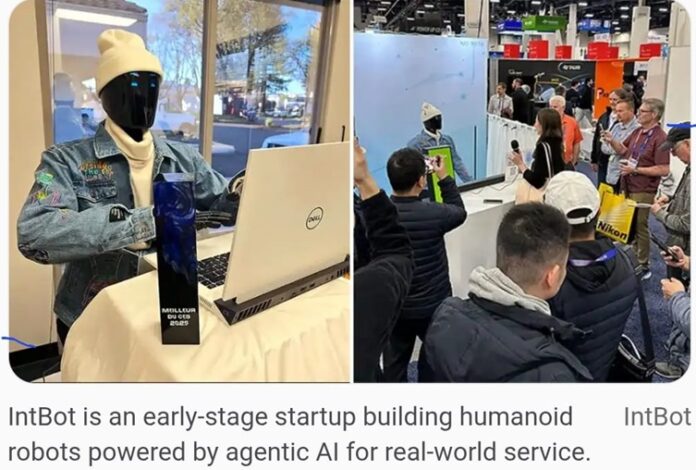
January 08, (THEWILL) — Nigeria’s tourism sector is preparing for a technological leap with an upcoming 2-Day AI-Driven Security Workshop, which will showcase cutting-edge solutions for hotels, airports, and recreational facilities.
The event will focus on how humanoid robots and Robot-as-a-Service (RaaS) can enhance safety, operational efficiency, and visitor confidence across the industry.
For hotels and resorts, the potential benefits are substantial. Humanoid robots will be able to monitor lobbies, corridors, and public areas discreetly, conduct night patrols, and provide a concierge-style security presence without intruding on guests’ privacy.

Real-time incident reporting is expected to reduce theft, unauthorised access, and reputational risks while maintaining seamless hospitality services. Guests will experience heightened safety and a modernised environment, positioning establishments as innovators in technology-driven guest care.
Airports and transport hubs, which face unique security challenges due to large crowds and heavy passenger flows, will learn how to deploy humanoids and autonomous dogoids for perimeter patrols, crowd behaviour monitoring, and baggage-area surveillance.
With real-time threat detection, human security teams will be able to respond faster without disrupting passenger flow, improving both operational efficiency and traveller confidence.
Tourism and recreational sites, including parks, beaches, museums, and event venues, will see how robotics can provide continuous security across high-traffic areas that are often expensive to patrol manually.
Humanoids can assist with hazard detection, crowd management, and visitor guidance, freeing staff to concentrate on enhancing experiences. Such technology will help destinations attract tourists who value safety as an integral part of their visit.
Speaking in Lagos today during an interview with BerexNews, technology expert David Mba highlighted the transformative potential of AI humanoids for tourism.
“Hotels, airports, and tourist attractions are under increasing pressure to provide safe, seamless experiences”, Mba said.
“Humanoids and AI-driven robots improve security, streamline operations, and enhance visitor engagement. These are not futuristic concepts; they are practical tools that operators can deploy to protect people, property, and reputation.”
The workshop will feature live and virtual demonstrations of AI security robotics, giving participants hands-on experience.
Attendees will explore cost-effective rental and RaaS models, showing how even facilities with limited budgets can adopt advanced technology. Sessions will also cover the integration of humanoids with existing CCTV networks and human security teams, ensuring AI solutions complement rather than replace staff.
Beyond operational efficiency, AI-driven security is expected to build trust among visitors—a crucial factor for destinations competing globally. Intelligent security systems demonstrate proactive management of safety risks, reassuring tourists and boosting a location’s reputation.
For Nigeria, adopting such innovations positions the country as a forward-thinking destination capable of offering safety, innovation, and world-class hospitality.
Industry experts predict AI humanoids will soon become standard in high-end hotels, airports, and major tourist attractions.
By combining robotics with hospitality and tourism services, operators can offer experiences that are not only memorable but also safe, efficient, and future-ready.
Humanoid and AI security systems are redefining tourism, transforming routine safety measures into a visible and reassuring part of the visitor experience.
The upcoming workshop will show how technology can integrate seamlessly with hospitality, ensuring that safety, efficiency, and guest satisfaction go hand in hand.

Janefrances Ebere Chibuzor is a Tourism Writer at THEWILL