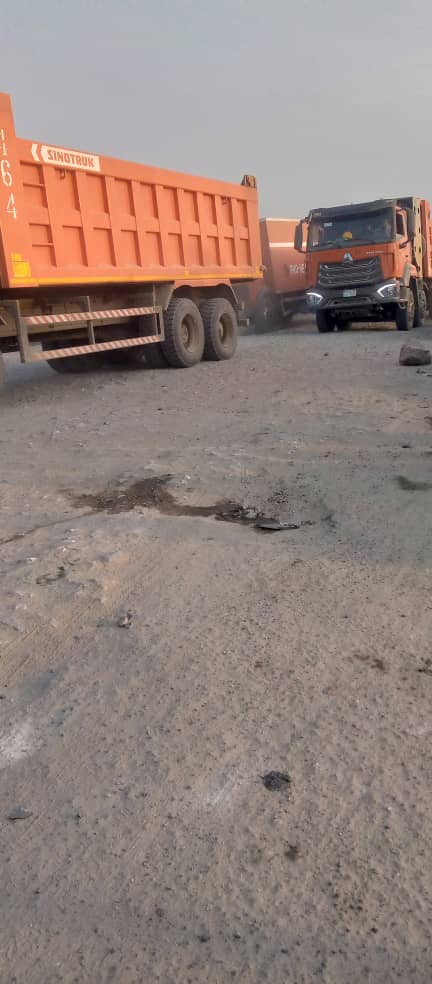
December 16, (THEWILL) — The Nigeria Union of Journalists (NUJ), Akwa Ibom State Council, has raised fresh alarm over the deplorable condition of the Calabar–Itu Highway, describing the road as a public safety disaster that has claimed countless lives over the last three decades.
The call by the union was contained in a communiqué issued at the end of its December State Congress, held at the NUJ Press Centre, Information Drive, Uyo, where journalists deliberated extensively on critical development and safety issues affecting residents of Akwa Ibom State.
According to the communiqué jointly endorsed by the leadership of the NUJ Akwa Ibom State Council, including Comrade Nsibiet John, State Chairman, Comrade Nsikak Esenowo, State Secretary and Comrade Okodi Okodi, Chairman, Communiqué Drafting Committee, the stretch of the highway between Ekim Junction and Oku Iboku Head Bridge has remained a death trap since the early 1990s, despite repeated appeals, budgetary allocations and promises of reconstruction by successive governments.

The Congress recalled numerous fatal road crashes involving commercial buses, fuel tankers, articulated vehicles and private cars, many of which plunged into deep gullies or collapsed sections of the road, particularly during the rainy season. Several prominent citizens, breadwinners, students, traders and public servants were said to have lost their lives on the road, leaving families and communities traumatised.
Residents of communities along the corridor told the Congress that the road has become impassable for days after heavy rainfall, forcing travellers to sleep in vehicles while exposed to security threats. They lamented that emergency responders often arrive late or not at all, worsening the death toll.
“This road has swallowed lives for over 30 years. Every rainy season, we count fresh graves. Government cannot continue to look away”, an affected resident, Mr Offiong Otu, said.
The NUJ noted that the poor state of the highway has also crippled economic activities, increased transport fares, slowed inter-state trade between Akwa Ibom and Cross River, and restricted access to healthcare for rural dwellers.
At the Congress, journalists urged the Akwa Ibom State Government to collaborate with the Federal Government to immediately take over and reconstruct the Calabar–Itu Highway, stressing that the scale of fatalities justifies an emergency intervention.
“A road that kills citizens year after year is no longer an infrastructure issue; it is a humanitarian crisis”, the NUJ declared.
Beyond the Calabar–Itu Highway, the Union also drew attention to the poor sanitary condition of Ukana Offot Street and the deteriorating internal roads in Uyo, calling for urgent repairs and improved waste management.
Congress further expressed concern over the deplorable state of the Ibaka Road in Mbo Local Government Area, a key route for seafood transportation to Uyo and other parts of the country, warning that continued neglect threatens livelihoods and food supply chains.
Journalists also raised alarm over the abandonment of critical roads such as the Eket–Ibeno Road, Ikot Akpan Abia Road, Ikot Iko and Ikot Akpa Edu, alongside persistent electricity outages in the affected communities, which they said have crippled local economies and worsened living conditions.
The Congress commended the Akwa Ibom State Government for the progress recorded at the NUJ Fourth Estate School and celebrated members of the Union who recently attained higher academic qualifications.
It concluded with a call for temporary safety measures, including the deployment of emergency response teams, road safety patrols and tow trucks along the Calabar–Itu Highway pending full reconstruction, while warning that the media would sustain advocacy until decisive action is taken.
“The lives already lost on this highway are too many to ignore. History will not forgive continued inaction”, the Union warned.