
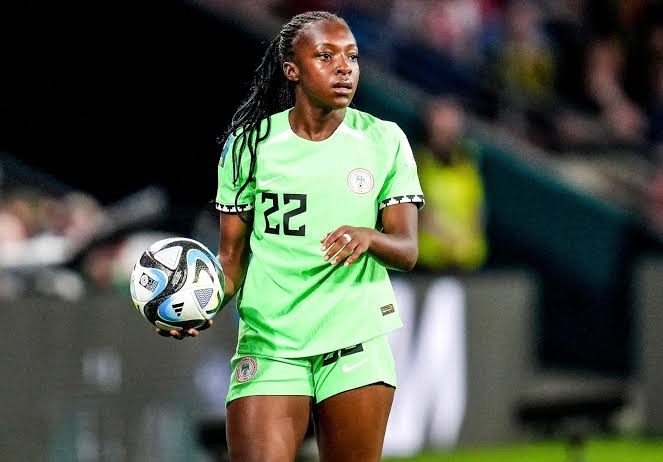
July 27, (THEWILL) — In their semi-final game against defending champions, South Africa, the Super Falcons of Nigeria once again proved their dominance in African women’s football, earning a hard-fought 2-1 victory over the Banyana Banyana at the 2024 Women’s Africa Cup of Nations (WAFCON), held in Casablanca, Morocco, on July 22. That triumph propelled Nigeria into the final and kept their hopes alive for a record-extending 10th continental title. The match, played at the Larbi Zaouli Stadium, was a gripping encounter between two of Africa’s footballing powerhouses, marked by intense rivalry, tactical battles and moments of individual brilliance.
It was clear that Nigeria entered the 2024 WAFCON to prove a point. The ladies had been defeated 2-1 by South Africa in the group stage of the 2022 tournament, a loss that stung deeply as Banyana Banyana went on to claim their first continental title. The Super Falcons, with nine WAFCON titles to their name, have long been the standard-bearers of African women’s football, qualifying for every FIFA Women’s World Cup since 1991. However, recent years have seen South Africa close the gap, with three victories in their last five competitive meetings, including that group room in 2022. This year’s semi-final clash was therefore billed as a “final before the final,” a testament to the stakes and the quality of both teams. Nigeria’s campaign in Morocco had been impressive, with an unbeaten record and no goals conceded prior to the semi-final, highlighted by a commanding 5-0 quarter-final win over Zambia, a team boasting a deadly global pairing in Barbra Banda and Racheal Kundananji.
The Super Falcons’ performance against Zambia exhibited their attacking depth and defensive strength. Osinachi Ohale opened the scoring just two minutes into the match, setting the tone for a dominant display. By half-time, Nigeria led 3-0, with goals from Esther Okoronkwo and Chinwendu Ihezuo. Tosin Demehin and Folashade Ijamilusi added further goals in the second half, completing a rout that silenced critics who had questioned coach Justin Madugu’s tactics after a goalless draw against Algeria in the group stage. The victory was a statement of intent, with five different players scoring, demonstrating Nigeria’s ability to spread their attacking threat. Goalkeeper Chiamaka Nnadozie, a standout performer throughout the tournament, maintained her clean sheet, reinforcing Nigeria’s defensive solidity.

Against South Africa, Nigeria faced their toughest test yet. Banyana Banyana, the defending champions, had reached the semi-final after a hard-fought penalty shootout victory over Senegal, with goalkeeper Andile Dlamini proving decisive. Despite their strong group stage performances, including a 4-0 win over Mali, South Africa were without star forward Thembi Kgatlana, who withdrew for personal reasons, leaving their attack reliant on players like Hildah Magaia and Linda Motlhalo. Nigeria, by contrast, had a fully fit squad, with key players like Ashleigh Plumptre and Chioma Okafor available despite minor injury concerns. Coach Madugu opted for an unchanged starting line-up from the Zambia match, with Asisat Oshoala, Deborah Abiodun, and Toni Payne on the bench, signaling confidence in his starting XI.
The semi-final began with Nigeria asserting early control, dominating possession and creating chances through quick transitions. In the opening minutes, Esther Okoronkwo and Chinwendu Ihezuo combined for a double chance, only to be denied by Dlamini and South Africa’s resolute defence. The first half saw Nigeria press relentlessly, with Ihezuo and Folashade Ijamilusi testing the Banyana backline. The breakthrough came just before half-time when Ijamilusi’s shot struck the hand of South Africa’s Bambanani Mbane, resulting in a penalty. Captain Rasheedat Ajibade stepped up, firing a low shot that Dlamini touched but could not stop, giving Nigeria a 1-0 lead at the break. The goal capped a first half in which Nigeria’s disciplined defence, led by Ohale and Tosin Demehin, limited South Africa’s attacking opportunities.
South Africa emerged with renewed intensity in the second half, pressing Nigeria’s defence and seeking to exploit set-pieces. Their efforts were rewarded in the 60th minute when Osinachi Ohale was adjudged to have tugged Hildah Magaia’s shirt in the box, leading to a penalty confirmed by VAR. Linda Motlhalo, South Africa’s midfield metronome with a tournament-leading 92% pass completion rate, converted the spot-kick, sending Nnadozie the wrong way to level the score at 1-1. The goal marked the first time Nigeria had conceded in the tournament, momentarily disrupting their rhythm. South Africa nearly took the lead in the 73rd minute when Noxolo Cesane met a deep cross, but her effort lacked power, and Ohale cleared off the line, redeeming her earlier mistake.
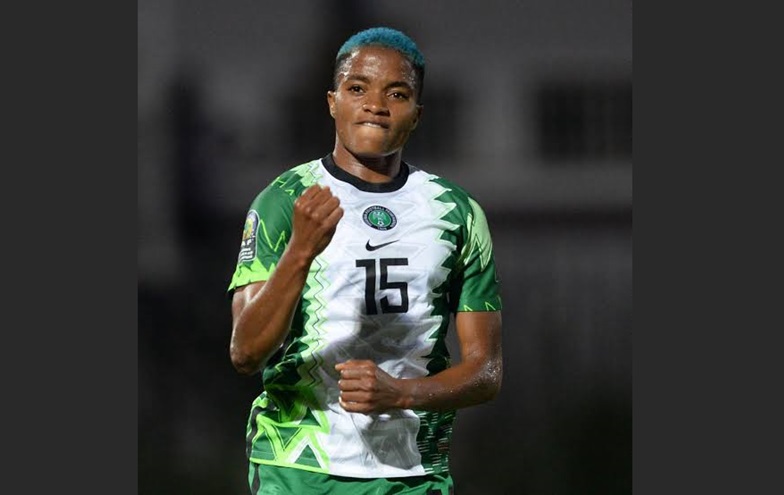
As the match appeared headed for extra time, Nigeria’s depth and determination shone through. In the 94th minute, right-back Michelle Alozie delivered a long-range ball from deep in her own half. Intended as a pass, the ball bounced just outside South Africa’s six-yard box, evading Dlamini and sparking confusion in the Banyana defence. Despite claims from Deborah Abiodun, replays confirmed the goal belonged to Alozie, whose opportunistic strike secured a 2-1 victory. The final minutes were tense, with South Africa’s Gabriela Salgado stretchered off after a serious-looking injury and tempers flaring, but Nigeria held firm through nine minutes of stoppage time. The victory sparked joyous celebrations among players and fans, reflecting the emotional weight of avenging their 2022 loss.
The tactical battle was a key factor in Nigeria’s success. Madugu’s side balanced defensive discipline with sharp attacking transitions, exploiting South Africa’s vulnerability to set-pieces and quick counters. Ajibade’s leadership and Okoronkwo’s four assists in the tournament underscored Nigeria’s attacking versatility, while Nnadozie’s goalkeeping provided a reliable last line of defence. South Africa, despite their possession-based approach, struggled to convert chances without Kgatlana, and Dlamini’s error on Alozie’s goal proved costly.
The Nigeria-South Africa rivalry added significant weight to the encounter. Historically, Nigeria have dominated, winning 15 of 23 meetings and six of 10 WAFCON clashes, including a penalty shootout victory in the 2018 final. However, South Africa’s recent successes, including their 2022 group-stage win, signaled a shift in the balance of power. However, that semi-final victory reaffirmed Nigeria’s status as Africa’s most successful women’s team, even as it also revealed Banyana Banyana’s growing competitiveness.
The broader context of the tournament further underscores Nigeria’s achievement. The 2024 WAFCON, postponed to 2025 to avoid clashing with the Paris Olympics, featured a doubled prize pot of $1 million for the winners, a reflection of the growing prominence of African women’s football. Nigeria’s unbeaten run and defensive record, conceding only one goal in five matches, position them as favourites for the Saturday 9:00pm final against hosts Morocco. The Super Falcons’ performance against South Africa showed their ability to handle high-pressure matches, a quality that will be crucial in their quest to reclaim the title the ladies last won in 2018.
For Nigerian fans, the victory was more than a semi-final win; it was a statement of intent. The Super Falcons’ blend of experience, with players like Plumptre and Ajibade, and emerging talents like Ijamilusi, has rekindled belief in their ability to dominate African football. Coach Madugu, who faced criticism earlier in the tournament, has been vindicated, with his tactical decisions, like benching Oshoala, paying dividends. South Africa, who lost to Ghana in the third-place playoff, will reflect on a valiant campaign marred by injuries and fine margins.
The Super Falcons’ journey to the final is a testament to their enduring quality and determination. Their victory over Banyana Banyana, earned through Ajibade’s penalty and Alozie’s late heroics, set the stage for a historic opportunity to claim a tenth WAFCON title in Saturday’s final. Fans across Africa and beyond will be watching as Nigeria aims to cement their legacy in Rabat. For now, the Super Falcons have proven that, even in the face of a formidable rival, they remain a force to be reckoned with in African women’s football.

Jude Obafemi is a versatile senior Correspondent at THEWILL Newspapers, excelling in sourcing, researching, and delivering sports news stories for both print and digital publications.
