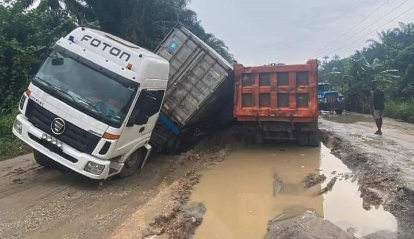
September 16, (THEWILL) — For anyone travelling the Calabar–Itu highway in recent years, the story is not just about potholes and gullies; it is about hope raised and dashed.
Year after year, officials announce contracts, take photographs at flag-offs, and allocate billions of naira, yet the road remains a death trap for commuters, traders and truck drivers who depend on it.
The highway, envisioned as part of the Lagos–Calabar coastal corridor to boost trade and regional integration, was allocated ₦185 billion under the NNPC tax-credit scheme in 2021.

Julius Berger, CCECC and SERMATECH were awarded contracts, with government promising an end to decades of neglect.
Four years later, the dual carriageway blueprint of the 1970s remains unfulfilled. Work has been sporadic and abandoned in several sections.
In July 2024, the Works Minister threatened to revoke contracts over “unacceptable delays,” but motorists insist little has changed.
The human cost is grim. On July 4, 2025, 16 people died in a truck accident on the Odukpani–Itu axis. Residents blamed the collapsed shoulders and swerving vehicles.
“These deaths are not accidents; they are the price of government failure,” said Chief Edet Bassey, a community leader.
“Farmers say the road has destroyed livelihoods. “I lost ₦250,000 worth of tomatoes last month when our vehicle broke down three times,” lamented Grace Effiong, a farmer from Odukpani.
Transporters complain of doubling repair bills. “We spend more fixing buses than we earn,” said driver John Udo.
Our correspondent observed how rains turn stretches of the highway into mud trenches. Floodwater eats away at the sub-base, while hollow asphalt collapses under heavy trucks.
Mechanics in Itu say broken axles and suspensions have become their mainstay, a niche market created by neglect.
The split contract arrangement has worsened the crisis, with firms trading blame over funding delays, compensation disputes, and right-of-way issues. The result is idle machinery and abandoned camps.
The economic toll is severe. The once 90-minute Calabar–Uyo trip now takes four to five hours. Fares have tripled, pushing up food prices.
Transport unions estimate drivers collectively spend over ₦500m yearly on repairs. Businesses are collapsing. A logistics firm in Calabar shut down in June, citing the road as “untenable.”
Security has also deteriorated. With vehicles stranded in gullies, robbers and kidnappers exploit the gridlock. Many now travel only by day. Parents fear for school children stuck for hours in traffic.
Civic groups describe the road as a “symbol of abandonment.” Protests and petitions have yielded little. Communities attempt self-help, pouring laterite into craters, but the rains wash it away.
Analysts recommend emergency stabilisation, proper drainage, and a single project manager with independent oversight. Without such measures, they warn, more lives will be lost long before any official ribbon-cutting.
Despite repeated assurances from the Works Ministry, motorists dismiss the promises as recycled. “They have flagged off this road more times than I can count,” scoffed driver Okon Asuquo.
For residents, the question is no longer about infrastructure alone but about governance. Does government value their lives?
Every cross planted along the roadside seems to answer otherwise.
Still, hope flickers. “This road is our lifeline. We will keep shouting until someone listens,” said Chief Bassey.
Until then, the Calabar–Itu highway remains a scar — 70 kilometres of broken asphalt, two decades of unkept promises, and a daily reminder that neglect kills.