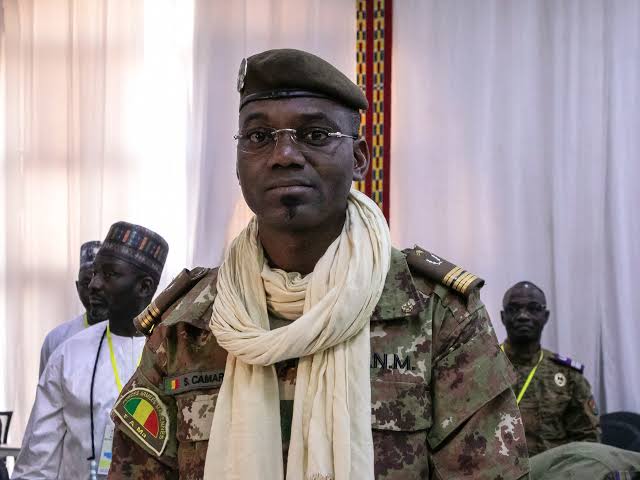
April 27, (THEWILL) — Mali’s Defence Minister, Sadio Camara, has died following an explosion in Kati near Bamako, as the country grapples with coordinated attacks across multiple regions.
His family confirmed that Camara was killed in suicide truck bombing that targeted his residence in Kati on Saturday. The explosion reportedly resulted in multiple casualties, including at least three members of his family.
The incident formed part of a broader, highly coordinated offensive attributed to militants linked to al-Qaeda, who launched near-simultaneous strikes across several regions on Saturday. Fighting was recorded in Kati, Gao, Kidal, Sévaré and Mopti, underscoring the scale and synchronisation of the assaults.

Although Mali’s military authorities have yet to issue an official statement confirming the Defence Minister’s death, security around the country’s leadership was immediately reinforced.
Reports indicate that Head of State, Assimi Goïta, was moved to a secure location after his residence was also considered a potential target during the attacks.
Mali has faced persistent insecurity for over a decade, driven by insurgencies from jihadist groups and separatist movements, particularly in the northern and central regions.
Armed groups affiliated with al-Qaeda and extremist networks linked to the Islamic State continue to maintain a strong presence, exploiting weak state control in remote areas.
The separatist Azawad Liberation Front (FLA) has also intensified its push for an independent Tuareg state in northern Mali.
Clashes have resumed in Kidal between government forces and FLA fighters, with the group claiming control of the area, although this has not been independently verified.
The FLA further claimed it had reached an arrangement with Russian Africa Corps personnel to facilitate their withdrawal from Kidal. A field commander reportedly indicated that the offensive had been planned for months, with ambitions to extend operations to major northern cities, including Gao and Timbuktu.
In response, authorities imposed a 72-hour nightly curfew in Bamako from 9:00 p.m. to 6:00 a.m., effective April 25, 2026, alongside intensified patrols, checkpoints and search operations aimed at restoring order and preventing further attacks.
Mali, alongside Niger and Burkina Faso, recently exited the Economic Community of West African States following military coups that brought their governments to power.
The country has remained under military rule since Assimi Goïta seized power in 2020, with authorities pledging to restore stability and reassert control over all territories.
Despite these commitments, large parts of Mali remain outside effective government control. However, the latest security measures signal renewed efforts by authorities to contain the crisis and stabilise the country following one of the most significant coordinated attacks in recent years.

Felix Ifijeh is a journalist with years of professional reporting experience. Known for his keen news sense, compelling storytelling and commitment to accurate, impactful reporting, he has built a reputation for turning leads into clear, engaging, and well-structured reports that resonate with readers. His work reflects deep newsroom experience and a commitment to accurate, impactful journalism.