
-
The ECOWAS Parliament has endorsed calls for sanctions against member states that fail to comply with regional trade protocols.
-
Lawmakers argued that stronger enforcement is needed to remove barriers to the free movement of people, goods and services.
-
They also urged governments to integrate more MSMEs into formal regional trade and improve access to finance and infrastructure.
-
The proposal now shifts attention to ECOWAS heads of state, who would decide whether to adopt enforcement measures.
July 29, (THEWILL) — West African lawmakers have backed calls for sanctions against member states that fail to implement regional trade protocols, arguing that stronger enforcement is needed to accelerate economic integration and remove longstanding barriers to cross-border commerce.
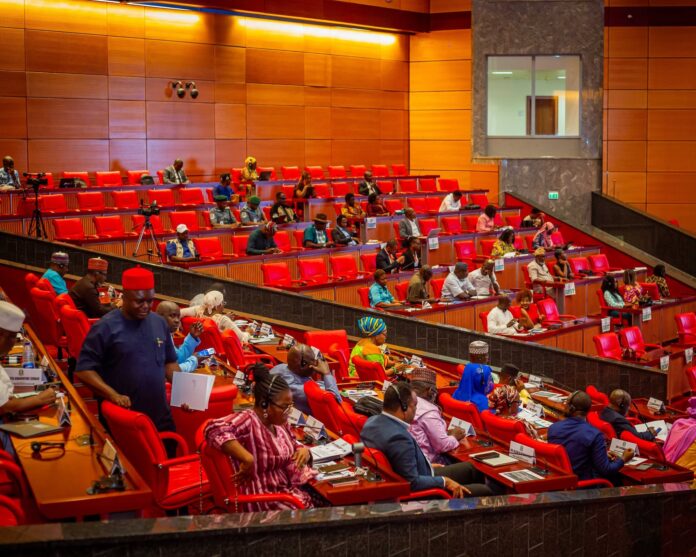
The position emerged during a delocalised meeting of the ECOWAS Parliament’s Joint Committee on Industry and Private Sector, Macroeconomic Policy and Economic Research, Administration, Finance and Budget, and Public Accounts in Cotonou, Benin Republic.
The endorsement follows a recommendation by Dr Tony Luka Elumelu of the ECOWAS Business Council Secretariat, who earlier urged the regional bloc to impose penalties on countries that fail to comply with trade agreements designed to facilitate the free movement of people, goods and services across West Africa.

Speaking on the sidelines of the meeting, Nigerian lawmaker Bashiru Dawodu said sanctions could encourage governments to fully implement existing ECOWAS trade commitments, arguing that the region’s economic potential continues to be undermined by weak integration.
“We are about 400 million people… generating billions of dollars, but our challenge is that we are not integrated,” Dawodu said. “We are all in silos. If countries know that there are sanctions, I think they would do better.”
He stressed that the free movement of goods, services and people remains central to achieving the bloc’s economic objectives and strengthening regional businesses.
Lawmakers Push MSME Integration
![Passers-by, customers and traders visit the Makola market in the center of Ghana's capital. The market is considered one of the largest urban markets in Africa. [Photo Credit: Christina Peters//picture alliance via Getty Images]](https://staging.thewillnews.com/wp-content/uploads/2026/07/FotoJet-67.jpg "Ghana Market - THEWILL NEWS MEDIA")
According to him, improving access to financing, expanding infrastructure and formalising small businesses would strengthen intra-regional trade and create broader economic opportunities.
“Most of our people are in small and medium-scale businesses, and many operate in the informal sector,” he said. “The objective is to strengthen their involvement through better integration of goods and services, improved financing and stronger infrastructure.”
Liberian parliamentarian Taa Wongbe also called for stricter enforcement of existing regional agreements, saying West Africa continues to face many of the same trade obstacles despite decades of integration efforts.
Drawing on personal experience, Wongbe said roadblocks, border delays and administrative bottlenecks continue to increase the cost of transporting goods across the region, making trade more expensive for businesses and consumers.
“After all these years we are still experiencing the same challenges,” he said, recalling journeys across several West African borders that often involved lengthy delays.
Wongbe proposed the establishment of a parliamentary committee to conduct visits to border crossings across the region to assess the scale of the challenges firsthand.
He argued that direct observation would strengthen the parliament’s ability to pressure national governments into removing unnecessary barriers to trade.
According to Wongbe, persistent roadblocks and border restrictions affect trade routes linking countries including Liberia, Ghana and Sierra Leone, contributing to higher prices for goods across the region.
The discussions reflect growing concern within ECOWAS over the slow implementation of protocols intended to deepen regional integration. Although the bloc has long promoted the free movement of people and goods, businesses have continued to report challenges ranging from border delays to inconsistent application of trade rules by member states.
The proposed sanctions would ultimately require the approval of ECOWAS member state leaders, who hold the authority to determine whether punitive measures should be introduced against countries that fail to meet their obligations under the bloc’s trade framework.
Lawmakers argued that stronger compliance with regional agreements would help expand opportunities for MSMEs, stimulate intra-African trade and contribute to broader efforts to reduce poverty, unemployment and insecurity across West Africa.

Segun Adeyemi serves as the Associate Editor of THEWILL Newspaper, leveraging more than ten years of editorial expertise and a proven track record in mainstream journalism.
