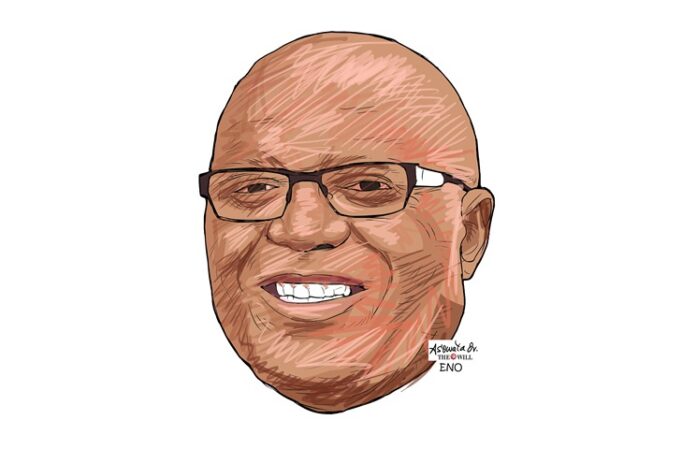
April 19, (THEWILL) — Across Akwa Ibom State, the rhythm of commerce begins early in the morning on market days. Long before sunrise, stalls reopen, goods are arranged and small transactions quietly power a larger economic engine. It is here, far from boardrooms and policy briefings, that the impact of Governor Umo Eno’s ARISE Agenda is becoming most visible.
At the heart of this transformation there is a deliberate shift:Development, not as distant infrastructure, but as direct investment in people, systems and communities that sustain daily life.
One of the clearest expressions of this approach is the N2 billion traders’ grant, a programme designed to strengthen grassroots commerce by placing capital directly in the hands of market men and women. Unlike traditional financing models, it removes the burden of repayment, allowing beneficiaries to focus fully on rebuilding and expanding their businesses.

“This is about empowering our people at the base of the economy,” Governor Eno said, speaking during a recent disbursement.
“When you support the trader, you support the family, and when you support families, you strengthen the state,” the governor added.
Implemented across all 31 local government areas, the grant is distributed through verified market structures and community networks. This method ensures that support reaches active traders while reinforcing transparency and accountability in the process.
Rather than concentrating resources in urban centres, the rollout has followed a phased and inclusive pattern, extending to rural markets and smaller communities often left out of large-scale interventions. The result is a broader spread of opportunity and a more balanced economic impact.
For many traders, the immediate effect is relief. With access to direct funding, they can restock goods, stabilise operations and avoid the cycle of high-interest informal loans that often erode profits.
But beyond short-term support, the initiative is driving business expansion. Traders are increasing inventory, diversifying products and improving turnover, gradually building more resilient enterprises within the local economy.
The ripple effects are visible across markets. Increased activity has made trading hubs more vibrant, while the steady circulation of money, from wholesalers to retailers and consumers has strengthened economic linkages across communities.
Complementing this effort is the expansion of ward-level cooperative societies, another pillar of the ARISE Agenda aimed at organising grassroots economic activity into structured and sustainable systems.
These cooperatives bring together traders, farmers, artisans and small business owners within individual wards, allowing them to pool resources, share risks and access opportunities collectively rather than in isolation.
According to Governor Eno, “Development must be structured to last. Through cooperatives, we are creating systems that will continue to work for the people beyond immediate interventions.”
By serving as organised channels for government support, cooperatives improve the targeting and monitoring of resources. Funds distributed through these groups are easier to track, reducing misuse and strengthening trust between communities and government.
They also lower barriers to financial access. Members are better positioned to benefit from grants and other support mechanisms that are often difficult to obtain individually.
Within communities, this collective model is reinforcing local economies. Money circulates more efficiently among members, businesses grow with shared support, and economic activity remains rooted within the locality.
Equally significant is the role of these cooperatives as long-term development platforms. Once established, they provide ready channels for future programmes in agriculture, trade and skills development, making subsequent interventions more effective.
The ARISE Agenda extends beyond commerce into human capital, with the “One Model Primary School Per Local Government” initiative addressing the foundation of education.
Designed to establish a clear standard for public primary education, the programme focuses on creating structured, well-equipped learning environments that support both teaching and learning.
Each model school is built with attention to space, sanitation and functionality, ensuring consistency in quality regardless of location. This uniform standard reflects an effort to close the gap between rural and urban education.
For pupils, the benefits are immediate: improved concentration, better learning conditions and stronger academic outcomes. For teachers, it provides an environment that enhances instructional delivery.
The initiative is also restoring confidence in public education. As facilities improve, more families are willing to enrol their children in government schools, reducing the financial burden of seeking private alternatives.
Beyond academics, these schools serve as community anchors symbols of progress that encourage parental involvement and reinforce the value of education.
Taken together, the traders grant, cooperative system and model schools reveal a coherent development strategy, one that connects economic support, institutional structure and human capital.
At its core, the ARISE Agenda recognizes that meaningful growth begins at the grassroots, where small businesses, organized communities and foundational education intersect to shape long-term progress.
Governor Eno captures this philosophy succinctly: “Our goal is simple; to ensure that development is not just seen, but felt in every home, every market and every community.”
In Akwa Ibom, that goal is steadily taking shape, not through isolated projects, but through a system designed to grow from the ground up.