

January 11, (THEWILL) — Nigeria’s commanding 4-0 victory over Mozambique in the round of 16 at the Africa Cup of Nations propelled the Super Eagles into the quarter-finals with a statement of intent that resonated far beyond the scoreline. Played at the Complexe Sportif de Fes on 5 January 2026, the match showed a team that had rediscovered both its attacking verve and defensive solidity under manager Eric Chelle, maintaining a perfect record that stretched across all four matches played by the squad in Morocco.
The comprehensive nature of the win marked a significant moment in the tournament. Ademola Lookman opened the scoring in the 20th minute with a composed finish after receiving a pass from Akor Adams, who had beaten his marker on the left. Five minutes later, Victor Osimhen doubled the advantage, converting a low cross from Lookman with characteristic predatory instinct. The striker’s brace, completed just 90 seconds into the second half when he tapped home another Lookman delivery, effectively ended the contest. Adams completed the rout in the 75th minute, smashing home from inside the penalty area to cap a performance in which he contributed both a goal and two assists.
What distinguished this victory from mere numerical superiority was the manner of its execution. Nigeria controlled 60 per cent of possession and created numerous chances throughout, dominating territory and tempo whilst limiting Mozambique to minimal opportunities. The defensive unit, marshalled by Calvin Bassey and Semi Ajayi, kept the dangerous winger Geny Catamo quiet throughout the 90 minutes, earning Nigeria her first clean sheet of the tournament. This defensive improvement, allied to the attacking prowess that has yielded 12 goals in four matches, suggests a team finding balance at precisely the right moment.

The tactical evolution under Chelle has been striking. The manager has implemented a direct, vertical style of play that suits Nigeria’s quick attackers, enabling them to transition rapidly from defence to attack and catch opponents before defensive lines can be established. Operating in a 4-2-3-1 formation, with Wilfred Ndidi captaining from midfield, the Super Eagles demonstrated both the individual quality and collective discipline required at this level. Alex Iwobi’s performance in the creative heart of midfield proved instrumental, his accurate through balls and distribution to the wings providing the platform for Nigeria’s dominance.
The result extends a remarkable sequence for Nigeria, who won all three group matches against Tanzania (2-1), Tunisia (3-2) and Uganda (3-1) to top Group C with nine points. This perfect record mirrors successful campaigns from 1992, 2006 and 2022, though the current goal tally surpasses those previous runs. The squad depth that Chelle has cultivated appears crucial for a long tournament. Substitutions of Paul Onuachu and Samuel Chukwueze in the second half bore testament to the competition for places, whilst minimal rotation during the group stage ensured key players remained fresh.
For Mozambique, the evening represented both achievement and harsh reality. Their presence in the knockout stages was a mark of historic progress for a nation that had never previously won a match at the Africa Cup of Nations before this tournament. Having broken that streak with a dramatic 3-2 victory over Gabon in the group stage, the Mambas reached uncharted territory. Coach Chiquinho Conde had built a team on strict principles and hard work, advancing as one of the best third-placed sides from Group F despite losses to Ivory Coast (0-1) and Cameroon (1-2).
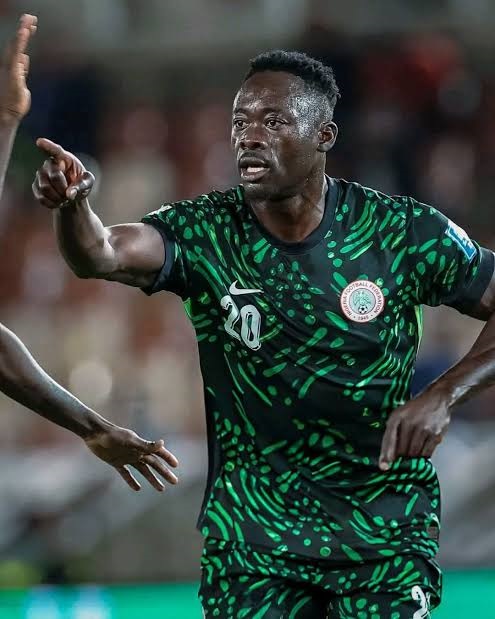
Yet the gulf in quality proved insurmountable. Mozambique managed no shots on target and were repeatedly drawn out of position by Nigeria’s movement and pace. Bruno Langa’s defensive line resorted to tactical fouls to stem the tide, but Nigeria’s attacking patterns proved too sophisticated. The experience gained, however, provides valuable data for future campaigns, even if the manner of departure was decisive.
Individual performances illuminated Nigeria’s comprehensive approach. Lookman’s goal and two assists earned widespread praise, his movement and technical ability testing defenders throughout. The performance saw him named in the round of 16 team of the tournament. Osimhen’s double marked his 50th cap for Nigeria in fitting fashion, taking his tournament tally higher after a sluggish start in earlier matches. Adams emerged as a revelation, contributing across all phases of attack with intelligent link play complementing his clinical finishing.
The victory positions Nigeria among the tournament favourites, though the path ahead steepens considerably. Their quarter-final in Marrakech on 10 January 10 will pit them against Algeria, an opponent of substantially greater pedigree than Mozambique. The 2019 champions possess tactical discipline and tournament experience, whilst Nigeria have lost their last three encounters with the North Africans.
Chelle addressed this challenge directly in post-match comments, noting that whilst the four-goal margin represented a strong statement, it constituted merely one step towards the ultimate objective. The coaching staff will have to analyse their opponent meticulously because maintaining the intensity and conversion rate demonstrated thus far will prove essential. There is also the concern that Nigeria’s midfield can be exposed during transitions, a vulnerability that superior opposition may exploit.
The broader tournament context enhances Nigeria’s credentials. They join Egypt and Morocco in the quarter-finals, with a semi-final clash against Cameroon or the host nation looming. Sponsors offered bonuses of $10,000 per goal in the knockout stages, double the group stage amount, potentially sharpening focus. Resolved bonus disputes before the fixture on Saturday ensured squad harmony, whilst the return of Ryan Alebiosu from injury bolstered options despite Cyriel Dessers’ absence.
Nigeria’s 16 previous semi-final appearances at the Africa Cup of Nations testify to their pedigree in this competition. The current squad, featuring players from top European clubs who blend tactical sophistication with traditional African passion, appears equipped to extend that legacy. Whether this represents the foundation for a fourth continental title, their first since 2013, will become clearer in Marrakech. For now, the manner of the Mozambique victory has transformed optimism into genuine belief.

Jude Obafemi is a versatile senior Correspondent at THEWILL Newspapers, excelling in sourcing, researching, and delivering sports news stories for both print and digital publications.
