
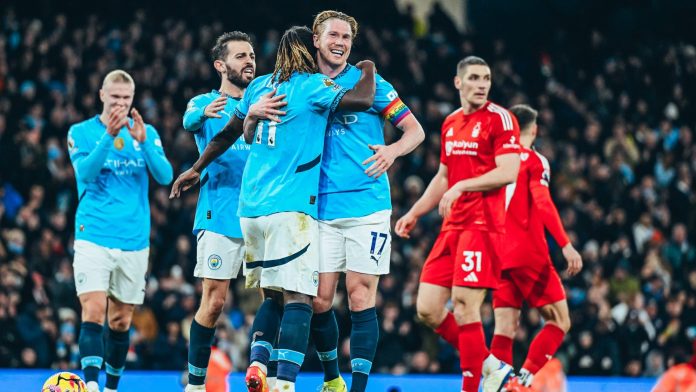
December 09, (THEWILL) – Manchester City Football Club, synonymous with dominance under manager, Pep Guardiola, find themselves in an extraordinary predicament that has cast doubt over their previously untouchable status. Having just recently gone seven matches without a win, including six defeats and a draw against Feyenoord in the UEFA Champions League, where they squandered a 3-0 lead to draw 3-3, this period represents the most turbulent of Guardiola’s tenure. Their position in the English Premier League is equally concerning, with City sitting in fourth place and trailing league leaders Liverpool by nine points. The club’s current struggles are starkly at odds with the consistency and control that have defined their recent history.
The rot began to set in with a string of defensive frailties and a puzzling lack of clinical finishing, areas that have rarely been issues for Guardiola’s meticulously crafted sides. City’s loss to Liverpool, a 2-0 defeat that was more comprehensive than the scoreline suggests, exemplified these issues. Liverpool’s high press and cohesive midfield overpowered City’s attempts at controlling the game. Mohamed Salah’s creative brilliance and Cody Gakpo’s early strike set the tone, and a late penalty conversion by Salah sealed City’s fate. Across these matches, Guardiola’s side has conceded far too many avoidable goals, with lapses in concentration proving costly. Even their lone point from the past seven games, the draw against Feyenoord, was marked by an alarming collapse, throwing away a commanding lead in the final fifteen minutes.
This dip in form has been attributed to several factors, chief among them the absences of Kevin De Bruyne, whose creative influence has been sorely missed, and the midfield defensive solidity of the injured Rodri. De Bruyne’s ability to dictate play and deliver crucial assists has been the engine of City’s attacking rhythm in recent years, and without him, the team has struggled to maintain its fluidity. This has been similar for them without the every reliable influence of Rodri. The introduction of new signings such as Josko Gvardiol has yet to yield the desired impact, with the defensive line appearing disjointed at times. Furthermore, an over-reliance on Erling Haaland for goals has made City’s attacking play more predictable. Opposing teams have adopted improved strategies to isolate the Norwegian striker, forcing City to look for other attacking outlets, which have been less effective in recent weeks.

Haaland, who scored a record-breaking number of goals last season, now finds himself the focus of multiple defenders in every game. This intense marking has exposed a lack of secondary goal threats in the team. Jack Grealish and Bernardo Silva, while industrious, have not provided the consistent end product needed to relieve the pressure on Haaland. Riyad Mahrez’s departure has also left a void in wide areas, further reducing City’s offensive options. The midfield, traditionally the heartbeat of Guardiola’s system, has also underperformed. Rodri’s absence this season from injury during a critical stretch of matches highlighted the lack of depth in defensive midfield.
Guardiola himself has come under scrutiny, with questions raised about his tactical adjustments during this challenging period. His rotation policies, often a source of debate, have not helped City find rhythm or continuity. Key players have been shuffled in and out of the starting lineup, preventing the team from building momentum. Meanwhile, the intense fixture schedule has exposed the squad’s depth issues, an area that Guardiola’s previous sides have navigated with greater success. Critics have pointed to City’s apparent lack of mental resilience, a quality that has defined their rivals, Liverpool, who now sit atop the league with growing momentum.
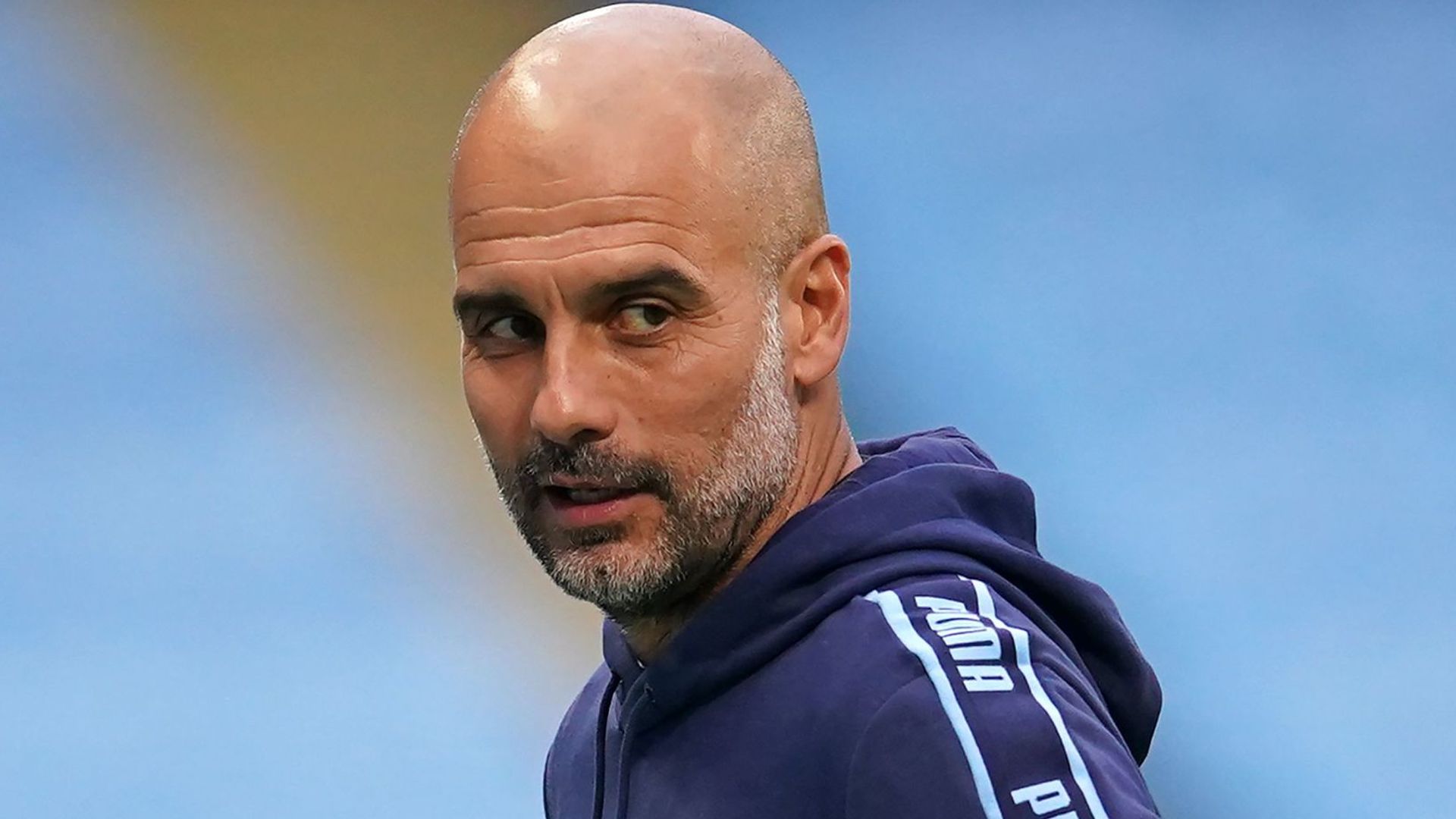
While Guardiola has called for patience and unity, urging his players and fans to trust the process, the road ahead is fraught with challenges. City’s victory over Nottingham Forest, their first in eight matches, was poignant for a team that understands that they cannot afford further slip-ups if they are to remain in contention for the title. However, the underlying issues—from tactical rigidity to a seeming loss of confidence—will require more than a single victory to address.
City’s struggles have also exposed vulnerabilities in their defensive structure. The usually reliable Ruben Dias has looked less assured, while Manuel Akanji and Nathan Ake have struggled to maintain the high standards set in previous campaigns. The absence of Aymeric Laporte, who moved to Saudi Arabia in the summer, has left a gap that has not been adequately filled. Opponents have capitalised on these weaknesses, exploiting spaces in wide areas and punishing City on the counterattack. Guardiola’s preference for a high defensive line has come under fire, with many questioning its effectiveness given the current form of his defenders.
This slump is unprecedented for Manchester City under Guardiola, a manager whose tenure has been characterised by relentless success. Comparisons to past struggles in the EPL era underscore how rare such a prolonged dip in form is for a team of City’s calibre. Yet, it also highlights the intense competitive nature of the league, where even the best sides can falter. City’s issues have been compounded by the resurgence of rivals. Liverpool’s return to their swashbuckling best has been spearheaded by a rejuvenated Salah and a solid defensive unit led by Virgil van Dijk. Arsenal, buoyed by the experience of last season’s title race, have also maintained their form, while Chelsea’s attacking football under Enzo Maresca has added another layer of competition to the race.
City’s struggles in Europe have further dampened morale. The draw against Feyenoord, in which City let a 3-0 lead slip in the final quarter of an hour, highlighted their fragility. It was a result that shook the confidence of a side that had previously looked invincible on the continental stage. Questions about Guardiola’s ability to motivate his squad for a gruelling campaign have surfaced, with some suggesting that fatigue, both mental and physical, is beginning to take its toll.
For now, City’s title defense hang in the balance, and their ability to recover will depend on rediscovering their identity—a combination of tactical innovation, defensive solidity, and attacking flair. Guardiola’s tactical genius has been his hallmark, but the current situation calls for adaptability and perhaps a more pragmatic approach. The January transfer window could provide an opportunity to address squad deficiencies, particularly in midfield and defence, but until then, City must find solutions from within.
As rivals like Liverpool, Chelsea and Arsenal gain momentum, the challenge for Guardiola and his team is to prove that this phase is but a temporary aberration, rather than the beginning of a decline. The coming weeks will undoubtedly be decisive in shaping not just this season but the legacy of one of the EPL’s most dominant eras. For the team at the Etihad, this is unfamiliar territory, a test of character and resilience that could define their trajectory for years to come.

Jude Obafemi is a versatile senior Correspondent at THEWILL Newspapers, excelling in sourcing, researching, and delivering sports news stories for both print and digital publications.
