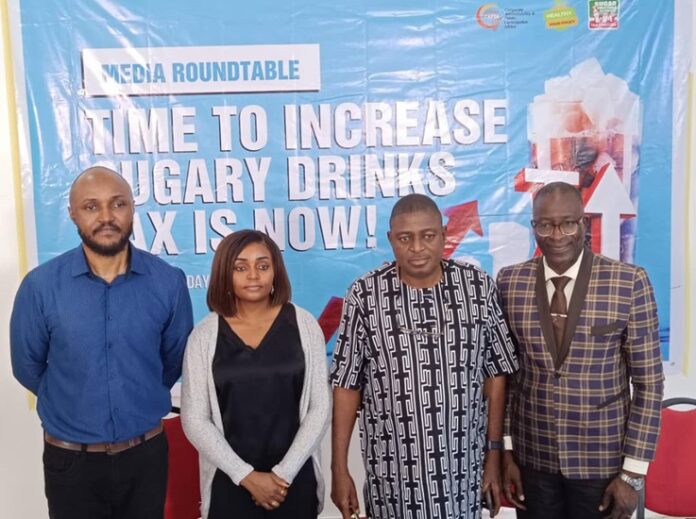
July 08, (THEWILL) — The Executive Director of Corporate Accountability and Public Participation Africa (CAPPA), Mr Akinbode Oluwafemi, has issued a powerful call to action urging the Nigerian government to significantly increase the Sugar-Sweetened Beverage (SSB) tax in order to avert what he described as a looming public health crisis.
Delivering his remarks at a media roundtable on July 8, 2025, in Abuja, Oluwafemi decried the alarming rise in non-communicable diseases (NCDs) across the country, attributing a significant portion of the burden to the excessive consumption of sugary drinks. He lamented that in many parts of Nigeria, soft drinks are more accessible and affordable than clean drinking water — a reality he said underscored the urgency of immediate fiscal and regulatory intervention.
“Our hospitals are overcrowded, our cemeteries are expanding, and our youths are dying from diseases that are largely preventable,” Oluwafemi said, describing the current situation as a public health emergency. He noted that the spread of diabetes, hypertension, stroke, heart disease, and obesity — once considered diseases of affluence — has now permeated all segments of society, affecting both the rich and the poor, young and old alike.

Citing data from the World Health Organisation, he said one in every three deaths in Nigeria is now attributable to NCDs. This, he argued, is not just a health concern but a socio-economic catastrophe. Families, he said, are selling land and depleting their savings to manage conditions that could have been avoided with better policy action.
The SSB tax, introduced in 2021 at N10 per litre, was described by Oluwafemi as a symbolic gesture that has since become ineffectual. At the time of its introduction, the tax represented just a 2 percent increase in price per bottle. With the inflationary rise in product prices over the years, the tax now accounts for a mere 1 percent of retail cost — not nearly enough to deter consumption or encourage product reformulation by manufacturers.
He called on the federal government to raise the tax from N10 to at least N130 per litre, aligning with global best practices that recommend taxes increase the retail price of sugary drinks by 20 to 50 percent to effectively change consumer behaviour. “This is not just about raising revenue,” Oluwafemi explained, “it’s about saving lives and reducing sugar content in these harmful beverages.”
The CAPPA director also warned against industry misinformation, saying beverage companies have been deliberately mischaracterising the SSB tax as a “sugar tax” to confuse the public and stoke resistance. He described this as part of a broader campaign by commercial interests to derail public health efforts in favour of profits.
Further compounding the issue is the infiltration of unregulated, foreign sugary drinks into the Nigerian market. Oluwafemi recounted a disturbing experience at a recent food and beverage exhibition in Lagos, where unapproved beverages with unknown contents were offered to traders with the freedom to “rebrand them however you like.” He said this reckless marketing tactic threatens to turn Nigeria into a dumping ground for unhealthy products.
He reminded the audience that in his 2023 campaign manifesto, President Bola Ahmed Tinubu pledged to use consumption taxes to discourage behaviours that harm public health. “This is the moment to act,” he said, insisting that a stronger SSB tax could yield over N200 billion annually. These funds, he argued, could be channelled into the Basic Healthcare Provision Fund, the National Health Insurance Authority, school feeding programmes, and nutrition education.
He pointed to global examples, including South Africa, Mexico, and the United Kingdom, where higher SSB taxes have led to reduced consumption, healthier product formulations, and job preservation. Oluwafemi dismissed claims that such taxes would hurt small businesses and cause job losses, calling those arguments “fearmongering” not borne out by international experience.
He also rejected the notion that Nigeria’s per capita sugar intake is too low to justify such a tax. “What matters is the rate of increase in consumption among vulnerable groups, especially urban youth. Waiting until our numbers match those of the West would be irresponsible,” he said.
Oluwafemi criticised those who view the SSB tax as an “imported idea,” noting that the diseases killing Nigerians are not foreign. “The problem is here. The evidence is here. The graves are here”, he declared.
To promote transparency, he called for annual public disclosures from the Federal Inland Revenue Service, the Nigeria Customs Service, and the Ministries of Finance and Health regarding how SSB tax revenues are being utilised. “The public deserves to know how their health is being protected — or neglected”, he added.
While acknowledging that the SSB tax is not a cure-all, he emphasised that it is one of the most effective tools available to reduce harmful consumption and signal the government’s commitment to public health. He also condemned the disinformation being spread by newly formed groups such as “Think Business Africa,” which he accused of having no credible standing and serving only corporate interests.
“We must choose life over profit. This is a moment that calls for courage, leadership, and compassion. Let us build a Nigeria where health is a right, not a privilege”, he concluded.

Janefrances Ebere Chibuzor is a Tourism Writer at THEWILL