
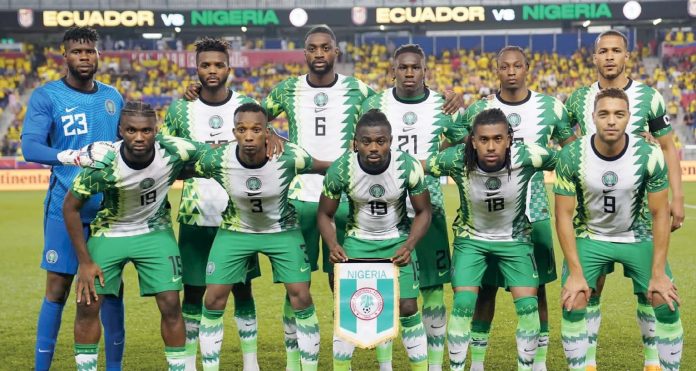
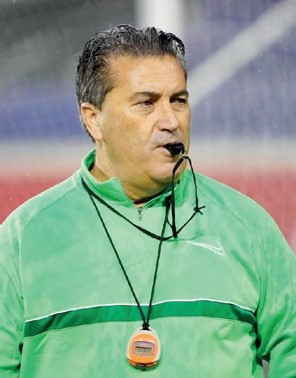
September 10, (THEWILL) – After what seemed to be a certain end to José Peseiro’s time as Super Eagles’ coach, with several domestic coaches being considered for the role, including Finidi George of Enyimba International and the return of Austin Eguavoen, the Nigeria Football Federation successfully renegotiated a fresh contract for Peseiro to continue. The Portuguese coach had been in charge of the Super Eagles, Nigeria’s senior men’s national football team, since July 2022, and had led them to qualify for the 2024 Africa Cup of Nations (AFCON) with a game to spare. Yet, his journey has been a challenge after another, as he had to overcome several obstacles, including criticisms for lack of tactical depth, a backlog of owed salaries, a pay cut, and a lack of friendly matches.
Peseiro’s initial contract with the Nigeria Football Federation (NFF) was for one year, with an option to extend for another year if he met certain targets. He agreed to a monthly salary of about $70,000, which was negotiated under the previous NFF leadership of Amaju Pinnick and considered to be the most expensive offered to any previous Super Eagles coach. Indeed, those who criticised this were right to point out that it nearly doubled the pay of his predecessor Gernot Rohr. The NFF, however, believed that a coach of Peseiro’s calibre and experience was worth the money. After all, the Portuguese had previously managed clubs like Sporting Lisbon, Porto, Braga, and Al-Hilal, as well as the national teams of Saudi Arabia and Venezuela.
Peseiro’s main objective was to qualify Nigeria for the next AFCON. The 2023 Africa Cup of Nations in Ivory Coast was moved to 2024 due to weather concerns. It was originally scheduled for June and July 2023 but will now take place in January and February 2024, for the second consecutive time, to avoid the rainy season. CAF president Patrice Motsepe cited the need to avoid risks as the reason for the change. In qualifying Nigeria for the tournament, Peseiro managed four wins and one draw in five games, booking the Super Eagles a place with 12 points.


However, in July, just before the final game of the qualifying series, Peseiro’s contract expired, leaving him with an uncertain future at the helm of the senior men’s national football team. The NFF said they wanted to keep him, but they could not afford his previous salary due to the economic impact of a lack of sponsorships and a scaled decline in government funding. They offered him a new deal with a 29% pay cut, which would reduce his monthly income to $50,000. They also added some new terms to his contract, such as taking charge of the CHAN Eagles, the home-based team that competes in the African Nations Championship (CHAN) and reaching at least the semi-finals of the AFCON.
Peseiro accepted the offer, as he was happy to continue working with Nigeria and that he understood the financial situation of the NFF. He was also confident that he could achieve the targets set by his employers. His decision to stay on was welcomed by the Federation, who praised him for his professionalism, commitment, and results. They also expressed their hope that he would be able to end Nigeria’s long wait for a fourth AFCON title, which they last won in 2013 under Stephen Keshi.
Yet, those sentiments were not unanimous across board as not everyone was satisfied with Peseiro’s performance and contract renewal. The coach faced some criticism from various quarters for how he organised his teams, which did not always yield expected results. For instance, the Super Eagles, who are ranked 39th in the world, lost 1-0 at home to Guinea-Bissau, a team ranked 112th in the world by FIFA, in their second qualifying match. The Super Eagles also struggled to beat Sierra Leone, ranked 120th, by a narrow 3-2 margin in their final qualifier.
Some critics also questioned Peseiro’s decision to continue inviting some players who were past their prime or not performing well at club level. One example was Ahmed Musa, the 30-year-old captain who had not scored a goal for his club Fatih Karagumruk in Turkey since January. Musa was accused of being favoured by the NFF due to his longevity, popularity and influence.
Another issue that Peseiro faced was his alleged lack of attention to the domestic league in Nigeria, from where he could scout and include the best players into the senior squad. Some local coaches and analysts argued that Peseiro was neglecting the talent pool in the country and relying too much on foreign-based players. They urged him to watch more local matches and give more opportunities to home-grown stars.
Peseiro also faced some accusations of not doing enough to instill discipline and best practices in the Super Eagles. Some reports claimed that some players were involved in indiscipline acts such as drinking alcohol, skipping training sessions, or arriving late for camp. These professionals know never to attempt such indulgences while at their clubs due to the zero-tolerance of indiscipline abroad. Therefore, Peseiro was blamed for not enforcing strict rules or imposing sanctions on such players.
On the side of the NFF, the criticism was also intense. The Federation was accused of negotiating an inordinately high salary with Peseiro in the first place, which was seen as one of the highest in the continent. Some observers argued that Amaju Pinnick’s NFF could have hired a cheaper and more qualified coach, either local or foreign. Still, the NFF also failed to pay Peseiro and his staff for extended periods, owing them a backlog of salaries, which they blamed the delay on the bureaucracy of the government and dwindling sponsorships. Some critics found reason to doubt their sincerity and accountability around this subject.
The NFF also caused so much uncertainty by failing to determine a resolution of the contract issue long before it expired. This allowed rumours to circulate about picking a local coach to replace Peseiro or renegotiating his contract with new terms. The NFF did not communicate clearly or timely with the coach or the public about their plans, which created confusion and anxiety.
Humorously, current NFF President, Ibrahim Musa Gusau, said the Federation was going to let Nigerians decide who the next Super Eagles’ coach will be, without concretely establishing the modalities for that determination.
There were also claims that the NFF influenced squad selection for the coach, which was responsible for the continued invitation of some players who did not merit their spots. Allegations that the NFF had a quota system for players from different regions or clubs, or that they received kickbacks from agents or sponsors for including certain players, have plagued the Federation for ages. These acts, if still in place, would undermine the integrity and autonomy of the coach and the team. Rohr, after being removed from the Super Eagles job, admitted that this was still the case while he was in charge. It is unfortunate because it does not help the Super Eagles field the best XI with the capacity to get results.
The new contract means that Peseiro has shown that he is a coach who can adapt to different situations and overcome difficulties. He has also shown that he is willing to sacrifice some personal benefits to remain on the job. He now has to look at some areas that he needs to improve on, such as his tactical choices, his player selection, his relationship with the local league, and his management of discipline. He also needs to be more vocal and assertive in defending his rights and interests against any interference or injustice from the NFF or other parties.
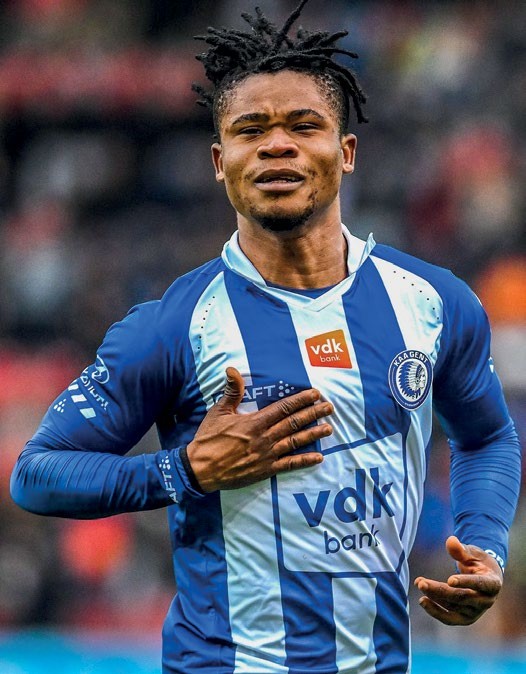
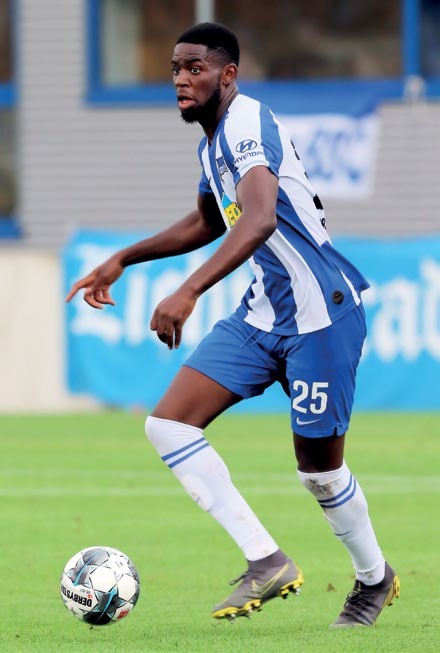
Peseiro’s first task after renewing his contract was to name his squad for the final AFCON qualifier against Sao Tome and Principe on September 10. In the squad selection, he seems ready to break from the past. He introduced some new faces to the squad, such as Victor Boniface, Gift Orban, and Jordan Torunarigha, who have impressed in their different club duties. He recalled some players who had missed out on previous games due to injuries or club commitments, such as Bruno Onyemaechi, Tyronne Ebuehi, Raphael Onyedika, and Jamilu Collins. He also retained most of the players who had performed well in his previous matches but did not invite Musa, a very telling move.
Nigeria are expected to win their group ahead of second-placed Guinea Bissau, who are two points behind them and play at home to Sierra Leone. Peseiro said he would use the game as an opportunity to test some players and tactics ahead of the AFCON.
He also said he would start preparing for CHAN, 2024.
Peseiro has a lot of work to do before he can lead Nigeria to glory in both tournaments. He will face high expectations and fierce competition from other teams. Under his first contract, while Nigeria struggled with African teams, they could not hold their own against foreign opposition, losing 2-0 to Costa Rica and 4-0 to Portugal in November last year. He will also have to deal with the pressure and scrutiny from the media and the fans. He will need all the support and cooperation he can get from the NFF, his staff, his players, and his supporters. He will need to prove himself as a coach who can deliver results and make Nigeria proud.

Jude Obafemi is a versatile senior Correspondent at THEWILL Newspapers, excelling in sourcing, researching, and delivering sports news stories for both print and digital publications.
