

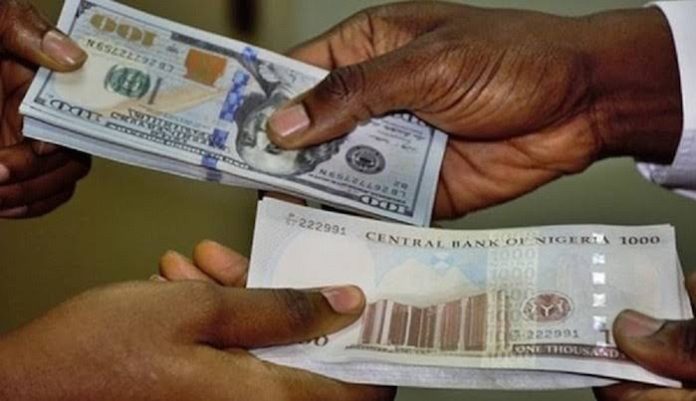
December 08, (THEWILL) — Nigeria’s Naira is tipped for a potential break toward N1,445 per dollar in the coming days as global markets position for an expected round of interest-rate cuts by the U.S. Federal Reserve a move analysts say could provide a meaningful boost to the local currency.
The Naira has traded with increased stability in the official market in recent sessions, supported by improved foreign-exchange liquidity and a calmer demand cycle. But currency strategists note that the biggest catalyst now sits outside Nigeria: the shifting monetary stance of the world’s most influential central bank.
How Fed Rate Cuts Support a Stronger Naira

Expectations that the Federal Reserve will begin lowering interest rates have already weakened the U.S. dollar globally. Lower U.S. yields reduce the appeal of dollar-denominated assets, prompting global investors to reallocate funds toward higher-yielding emerging-market instruments including Nigerian government securities.
Analysts say this dynamic could translate into renewed foreign portfolio inflows, bolstering the supply of foreign exchange into Nigeria’s market and improving support for the Naira.
Any meaningful easing by the Fed creates room for a softer dollar. A weaker dollar increases risk appetite, and Nigeria stands to benefit from additional inflows, especially with domestic yields still attractive.
Domestic Reforms Add Momentum
The Central Bank of Nigeria (CBN)’s ongoing reforms aimed at reducing FX market distortions and improving transparency have helped stabilize market sentiment. Dealers say improved liquidity conditions mean the Naira is now more responsive to favorable global trends than earlier in the year.
With reserves recovering and speculative pressure easing, the local currency is better positioned to take advantage of external tailwinds such as a weaker dollar and revived investor appetite.
Despite the optimistic outlook, analysts warn that the Naira’s trajectory will still depend on domestic fundamentals, including inflation, FX demand pressures, and the sustainability of CBN policies. Oil-price fluctuations also remain a risk factor.
Fed cuts may provide breathing room, but Nigeria must continue strengthening internal stability. The global window won’t be enough on its own.
If the U.S. Federal Reserve proceeds with the anticipated rate cuts, traders expect the Naira to gain modest ground, with projections indicating a potential move toward N1,445/$* in the short term. A sustained rise in inflows, supported by domestic policy continuity, may determine whether the local currency can hold or even improve on such gains.
For now, all eyes remain on the Fed and on how far the dollar will fall as the world’s monetary cycle turns.

Ogochukwu Onwaeze



