October 12, (THEWILL) — The House of Representatives on Thursday, October 9, 2025, resolved to investigate the over $18 billion reportedly spent on the rehabilitation of Nigeria’s state-owned refineries in Port Harcourt, Warri, and Kaduna over the past two decades without tangible results.
This followed the adoption of a motion moved during plenary by Hon. Sesi Oluwaseun Whingan on the non-functionality of state-owned Refineries.
Whingan, in his motion, expressed concern over the persistent non-performance of the refineries despite years of turnaround maintenance projects and repeated government assurances. He noted that the facilities remained comatose even after extensive funding and several promises of rehabilitation.

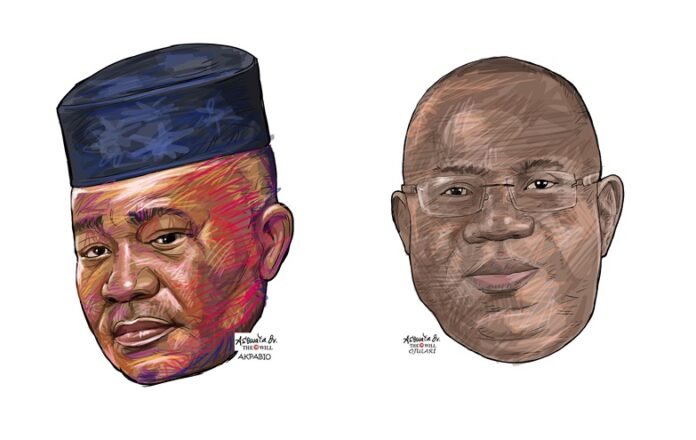
He noted that the recent admission by the Group Chief Executive Officer of the Nigerian National Petroleum Company Limited (NNPCL), Engr. Bayo Ojulari, that the refineries remain non-functional despite the huge investments, further raises questions about fiscal discipline and transparency in managing national assets.
“The continued non-functionality of these refineries despite consistent budgetary allocations and rehabilitation contracts represents a gross misuse of public funds and a betrayal of public trust,” Whingan lamented.
Adopting the motion, the House resolved to set up an ad-hoc committee drawn from the Committees on Petroleum Resources (Upstream and Downstream), Public Accounts, Anti-Corruption, Finance, and Legislative Compliance to probe the funds appropriated and disbursed for the rehabilitation of the refineries between 2010 and 2024.
The committee is to ascertain the current operational status of the refineries, evaluate how the funds were utilised, identify any cases of mismanagement or corruption, and recommend measures to safeguard future public investments. The House directed the committee to report back within four weeks for further legislative action.
Previous outings
This would be the third probe of the moribund refineries by the national law makers since the 10th National Assembly was inaugurated in 2023. The two previous probes yielded no results, neither did the lawmakers publish any reports.
First probe
The Senate had on October 24, 2023 constituted an ad-hoc committee to investigate all contracts estimated at over N11.35 trillion awarded for the rehabilitation of the four moribund refineries in the country. This followed a motion brought by Senator Sunday Karimu on the unending repairs of the nation’s refineries despite the huge resources invested in fixing them.”
Karimu said, “We are concerned that the Federal Government of Nigeria has carried out rehabilitation projects in Port Harcourt Refinery Company (PHRC) over a period of seven years from 2013-2019 at an estimated cost of N12,161,237,811.61. In addition, on the 18th March 2021, a rehabilitation contract was executed between NNPC/PHRC and Tenenimont SPA at a Lump Sum of $1,397,000,000.00, about N75 billion naira amidst global public criticism, no result has been achieved.”
The Senate ad-hoc committee was asked to report back in four weeks. No report was submitted.
Second probe
Ten months after the Senate embarked on the probe of the endless maintenance of Nigeria’s moribund refineries, the upper and lower legislative chambers jointly commenced a similar exercise in August, 2024.
Following fresh controversies trailing the nation’s oil and gas industry, especially in the aspects of sabotage, corruption and oil theft, the Speaker of the House of Representatives, Abbas Tajudeen, named a seven-member committee to probe alleged economic sabotage in the oil and gas sector.
Surprisingly, this came on the heels of the action by the same Speaker who abruptly relieved the joint committee on Petroleum Resources Downstream and Midstream of the responsibility of a forensic probe into the sector amid allegations of massive fraudulent activities.
The new panel headed by House Leader, Julius Ihonvbere, was to join the Senate in executing the same task. The House said the new structure aimed to ensure synergy between the two chambers of the National Assembly towards a holistic approach in addressing the issues involved.
On its part, the Senate also raised an Ad Hoc Committee to Investigate the Alleged Economic Sabotage in the Nigerian Petroleum Industry. The upper legislative chamber expressed concern over the $1.5 billion approved in 2021 for the turn-around maintenance of the Port Harcourt Refinery with little or no result. Opeyemi Bamidele, chairperson of the Senate Ad Hoc Committee, said it was unfair and wrong to treat public companies shabbily while private businesses were flourishing and thriving.
The Senate ad-hoc Committee later suspended its assignment indefinitely citing the need for broader consultation in the nation’s interest. The matter ended.
Drama of NNPC
However, in a dramatic turn of events, the NNPCL on August 30, 2024 announced that it was seeking private Operations and Maintenance (O&M) companies to bid for the Warri and Kaduna refineries (while repairs of the Port Harcourt refinery were in progress).
“NNPC Ltd is seeking to engage reputable and credible Operations & Maintenance (O&M) companies to operate and maintain two of its refineries, Warri Refining and Petrochemical Company (WRPC) and Kaduna Refining and Petrochemical Company (KRPC), to ensure reliability and sustainability to meet the nation’s fuel supply and energy security obligations,” the company said in a circular.
As expected, this was not achieved. Instead, the plants suddenly began production, according to NNPCL, following the commencement of petroleum products production by the Dangote Refinery on September 3, 2024.
Another round of probe?
The latest action by the House of Representatives is being viewed with utmost skepticism from various quarters. Hon. Whingan had cited recent comments by industrialist Aliko Dangote and former President Olusegun Obasanjo, both of whom publicly cast doubt on the viability of the refineries, describing the multi-billion-dollar expenditures as wasteful and unproductive.
The lawmaker stressed that with the removal of the petrol subsidy, it had become more crucial for Nigeria to have functional refineries to ensure energy security and cushion the economic impact on citizens.
Whingan recalled that in 2007, under President Obasanjo’s administration, Dangote and other private investors had acquired the refineries before the decision was reversed by the late President Umaru Musa Yar’Adua, who instead opted for state-funded rehabilitation — a move that has since failed to yield results.
However, there is nothing to suggest that the latest round of probe by the national lawmakers would yield any result.
Weary voices
THEWILL had earlier reported the concerns raised by stakeholders and industry experts over the Senate’s legislative frivolities called probe.
An oil and gas business practitioner, Engr Canice Benjamin, advised the upper legislative chamber to settle down and enjoy their new SUVs cars gifted by the Federal Government instead of embarking on a “public, dance of shame”.
Engr Benjamin recalled that the Senate had engaged in countless probes of the oil and gas industry as well as the NNPCL without producing any concrete result.
Mr Rufai Oseni, a co-anchor of the popular Arise Television News ‘The Morning Show’, had described the exercise as one that would end the way of the notorious Senate probes of the Niger Delta Development Commission (NDDC).
The Minister of State for Labour and Employment, Mrs Nkeiruka Onyejeocha, during a tour of the facility in 2024, disclosed that the refinery would resume full production “soon”.
According to her, the refinery will produce two million litres of Premium Motor Spirit, otherwise known as petrol, and 2.2 million litres of diesel per day upon resuming operations.
However, Aliko Dangote had in June 2025 cast serious doubt on the viability of Nigeria’s state-owned refineries, warning they may never function again despite a staggering $18 billion reportedly spent on their rehabilitation.
While hosting members of the Global CEO Africa group at the Dangote Petroleum Refinery in Lagos, Alhaji Dangote said the NNPCL refineries’ outdated infrastructure and years of mismanagement render them effectively obsolete, even with continued investments.
“I doubt very much if they will work,” he said bluntly. “It’s like trying to modernise a car that was built 40 years ago. Even if you change the engine, the body will not be able to take the shock of that new technology engine.

Sam Diala is a Bloomberg Certified Financial Journalist with over a decade of experience in reporting Business and Economy. He is Business Editor at THEWILL Newspaper, and believes that work, not wishes, creates wealth.