February 18, (THEWILL) — There was no festival, no ceremonial pageantry — just a deliberate move that may yet recalibrate Lagos’ domestic tourism map.
On February 12, 2026, the South West Zone of the Nigeria Association of Tour Operators (NATOP) took its destination development drive to Ijede and Egbin, two historic riverine communities in Ikorodu, long steeped in heritage, but largely absent from mainstream tour itineraries.
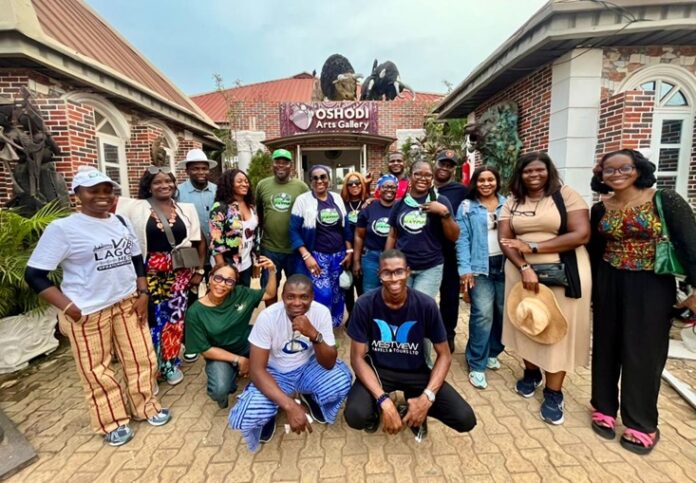
Led by its Vice President, Amb. Anago-Osho J.A., and accompanied by the National President, Hajia Bolaji Mustapha, alongside executives and members, the delegation embarked on a familiarisation (FAM) tour aimed at identifying, assessing and documenting tourism assets with commercial viability.

The reception at Ijede Local Council Development Area signposted institutional interest. Local officials welcomed the delegation, reflecting an emerging synergy between grassroots governance and private sector tourism operators.
But the significance of the visit lay beyond formalities.
At the palace of the Alajede of Ijede Kingdom, His Royal Majesty, Oba Adefarasin Saheed Hassan (Ajanaku II), openly expressed readiness to collaborate with professional tour operators in developing and promoting sites within the kingdom. The monarch’s stance was not merely symbolic; in traditional communities, royal endorsement remains pivotal to land use, heritage preservation and cultural access.
In the neighbouring Egbin Kingdom, chiefs received the delegation at the historic Obateru Palace, while the Obateru of Egbin, His Royal Majesty, Oba (Dr) Adeoriyomi Oluwasesan Abdul-Akeem Oyebo (Ademoyebo III), joined the engagement virtually from overseas — reinforcing royal alignment with tourism-driven economic engagement.
The delegation’s itinerary moved from palaces to riverbanks.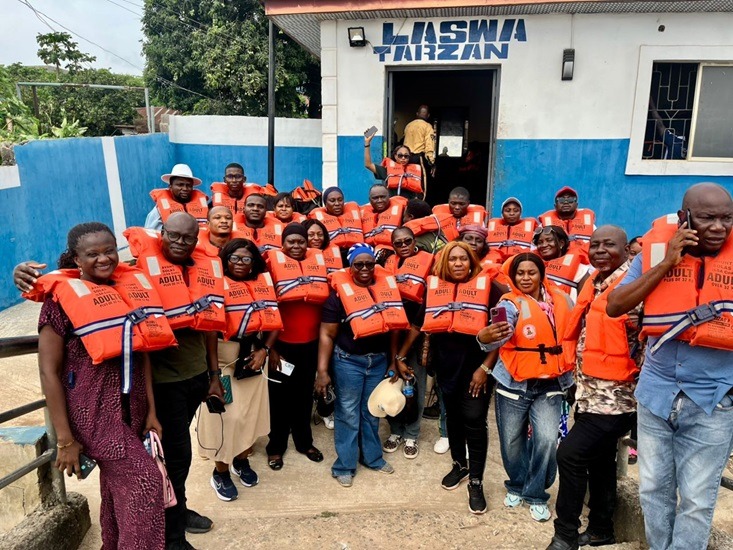
At the historic Obateru Palace and the ruins of the over 100-year-old Alajede Palace, tour operators examined tangible relics of leadership and indigenous architecture that could anchor heritage tourism narratives. Though understated, the sites carry historical weight and storytelling value capable of attracting culturally inclined travellers.
The exploration extended to Odoro River, notable for its seven outlets, where eco-tourism discussions centred on regulated boat cruises and curated lagoon experiences.
A cruise to Calverton and Aiyetoro communities provided first-hand exposure to the tranquil waterways and rustic settlements that define the lagoon belt — environments increasingly attractive in experiential travel markets seeking authenticity over spectacle.
Speaking during the visit, Amb. Anago-Osho described the tour as consistent with NATOP’s mandate to expand Nigeria’s tourism frontiers beyond traditional hotspots.
“This familiarisation tour reflects our commitment to identifying new destinations, developing marketable tourism products and promoting domestic tourism in a sustainable manner”, he stated.
Industry observers note that the Ijede–Egbin engagement aligns with a pattern established under the current South West leadership. In recent months, NATOP’s Lagos chapter has undertaken curated heritage tours across Badagry’s historic corridor and exploratory visits along the Lekki–Epe coastal axis, focusing on product development and professional packaging rather than ceremonial excursions.
The move into Ikorodu Division signals a broader decentralisation strategy — one that seeks to rebalance Lagos tourism by integrating underexposed communities into structured itineraries.
Historically, Ikorodu has maintained political and cultural prominence within Lagos State, yet its tourism narrative has lagged behind more commercialised destinations. Ijede and Egbin offer a different story — one shaped by indigenous monarchy, lagoon commerce routes, ancestral architecture and environmental assets that remain largely untapped.
By spotlighting these communities, NATOP positions itself as a bridge between heritage custodians and market operators. The approach reflects an understanding that sustainable tourism requires alignment between traditional institutions, local government and private sector expertise.
Beyond site inspection, discussions during the tour touched on documentation, preservation and structured visitor management — measures aimed at ensuring that increased exposure does not compromise cultural integrity.
The economic undertone was equally evident. As Lagos continues to explore non-oil revenue alternatives, tourism remains a viable pathway for supporting small businesses, generating employment and strengthening community-based enterprises. Properly packaged riverine and heritage destinations can stimulate local economies through boat operations, guiding services, crafts and hospitality.
No grand announcements were made at the close of the visit. No infrastructure blueprints were unveiled. Instead, what emerged was groundwork — assessment notes, partnership signals and renewed visibility. In tourism development, such groundwork often precedes transformation.
For Ijede and Egbin, the February 12 FAM tour may well represent the first structured step toward formal inclusion on Lagos’ expanding tourism map — a quiet but calculated intervention that could reposition Ikorodu’s lagoon belt within Nigeria’s domestic travel economy.

Janefrances Ebere Chibuzor is a Tourism Writer at THEWILL